As the EU weighs a sweeping ban on PFAS, a new study from Norwegian researchers suggests the threat from these so-called ‘forever chemicals’ may begin even before birth.
Scientists from the Norwegian University of Science and Technology (NTNU) have discovered that PFAS can disrupt gene expression in developing duck embryos, altering the activity of vital organs in ways that could affect survival long after hatching.
An expanding global concern
PFAS – per- and polyfluoroalkyl substances – are synthetic chemicals prized for their resistance to heat, water and grease.
Their durability has led to widespread use in daily products such as non-stick cookware, waterproof garments, food packaging, firefighting foam and stain-repellent coatings. The same durability, however, means they persist in nature for decades.
Thousands of PFAS variants remain in circulation worldwide, even though the toxicity of several well-known compounds has already triggered bans.
These chemicals have been detected in environments as varied as drinking water supplies and the snow-covered surfaces of ski trails, a legacy of their former use in ski wax.
Despite their ubiquity, the biological risks posed by many of these newer PFAS compounds remain largely uncharted.
Testing PFAS impact directly in duck eggs
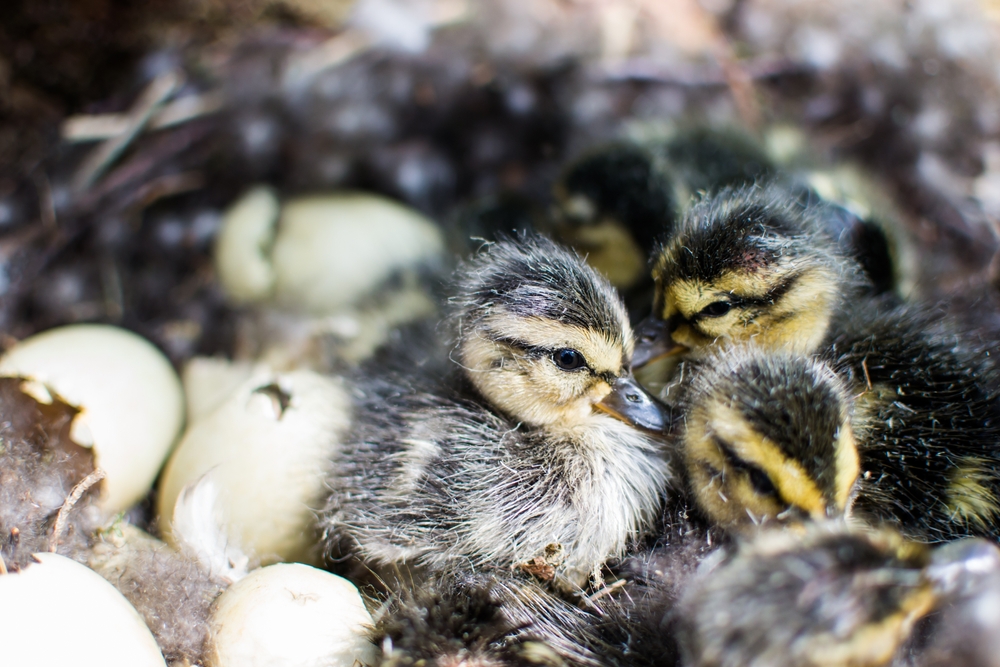
To understand how emerging PFAS variants influence early development, researchers at NTNU turned to mallard duck eggs.
Studying wild populations is notoriously complex because birds in nature face a barrage of external pressures – from fluctuating food availability to viral outbreaks – and these variables can obscure the effects of chemical exposure. A controlled laboratory setting offered a clearer view.
The team obtained eggs from a duck farm and introduced two recently detected PFAS compounds directly into the eggs. A third group was exposed to PFOS, a well-known PFAS variant already banned for its toxicity.
After injecting the chemicals through tiny drilled openings, the researchers sealed the shells with wax and incubated the eggs for four weeks.
The goal was to mimic natural exposure: in the wild, PFAS are transferred from female birds to their eggs, meaning contamination begins in the earliest stages of life.
Three organs, three different responses
Once the ducklings hatched, the team analysed three organs essential for healthy development: the liver, the heart and the bursa fabricii, a bird-specific organ central to building the immune system.
By examining changes in gene expression, they could pinpoint which genes had been switched on or off as a result of PFAS exposure.
Liver: Disrupted fat metabolism
The liver showed the clearest signs of disruption. Ducklings exposed to the new PFAS variants exhibited shifts in the genes that regulate fat processing.
Timing of fat storage is crucial for mallard ducks, which must accumulate energy reserves during the breeding season and ahead of long migrations. Interference in these metabolic pathways could diminish the birds’ ability to reproduce or survive harsh conditions.
Heart: Surprisingly stable
Contrary to earlier findings in other species, the heart displayed few immediate changes in gene activity.
Other PFAS compounds have been linked to cardiac development issues in animals, including humans, so the relative stability in this study was unexpected. However, the researchers noted that subtle or long-term effects might only emerge later in life.
Immune system: Early alarm signals
The bursa fabricii told a different story. Across all ducklings exposed to any of the three PFAS substances, a gene associated with early viral detection became unusually active.
This gene normally acts as a frontline sensor for infections, raising the possibility that PFAS may push the immune system into a state of heightened – possibly unnecessary – alert.
Whether this reaction strengthens disease resistance or burdens the body with chronic stress is not yet clear.
The next step will be to monitor the birds’ resilience against real pathogens such as avian influenza, a major global threat to wild bird populations.
Implications for EU regulation
The findings come at a pivotal moment. The EU is evaluating whether to regulate PFAS as an entire class instead of attempting to ban individual compounds piecemeal.
With thousands of variants sharing similar chemical structures, testing and restricting them one by one is slow, costly and likely ineffective.
The new study suggests that even lesser-known PFAS can mirror the biological disruptions caused by well-studied, already-banned compounds.
This strengthens the argument for a unified regulatory approach, particularly because PFAS linger in the environment for decades and accumulate across ecosystems.
A threat from the first moments of life
The research underscores a growing concern among environmental scientists: PFAS risks are not limited to long-term accumulation but may begin during the earliest developmental stages.
With evidence that PFAS can alter gene expression in embryos, the chemicals may shape health outcomes long before birds encounter the outside world.
As policymakers deliberate sweeping restrictions, researchers stress the importance of further studies that mimic natural conditions.
Given PFAS’s persistence and global reach, the stakes extend far beyond duck eggs. These forever chemicals may influence wildlife populations from their very first heartbeat – long before they take their first breath.