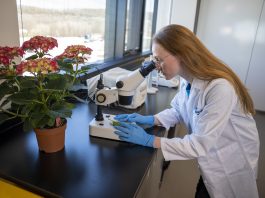
Canada’s top research college is transforming health and wellness research into real-world impact and building global partnerships for the future.
Niagara College (NC) has established itself as a national leader in applied health and wellness innovation. For the second year in a row, NC holds the No. 1 research college ranking in Canada, with more than $40 million in annual research support across sectors, including health, advanced manufacturing, food and beverage, business and commercialisation, horticulture, and environmental science.
Its industry research income exceeded $35m, underscoring the strong confidence that Canadian companies and community organisations continue to place in the College’s applied research expertise.
This success is built on a deliberate model that connects applied research directly to societal and industry needs. Faculty, staff, and students collaborate with health providers, technology developers, and small- and medium-sized enterprises (SMEs) to test prototypes, validate technologies, and evaluate service models that improve health outcomes and quality of life.
The approach ensures that research at Niagara is both scientifically rigorous and immediately practical – driving innovation while preparing the next generation of health and wellness professionals.
New innovations for ageing populations
At the heart of this ecosystem is the Healthy Aging and Wellness Innovation Centre (HAWIC), NC’s newest innovation centre focused on advancing research in health and wellness. The Centre was established to support innovation that enhances independence, dignity, and quality of life as populations age. HAWIC represents NC’s expansion into one of the fastest-growing global research priorities—connecting health, technology, and education to improve well-being across the lifespan.
Together with NC’s other specialised centres—the Food and Beverage Innovation Centre (FBIC), the Horticultural and Environmental Science Innovation Centre (HESIC), the Walker Advanced Manufacturing Innovation Centre (WAMIC), and the Business and Commercialization Innovation Centre (BCIC).
HAWIC strengthens NC’s role in advancing applied research that delivers measurable impact in Canada and beyond.
Expanding research impact through wellness and care
Across the world, people are living longer than ever before, as the meaning of health evolves with them. Wellness is no longer defined solely by the absence of illness; it now encompasses independence, mental well-being, social connection, and equitable access to care. These global priorities echo the goals of international health research initiatives focused on prevention, innovation, and sustainable health systems.
HAWIC was created to meet this moment, leading applied research that turns creative ideas into practical, evidence-based solutions that help people live not only longer, but better.
HAWIC brings together healthcare providers, technology developers, researchers, and community partners to co-design, test, and validate solutions that make care more responsive, efficient, and inclusive. The centre connects partners to the College’s broader research ecosystem, linking expertise in applied health, digital and assistive technologies, and workforce innovation with advanced resources, including prototyping facilities, usability testing environments, and data analytics. This collaborative approach allows HAWIC teams to move ideas quickly from concept to pilot to implementation, generating measurable improvements for individuals, caregivers, and communities.
With its interdisciplinary network of faculty experts, staff researchers, and students from programmes in health sciences, community studies, and technology, HAWIC offers partners a uniquely agile and collaborative environment. Through this approach, NC is strengthening its role as a trusted partner in advancing global health innovation — building bridges between research and care, and shaping a healthier, more connected future for all.
Advancing innovation in healthy ageing and wellness
HAWIC’s research is guided by five pillars – ageing-in-place, community, care and services, technology, and education and knowledge mobilisation – which together aim to strengthen health systems, empower care providers, and improve the everyday experiences of older adults.
For example, HAWIC recently collaborated with Niagara Region Senior Services, based in St. Catharines, Ontario, where researchers and recreation therapy staff are developing and evaluating therapeutic protocols for robotic companion animals. These low- and high-tech robotic “pets”, such as seals and birds, have shown measurable improvements in reducing agitation, anxiety, and loneliness among long-term care residents living with dementia. HAWIC’s applied studies are producing the training resources and evidence-based guidelines needed to help staff implement programs using this technology safely and effectively in care settings across the Niagara region.

Another initiative with Seasons Retirement Communities, headquartered in Oakville, Ontario, focuses on preventing injury and maintaining mobility. Using the CareFall neuro-assessment system — a wearable EEG and cognitive testing platform — researchers are developing a falls risk intervention and management programme that combines real-time physiological data with tailored exercise and wellness activities. This applied research aims to reduce hospital visits and improve the quality of life for older adults living across southern Ontario.
HAWIC is also expanding its work in virtual reality (VR) therapy, in partnership with the Benevolent Society Heidehof for the Care of the Aged, and the Alzheimer Society of Niagara Region. Researchers are introducing immersive VR experiences to enhance mood, memory, and social connection among older adults living in long-term care. Paired with iPads to facilitate, this project demonstrates how digital engagement can support emotional and cognitive well-being in ageing populations.
While HAWIC’s dedicated laboratory is under development as part of NC’s new 75,000-square-foot Health and Community Services Expansion at its Welland Campus, partners already benefit from access to the College’s advanced research ecosystem. Projects within NC’s research ecosystem can transition seamlessly between innovation centres as they progress from concept to commercialisation. A health technology validated through HAWIC can move to WAMIC in Welland for advanced prototyping, precision metrology, and product optimisation, then to BCIC in Niagara-on-the-Lake for user testing, marketing strategy, and commercialisation support. Other centres—FBIC and HESIC—can provide expertise in packaging, environmental design, and sustainability when relevant. This interconnected model enables partners to access specialised capabilities across NC’s entire innovation network, accelerating development and reducing market barriers.
Together, these collaborations exemplify how HAWIC is shaping the future of healthy ageing. From robotic interventions and virtual reality therapies to cognitive and physical health assessment, HAWIC is driving research that combines compassion, technology, and evidence, positioning NC and the Niagara region as a leading hub for applied health innovation in Canada and beyond.
Accelerating health innovation through advanced manufacturing
The Walker Advanced Manufacturing Innovation Centre (WAMIC) at NC’s Welland Campus in Ontario, Canada, is a 15,000-square-foot applied research facility dedicated to precision engineering, prototyping, and product development.
The Centre provides industry and community partners with access to advanced technologies, equipment, and software, supported by expert staff, faculty, and students who specialise in mechanical design and materials testing.
WAMIC’s specialised services span three core areas: Precision Metrology (3D scanning, dimensional inspection, reverse engineering, and coordinate measuring); Design and Development (CAD modelling, 3D printing, machining, and electronics integration); and Industry 4.0 technologies (sensor integration, data analytics, and IoT-enabled process improvement). Together, these capabilities enable partners to efficiently move ideas from concept to manufacturable product, ensuring performance, safety, and scalability.
During the COVID-19 pandemic, WAMIC’s capacity for rapid innovation was tested under real-world pressure. The Centre designed, prototyped, and produced more than 37,000 Health Canada-certified face shields, donating 17,300 units to Niagara Health and distributing thousands more to essential workers across Ontario. Working under a Medical Device Establishment Licence (MDEL Class 1) and supported through federal funding, WAMIC demonstrated how applied manufacturing expertise could be mobilised to meet urgent healthcare needs.
WAMIC also collaborated with McMaster University and Hamilton Health Sciences in Hamilton, Ontario, to reverse-engineer and produce a 3D-printed laryngoscope sheath, addressing critical supply shortages in ventilator consumables during the same period. These projects underscored the Centre’s ability to respond quickly and deliver practical, regulatory-compliant solutions for Canada’s healthcare sector.
Today, WAMIC continues to support health and wellness innovation through collaborations with HAWIC and external partners. Health-focused projects, such as assistive devices, wearable falls-risk sensors, or therapeutic technologies, can transition seamlessly from validation and testing at HAWIC to prototype development and small-scale production at WAMIC. Through its integrated engineering services, state-of-the-art facilities, and collaborative approach, WAMIC strengthens Canada’s innovation pipeline — helping research and industry partners bring safer, more effective technologies to market that enhance care delivery and improve quality of life in communities across the country.
Beyond facilities: Talent and support
NC’s strength in health innovation extends beyond its facilities — it lies in the people and partnerships that drive each project forward. Through HAWIC, organisations gain access to an interdisciplinary network of researchers, faculty, and students from programmes such as Practical Nursing, Recreation Therapy, Occupational Therapist Assistant/Physiotherapist Assistant, Health Care Administration, Paramedic Studies, Data Analytics, and Community and Social Service Work.
These teams blend clinical understanding with technical expertise to design and evaluate real-world solutions that enhance quality of care and well-being.
For partners, collaboration means more than access to research — it means access to talent. Students trained through HAWIC and WAMIC projects gain hands-on experience with cutting-edge health and wellness technologies, including neuro-assessment and virtual-reality systems, as well as therapeutic and assistive devices. Many transition directly into roles within the organisations they’ve supported, strengthening local care systems and expanding Canada’s skilled workforce in health and ageing innovation.
These partnerships also open doors to funding opportunities. Through NC’s Research and Innovation Division, HAWIC and WAMIC work directly with partners to identify and secure cost-shared funding that advances applied health research.
Programmes supported by agencies such as the Natural Sciences and Engineering Research Council of Canada (NSERC), the National Research Council of Canada’s Industrial Research Assistance Program (NRC IRAP), and the Ontario Ministry of Colleges and Universities (MCU) help reduce financial risk, expand project scope, and bring innovative health and wellness solutions to market faster.
For healthcare providers, technology developers, and community organisations, partnering with HAWIC offers a clear advantage — a collaborative environment where expertise, infrastructure, and funding align to accelerate ideas that improve care and strengthen communities.
Positioning for the future
HAWIC and WAMIC exemplify NC’s approach to the intersection of research, innovation, and community impact to address global health and wellness challenges. As part of NC’s broader network of innovation centres, they provide partners with access to a comprehensive ecosystem that supports innovation at every stage.
Looking ahead, NC is expanding its reach through global partnerships. With proven expertise across health, wellness, food, environment, and advanced manufacturing, the College is actively seeking collaborators through Horizon Europe, the European Union’s flagship research and innovation program. For those tackling the shared challenges of ageing populations and health system transformation, NC offers the facilities, expertise, and results-driven experience to turn ideas into impact.
For more information or to explore partnership opportunities with NC’s Research and Innovation Division, please contact Marc Nantel, PhD, Vice-President, Research, Innovation & Strategic Enterprises, at mnantel@niagaracollege.ca.