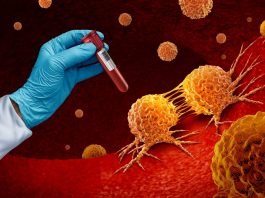
A major partnership announced today could transform the future of UK cancer treatment by turning historic nuclear materials into life-saving medicines.
Tens of thousands of doses of advanced radiopharmaceuticals are set to be produced annually using reprocessed uranium originally generated from spent nuclear reactor fuel, marking a major scientific and medical milestone for the UK.
The agreement brings together Bicycle Therapeutics, a Cambridge-based biotech innovator, and the UK Nuclear Decommissioning Authority (NDA), unlocking a new medical use for hundreds of tonnes of previously untapped nuclear material.
Science and Technology Secretary Liz Kendall explained: “Cancer is a disease that affects millions worldwide, and tears too many families apart.
“Breakthroughs in medical science are giving more cancer patients and their loved ones hope, and this unique partnership could help take that work even further.
“Turning nuclear material into cutting-edge cancer treatments sounds like science fiction – but thanks to the brilliance of scientists, researchers and doctors, it could be a life-saving reality.
“Work like this shows exactly why we’re determined to support our life sciences innovators to make groundbreaking new treatments possible.”
From nuclear legacy to cancer breakthrough
Under the 15-year agreement, the NDA will provide Bicycle Therapeutics with access to up to 400 tonnes of reprocessed uranium. While this material is a legacy of historic nuclear activity, it holds the key to a rare and valuable medical isotope: lead-212.
Using a pioneering technique developed by the United Kingdom National Nuclear Laboratory (UKNNL), scientists can extract a minuscule quantity of lead-212’s parent material.
The scale is astonishing – comparable to a single drop of water diluted in an Olympic-sized swimming pool. Through controlled radioactive decay, even smaller amounts of lead-212 are then isolated for medical use.
Crucially, the reprocessed uranium continuously regenerates the required isotopes, creating a long-term, sustainable source of material capable of producing tens of thousands of doses each year.
Why radiopharmaceuticals matter
Radiopharmaceuticals represent one of the most promising frontiers in cancer care. These precision medicines deliver targeted radiation directly to cancer cells, destroying tumours while minimising damage to surrounding healthy tissue.
This approach shows particular promise for cancers that are difficult to treat with conventional therapies, including prostate cancer and neuroendocrine tumours affecting organs such as the pancreas and gut.
By improving accuracy and reducing side effects, radiopharmaceuticals could significantly enhance patient outcomes and quality of life.
Lead-212 is especially valuable in this context, as its radioactive properties make it well-suited for highly targeted cancer therapies.
Innovation driven by British scientific excellence
Bicycle Therapeutics was co-founded by Sir Greg Winter, one of the UK’s most celebrated scientists and a recipient of the 2018 Nobel Prize in Chemistry.
The company is developing a new class of precision medicines known as Bicycle® molecules, designed to target diseases that remain underserved by existing treatments.
To support the extraction process, Bicycle will use a bespoke radioisotope generator developed exclusively for the company by medical isotope specialists Spectron Rx, further underlining the depth of UK expertise driving this initiative.
UK Health Innovation Minister, Dr Zubir Ahmed, added: “Every breakthrough that gives patients and their loved ones new hope matters deeply – and this extraordinary partnership could be truly life-changing for people facing some of the hardest-to-treat cancers.
“I’m immensely proud that we’re backing partnerships like this, showcasing how British innovation can transform lives. By turning nuclear material into precision cancer treatments, we’re opening new frontiers in the fight against this deadly disease.
“This is exactly the kind of bold thinking that will help us build an NHS fit for the future – harnessing life sciences potential to improve care, save lives, and drive economic growth across the UK.”
Backed by government investment and vision
This announcement builds on wider government efforts to modernise cancer care across the NHS, including expanded diagnostic capacity and reduced waiting times.
The initiative also complements £20m in funding announced last month to support further research into lead-212 extraction by UKNNL and Medicines Discovery Catapult.
Together, these efforts reflect the government’s ambition to usher in a ‘golden era’ of nuclear innovation, alongside recent backing for projects such as Sizewell C and small modular reactors.
By merging nuclear science, biotechnology and healthcare, the UK is positioning itself at the forefront of radiopharmaceuticals – turning the legacy of the past into hope for the future.