The Jülich Supercomputing Centre (JSC) is advancing European high-performance computing by evolving cutting-edge systems such as JUPITER, and integrating AI as well as quantum technologies to tackle complex scientific, societal, and industrial challenges.
At the heart of Europe’s scientific computing landscape, the Jülich Supercomputing Centre at Forschungszentrum Jülich (Jülich, North Rhine-Westphalia) has grown from a national computational science hub in the 1980s into a global powerhouse of high-performance computing (HPC), artificial intelligence (AI), and emerging quantum technologies. With a long legacy of innovation, strong collaborations across academia and industry, and a firm commitment to advancing Europe’s digital sovereignty, JSC is shaping the next era of HPC-enabled scientific discovery.
Building Europe’s HPC future
JSC’s journey began with early adoption of large-scale computing for scientific research, helping position Germany among the pioneers of computational science. Over decades, JSC cultivated an ecosystem that blends national research priorities with European collaborations, academic partnerships, and industrial use cases – from climate science and materials modelling to energy systems and life sciences.
A hallmark of JSC’s approach has been its ability to anticipate and adapt to major shifts in computational science. Long before ‘AI’ dominated tech headlines, JSC’s systems – designed for massive parallelism and leading-edge hardware – enabled large-scale machine learning research and data-intensive simulations, fostering a culture of innovation that bridged HPC and AI needs.
JUWELS: A new blueprint for modular supercomputing
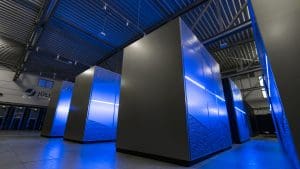
A landmark step in this evolution was the JUWELS supercomputer. Built as a modular HPC platform, JUWELS set high marks for performance, flexibility, and efficiency, becoming one of Europe’s foremost HPC systems. Its Booster module, in particular, paired GPU accelerators with traditional CPU resources, enabling highly scalable simulations for climate research, molecular dynamics, and particle physics, among others – and making JUWELS one of the first systems in Europe to support large-scale AI augmented workflows effectively. These capabilities helped position JUWELS as a bridge between classical HPC and the emerging demands of AI-driven computation.
JUPITER: Europe’s first exascale supercomputer
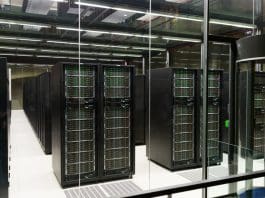
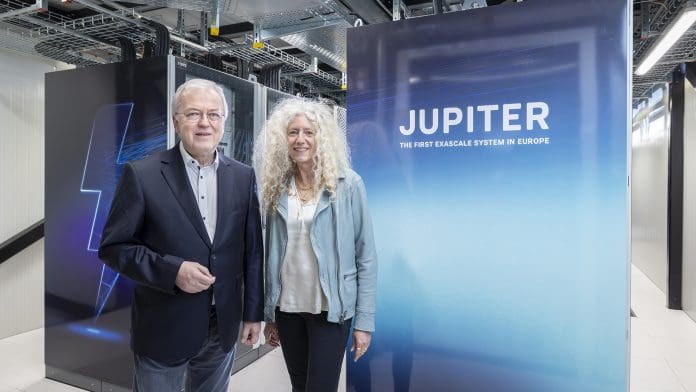
The centrepiece of JSC’s current strategy is JUPITER, Europe’s first exascale supercomputer – a system that is redefining scientific computing across the continent. Commissioned in 2024 and inaugurated with great media attention in 2025, JUPITER exceeds 1 ExaFLOP/s of sustained performance, making it not only Europe’s fastest supercomputer but also one of the most energy efficient in its class. Its heterogeneous architecture features superchips that tightly integrate CPU cores with GPU accelerators, enabling enormous versatility across workloads – from classical simulations to cutting-edge AI research.

“With JUPITER, we have reached a milestone in computing history,” said Professor Thomas Lippert, one of the two directors of the Jülich Supercomputing Centre. “But what truly matters is what it enables: a new era where high-performance computing becomes an agile platform for innovation in science and AI, letting researchers tackle questions that were previously out of reach.”
JUPITER’s fusion of power, scalability, and adaptability positions it as a key engine for next-generation science – advancing fields as diverse as climate modelling, materials design, and biomedical research.
The JUPITER AI Factory: Exascale for all
One of JSC’s most strategic innovations is the JUPITER AI Factory (JAIF) – an infrastructure layer that leverages JUPITER’s exascale capabilities to make them widely accessible. JAIF provides universities, research institutions, start-ups, SMEs, and industry partners with a collaborative platform to develop, scale, and deploy AI applications.
This approach reflects JSC’s long-standing commitment to open and collaborative HPC. Through JAIF, users can experiment with training and tuning large AI models, run data-intensive analytics, and integrate exascale computing into research and industrial workflows. By providing training and community support, JAIF helps foster a vibrant ecosystem that connects scientific discovery with practical innovation, strengthening Europe’s competitiveness in AI and data-driven research.
Quantum computing at JSC: JUNIQ and hybrid computing
While HPC remains JSC’s core mission, the JSC is actively expanding into quantum technologies. Central to this effort is JUNIQ – a multi-platform quantum computing infrastructure that brings together diverse hardware and software tools as well as user support for science and industry.
In late 2024, JSC added a 100-qubit quantum computer from Pasqal, now named JADE, to its quantum portfolio – a key milestone for JUNIQ and for hybrid classical quantum exploration. This system was officially inaugurated in 2025 and strengthens JSC’s ability to explore hybrid HPC quantum applications that may accelerate particular classes of problems, such as optimisation and materials discovery.

“Quantum computing at JSC is not a separate track,” said Professor Dr Kristel Michielsen, Director of the JSC and Head of JUNIQ. “We are exploring how it complements HPC. JUNIQ and systems like JADE allow us to experiment with hybrid approaches that can dramatically accelerate scientific discovery and open new computational pathways.”
By situating quantum systems alongside exascale infrastructure, JSC provides researchers with a continuum of computing paradigms – classical, AI-enhanced, and quantum – within a single integrated platform.
Milestones and global collaboration
JSC’s influence reaches far beyond its own machines. Its integration into European and international consortia – including the European High Performance Computing Joint Undertaking (EuroHPC JU) – ensures German and European researchers have access to world-class resources, while contributing expertise in scalable software frameworks, HPC architectures, and interdisciplinary research. Through these collaborations, JSC helps define the future of computational science for Europe and the world.
Connecting HPC, AI, and quantum to tackle grand challenges
As computational science evolves, JSC’s mission continues to be ambitious and future-oriented. The seamless integration of HPC, AI, and quantum technologies represents not just a technological frontier but a strategic one: an infrastructure ecosystem capable of addressing grand challenges – from climate change, sustainable energy, and advanced materials to public health and beyond.
JSC’s vision extends past standalone systems to integrated computational ecosystems: hybrid HPC-quantum workflows, shared platforms such as the JUPITER AI Factory, and a cross-sector collaborative community that spans borders and disciplines. HPC remains at the heart of this vision, with exascale computing – exemplified by Europe’s first exascale supercomputer, JUPITER – enabling science at scale, accelerating innovation, and charting new horizons in computational discovery. Through initiatives that bring quantum resources and classical supercomputing closer together, researchers can explore hybrid approaches to tackle complex problems and expand the reach of computational science – just as JSC set out to do from the very beginning.
Please note, this article will also appear in the 25th edition of our quarterly publication.
Please Note: This is a Commercial Profile

This work is licensed under Creative Commons Attribution-NonCommercial-NoDerivatives 4.0 International.