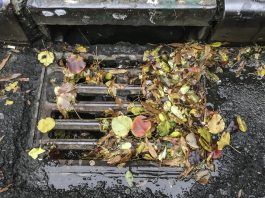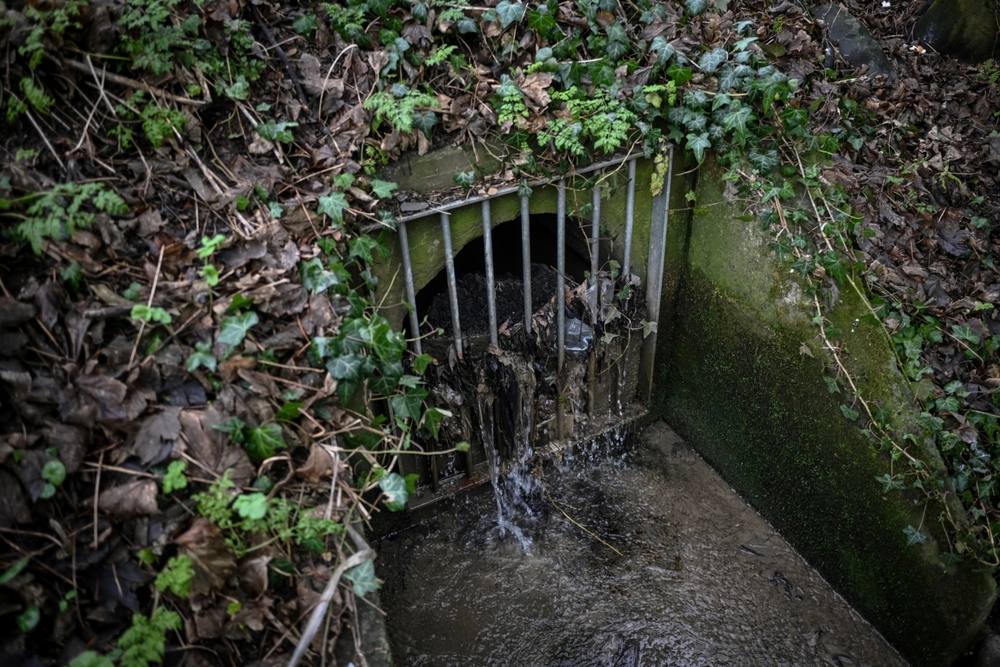
Urban stormwater runoff is increasingly recognised as one of the most complex — and underestimated — sources of diffuse pollution affecting our rivers, lakes, and coastal waters.
As cities grow denser and climate change intensifies rainfall events, pollutants that accumulate on roads, rooftops, and urban surfaces are more frequently washed into receiving waters. The consequences are far-reaching, impacting ecosystems, water quality, and public health.
While wastewater treatment has long been central to urban water management, stormwater runoff remains insufficiently addressed in many cities. The D4RUNOFF project set out to close this gap — moving from problem awareness to practical implementation.
Building on earlier discussions around why stormwater runoff matters, this contribution focuses on what happens when research meets reality: how solutions were tested under real urban conditions.
Testing solutions in real cities
In its final phase, D4RUNOFF concentrated on three European case study cities. Each site represented different urban, climatic, and institutional contexts, enabling the project to explore how runoff pollution behaves under varying conditions — and how different solutions perform in practice.
Understanding pollution dynamics
The first case study, Odense (Denmark), focused on high-resolution monitoring of stormwater pollution. By combining rainfall data, flow measurements, and detailed water quality sampling, the project revealed that pollutant concentrations vary significantly between storm events.
One key finding stood out: A small number of intense rainfall events can account for a large share of annual pollutant loads.
This reinforces the need for preventive approaches that reduce pollution at source, rather than relying only on downstream treatment.
Monitoring also revealed clear links between land use and pollutant profiles. Traffic-heavy areas and dense urban environments showed elevated levels of metals, hydrocarbons, and other contaminants of concern. These findings underline the importance of integrating runoff considerations into urban planning, where municipalities can influence surface materials, mobility patterns, and spatial design.
Nature-based solutions in practice
The second case study, Santander (Spain), tested integrated mitigation strategies that combined nature-based solutions (NbS) with conventional drainage infrastructure.
Measures were implemented to reduce runoff volumes and attenuate pollutant loads, such as:
- Infiltration areas
- Vegetated systems
- Controlled retention structures
The results were promising. Hybrid solutions delivered multiple benefits, including:
- Improved water quality
- Reduced pressure on drainage systems
- Urban cooling
- Enhanced public spaces
However, the study also showed that effectiveness depends on careful design and maintenance. Long-term performance is closely linked to operational practices and clear institutional responsibilities. This highlights that environmental performance alone is not enough – governance and maintenance planning are equally critical.
From technical feasibility to long-term implementation
The third case study, Pontedera (Italy), addressed operational feasibility and sustainability. Beyond environmental performance, D4RUNOFF assessed:
- Costs
- Maintenance requirements
- Organisational responsibilities
The findings were clear: even technically effective solutions can face implementation barriers if governance structures are unclear or if maintenance demands exceed municipal capacity.
Across all case studies, one consistent message emerged:
Urban runoff pollution cannot be solved through isolated technical measures alone. It requires an integrated approach combining monitoring, urban planning, infrastructure design, and governance.
Early integration of runoff considerations into urban development and renewal processes was identified as essential to prevent future pollution and avoid costly retrofitting.
Learning, replication and policy impact
D4RUNOFF also focused on transferability. Through workshops and Open Day events, insights from the case studies were shared with local stakeholders and other cities.
While the technical principles proved broadly transferable, solutions must be adapted to local climatic conditions, regulatory frameworks, and institutional capacities.
Stakeholder feedback highlighted practical concerns such as:
- Cost implications
- Regulatory acceptance
- Long-term operation
Addressing these concerns early in the planning process was identified as a key factor for successful uptake.
From local action to policy development
The project’s findings provide valuable evidence for policy development at multiple levels.
At the municipal level, D4RUNOFF demonstrates that existing planning and regulatory tools can be used more effectively to prevent runoff pollution — especially when supported by robust data and cross-sector collaboration.
At national and European levels, the results reinforce the need to recognise urban stormwater runoff as a distinct and significant pollution source within water and environmental policies.
From research to real impact
D4RUNOFF shows that managing urban stormwater pollution is not only a technical challenge – it is also a governance, planning, and societal challenge.
By testing solutions under real conditions, engaging stakeholders, and analysing implementation barriers, the project moves the conversation from research to real streets – offering practical pathways for cities aiming to become more resilient, sustainable, and water-sensitive.
By testing solutions under real-world conditions, D4RUNOFF bridges the gap between research and implementation. The project shows that research and innovation can support cities in moving from awareness to action, providing practical pathways to reduce pollution, enhance climate resilience, and protect aquatic ecosystems.
As cities across Europe and beyond face growing pressures from urbanisation and climate change, the lessons from D4RUNOFF are increasingly relevant. Stormwater runoff is not only an environmental challenge but also an opportunity to rethink urban water management in a more integrated and sustainable way.
Delivering actionable solutions for urban stormwater pollution
Together with the earlier article outlining why stormwater runoff matters, this contribution demonstrates how targeted research and innovation can deliver actionable solutions.
D4RUNOFF provides a clear example of how testing, learning, and adaptation in real urban environments can inform better policies and practices, helping cities move towards cleaner waters and more resilient urban systems.