High-capacity capture and emerging destruction technologies are redefining PFAS treatment for safer drinking water—yet the most difficult challenge lies in managing what these processes leave behind
Advanced PFAS treatment technologies increasingly pair high‑capacity capture with destructive steps to meet tightening drinking‑water limits. Granular activated carbon performs well for long‑chain PFAS, while anion exchange resins improve the removal of short‑chain compounds but create spent media or regenerant wastes.
Nanofiltration and reverse osmosis remove most PFAS but generate concentrated brines that require secure management. Destruction innovations include UV‑driven advanced oxidation, plasma, and boron‑doped diamond electrochemical reactors that cleave carbon–fluorine bonds. When does each PFAS treatment option perform best?
PFAS treatment options: Which works best?
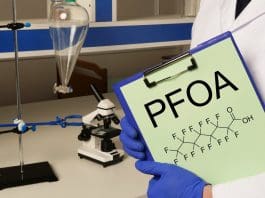
Granular Activated Carbon (GAC) fits best when water is characterised by long-chain PFAS such as PFOA and PFOS, where adsorption is strong; it is less suitable when short-chain PFAS drive risk. Anion exchange resins (AER) perform well when PFAS are primarily negatively charged and consistent, and single-use media can be economical where regeneration logistics are costly.
Reverse osmosis (RO) is preferred when broad removal is required across long- and short-chain compounds, accepting that 10–20% of flow becomes a concentrated waste stream. Foam fractionation suits scenarios that need simple, low-cost PFAS concentration for removal, especially as a front-end step, but it often requires downstream treatment for complete destruction. Plasma and supercritical water oxidation target destruction directly, best reserved for treating concentrates despite energy, scale, and byproduct constraints.
Measuring PFAS in water: Methods and detection limits
Although treatment performance ultimately depends on accurate characterisation, measuring PFAS in water typically requires combining targeted LC‑MS/MS—capable of quantifying known PFAS at ng/L levels—with broader screening tools such as the total oxidisable precursors (TOP) assay and total/extractable organic fluorine measurements to account for unknowns. Targeted LC-MS/MS provides compound-specific concentrations for regulated analytes, supports trend analysis, and enables comparison to health advisories, but it can miss precursor compounds and novel structures not included in the method list.
The TOP assay addresses this gap by chemically oxidising precursors into terminal perfluoroalkyl acids that can then be quantified, revealing “hidden” PFAS mass. Total or extractable organic fluorine provides a mass-balance perspective on overall organofluorine, but it cannot distinguish PFAS from other fluorinated substances. Pairing targeted and total approaches improves confidence in evaluating detection limits and overall PFAS burden at sites.
PFAS capture with adsorption: GAC, IX, and new media
Adsorption technologies anchor many PFAS treatment trains by physically or electrostatically capturing contaminants onto a solid medium. Granular Activated Carbon (GAC) remains a common choice because it can achieve over 90% removal for long-chain PFAS, where hydrophobic interactions favour uptake. Its limitation is its reduced affinity for short-chain PFAS, which can breakthrough earlier and require more frequent media replacement or polishing steps.
In contrast, ion exchange resins are engineered to bind negatively charged PFAS, often delivering high efficiencies for both short- and long-chain compounds. This selectivity can improve performance in challenging matrices, but it concentrates contaminants into spent resin or regenerant streams that require downstream handling.
To close remaining gaps, developers are advancing functionalised polymers and hybrid nano-adsorbents designed to capture a broader PFAS spectrum. Early results indicate higher capacities and faster kinetics than traditional media across diverse water chemistries and conditions.
PFAS removal with membranes: NF/RO and concentrate control
Membrane separation provides a complementary route to PFAS control when adsorption media approach capacity or short-chain compounds break through. Nanofiltration (NF) and reverse osmosis (RO) are the leading membrane technologies used for polishing, often achieving removals exceeding 90% for both long- and short-chain PFAS.
RO is typically the most robust option, separating contaminants by size and charge, but it often produces a 10–20% waste concentrate stream with elevated PFAS levels. NF can also reject PFAS via size and charge effects and may offer lower energy demand in suitable water matrices, though performance is more application-specific than that of RO.
System design thus hinges on concentrated control. Without careful handling, the concentrated waste can reintroduce PFAS to the environment. Practitioners evaluate secure disposal pathways, minimise concentrate volume, and integrate membranes with upstream treatment to reduce fouling and stabilise performance over time.
PFAS destruction in water: AOPs and plasma
Push beyond separation, and PFAS control shifts from capture to true destruction in the water phase using advanced oxidation processes (AOPs) and plasma-based treatments. In AOPs, strong oxidants such as ozone or hydrogen peroxide are paired with UV light to generate highly reactive species that attack PFAS, with studies reporting destruction efficiencies exceeding 90% for multiple PFAS types. Performance depends on water chemistry, contact time, and oxidant dose, and incomplete reactions can create transformation products that require monitoring.
Plasma treatment applies high-energy electrical discharges to water, producing short-lived radicals and energetic conditions capable of cleaving carbon–fluorine bonds; under controlled settings, near-complete destruction has been demonstrated. However, both approaches are constrained by high energy demand, the need to manage byproducts, and uncertainty around cost-effective scale-up for municipal use. Continued innovation in AOP chemistries and plasma reactors is central to improving reliability and lifecycle cost.
Electrochemical PFAS destruction: New reactor designs
Beyond UV/oxidant AOPs and plasma, electrochemical reactor designs are emerging that destroy PFAS directly in water while aiming to control energy use and byproduct formation.
WSP’s PFASER technology applies boron-doped diamond (BDD) electrodes in a modular electro-oxidation system engineered for scalable, on-site treatment. BDD’s chemical stability supports long runtimes; reported continuous operation exceeding six years suggests durability suitable for permanent installations. Reactor design is also increasingly tied to compliance management. PFASER integrates control of perchlorate, a potential electrochemical oxidation byproduct, to meet stringent international water-quality limits while advancing PFAS destruction.
In parallel, Tetra Tech is developing approaches that emphasise strong bond cleavage with limited additives. Its mobile electron beam (eBeam) system uses high-energy electrons to break carbon–fluorine bonds without chemical dosing, illustrating a transportable platform concept. Across these innovations, designers prioritise destruction performance, modular deployment, and minimised secondary contaminants.
Emerging PFAS destruction: Bioremediation and enzymes
While most PFAS treatment has relied on physical separation or energy-intensive destruction, bioremediation and enzyme-driven approaches are emerging as potential routes to degrade these persistent compounds in situ. Bio-based strategies centre on identifying microorganisms with measurable PFAS-transforming activity and on engineering enzymes that can attack strong carbon–fluorine bonds, an effort that remains early-stage but increasingly active.
Recent studies reporting microbial degradation of select PFAS support the premise that biological pathways may be harnessed for contaminated soils, sediments, or groundwater where conventional treatments are difficult to deploy. Enzymatic treatments are also being evaluated as a more sustainable destruction option, since enzymes can operate at milder temperatures and pH values than many chemical processes.
Parallel work on mechanochemical degradation, which applies mechanical force to promote PFAS breakdown in solids, highlights broader interest in low-input destruction concepts, even though performance limitations persist. Ongoing innovation aims to improve reaction rates, specificity, and scalability across diverse PFAS mixtures.
PFAS treatment trains: Cost, waste, and performance
As utilities confront tighter PFAS limits and more complex contaminant mixtures, treatment trains that combine adsorption, membrane separation, and destructive steps such as electrochemical oxidation are increasingly used to balance removal efficiency, operating practicality, and lifecycle cost.
In laboratory studies, integrated PFAS treatment systems often exceed 90% removal, but field outcomes depend on influent variability, media exhaustion, and membrane fouling.
Cost tradeoffs are central. Advanced trains may require higher capital spending, yet better process control and longer run times can lower long-term operating costs. Waste management can dominate lifecycle impacts: ion exchange and some membrane processes generate concentrated brines or spent media that must be treated, destroyed, or disposed of without transferring PFAS to another pathway.
Robust performance metrics consequently track removal of both long-chain and short-chain PFAS, residual precursors, and breakthrough behaviour over time. Regulatory compliance also pushes precise analytics to confirm that known and emerging PFAS remain below drinking-water standards throughout the train.