BioLargo has developed a next-generation solution which delivers cost savings, energy efficiency, and non-detect PFAS removal for modern water systems.
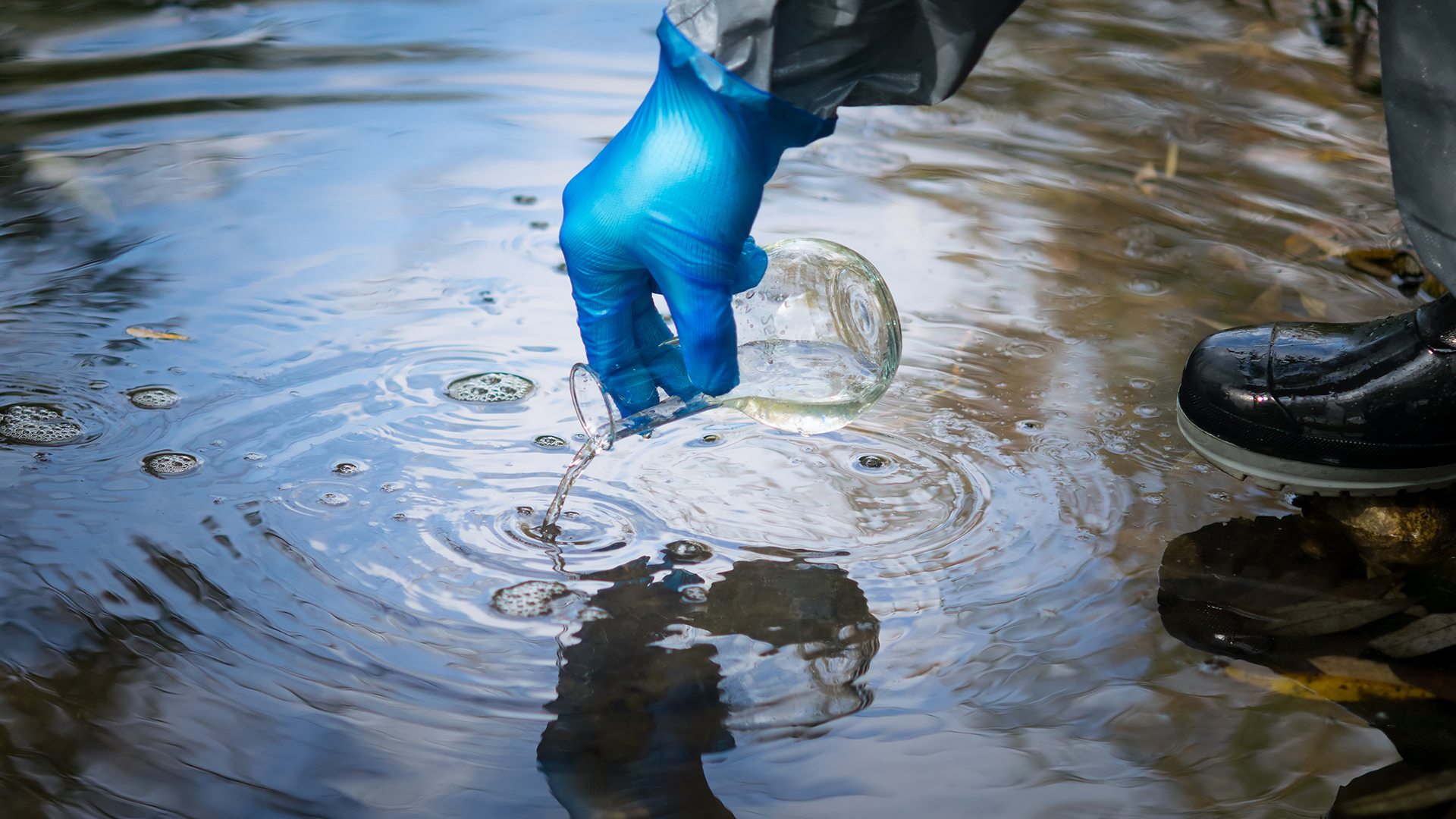
Per- and polyfluoroalkyl substances (PFAS), often called ‘forever chemicals’, have become one of the most urgent challenges in environmental protection and regulatory compliance. These synthetic compounds are widely used in industrial processes and consumer products, ranging from firefighting foams and textiles to food packaging and electronics, and their stability, persistence, and bioaccumulative nature have led to widespread contamination of groundwater, surface water, and industrial effluents. Studies have shown that, even at low concentrations, PFAS are linked to adverse health outcomes including cancer, liver damage, immune system suppression, and developmental effects.
As government agencies tighten limits on PFAS concentrations in drinking water – some now as low as four parts per trillion – the need for scalable, cost-effective treatment technologies has never been greater. Conventional approaches – such as granular activated carbon (GAC), ion exchange (IX), and reverse osmosis (RO) – can remove PFAS, but they face significant limitations, including poor performance on short-chain and ultra-short-chain PFAS, high lifecycle costs, and the generation of large volumes of PFAS-laden secondary waste streams that require disposal.
Enter BioLargo’s Aqueous Electrostatic Concentrator (AEC)
BioLargo Equipment Solutions & Technologies has developed the Aqueous Electrostatic Concentrator (AEC) – a next-generation PFAS treatment system that breaks new ground in efficiency, affordability, and sustainability. The AEC uses a patented electrostatic separation process to capture and concentrate PFAS molecules from aqueous waste streams, including groundwater and surface water, RO concentrate, wastewater, and leachate. By exploiting the polarity of the PFAS, the system pulls contaminants across a selective membrane, immobilising them while allowing non-target ions and neutral molecules to pass through. A secondary destruction step (typically completed offsite through a maintenance contract) destroys the PFAS, turning them into inert salts.
The result is greater than 99% PFAS removal in continuous flow systems, with energy costs as low as 30 cents per 1,000 gallons. Recent breakthroughs have further reduced energy use by more than 90% compared to earlier generations, enabling utilities to treat water at a fraction of the cost of reverse osmosis or carbon filtration with only a fraction of the waste.
Key advantages of the AEC
- Energy efficiency: The latest AEC modules cut the system’s energy use by up to 90%, reducing monthly costs dramatically.
- Lifecycle cost savings: Compared to carbon and ion exchange, the AEC offers up to 80% total lifecycle cost savings.
- Minimal waste generation: Produces 1/40000th the waste of a traditional GAC system.
- Non-detect removal: Capable of achieving below 1 part per trillion PFAS removal.
- Modular design: Compact and scalable for diverse facility needs.
Full-spectrum PFAS removal
BioLargo’s AEC technology has proven effective across the entire spectrum of PFAS compounds — long-chain, short-chain, and even ultra-short-chain molecules such as trifluoroacetic acid (TFA). While conventional systems often struggle with short-chain and ultra-short-chain PFAS due to their high solubility and mobility, the AEC consistently achieves greater than 99% removal across all classes, delivering non-detect results that meet the most stringent regulatory standards. Importantly, the first commercial AEC unit has already been deployed in Stockholm, New Jersey, to treat municipal drinking water, marking a milestone in translating laboratory success into real-world impact.
Regulatory and market context
BioLargo’s AEC is uniquely positioned to meet the ever-changing regulatory landscape around the world. Its combination of minimal waste, broad spectrum, and non-detect removal performance makes it a compelling alternative to incumbent technologies.
Applications across sectors include:
- Municipal drinking water.
- Industrial wastewater.
- Groundwater remediation.
- Reuse.
- Municipal and industrial landfill leachate.
Transformational impact
The AEC represents more than just a technical innovation – it is a transformative solution for the water industry. By combining breakthrough energy efficiency with unmatched lifecycle cost savings, BioLargo has created a platform that enables utilities and industries to achieve compliance without sacrificing financial sustainability.
Randall Moore, President of BioLargo Engineering, summarised: “We are solving PFAS treatment under the toughest field conditions. This breakthrough proves that scalable, energy-efficient PFAS removal is not only achievable – it’s ready for deployment at scale.”
Tonya Chandler, President of BioLargo Equipment Solutions & Technologies, added: “Our business model delivers costs that utilities can budget and forecast with confidence – backed by guaranteed performance. With our AEC system, facilities treat water at a fraction of the traditional cost, without ever sacrificing results. And because the design is modular, we size each system to fit the exact needs of the site – efficiently, affordably, and with flexibility built in for future growth.”
Conclusion
PFAS contamination is one of the defining environmental challenges of our time. Conventional treatment technologies have struggled to balance performance with affordability, leaving utilities and industries burdened with high costs and complex waste streams. BioLargo’s AEC changes the equation.
With non-detect PFAS removal, breakthrough energy efficiency, and up to 80% lifecycle cost savings, the AEC offers a sustainable, scalable, and affordable path forward. As regulations tighten and public awareness grows, BioLargo’s AEC is poised to become the gold standard in PFAS treatment – delivering clean water, regulatory compliance, and financial sustainability for communities and industries alike.