In a move that reinforces Canada’s leadership in scientific research, the Canadian Government has strengthened its partnership with CERN through a newly signed statement of intent.
This pivotal agreement will drive international collaboration on advanced technologies, large-scale research infrastructure, and the next generation of particle physics exploration.
Announced by Mélanie Joly, Minister of Industry and Economic Development Canada for Quebec Regions, this renewed commitment highlights Canada’s dedication to global scientific cooperation.
Joly explained: “Canada’s scientific community has long been at the forefront of particle physics research.
“This collaboration with CERN will further diversify our international partnerships and strengthen Canada’s position as a global leader in science and innovation.
“By working with the world’s leading physics research facility, the government is creating opportunities for Canadian researchers to contribute to groundbreaking discoveries that will advance our understanding of the universe and drive technological innovation.”
A strategic leap toward the Future Circular Collider
Signed in March by Canada’s Deputy Minister of Innovation, Science and Economic Development, Philip Jennings, and CERN Director-General Fabiola Gianotti, the agreement sets the stage for Canadian involvement in future major projects, including CERN’s proposed Future Circular Collider (FCC).
The FCC, envisioned as a successor to the iconic Large Hadron Collider, aims to push the boundaries of particle physics with unprecedented energy and precision.
Canada has expressed its intent to participate in the FCC’s construction and experimental programmes, pending necessary approvals.
Building on a legacy of scientific excellence
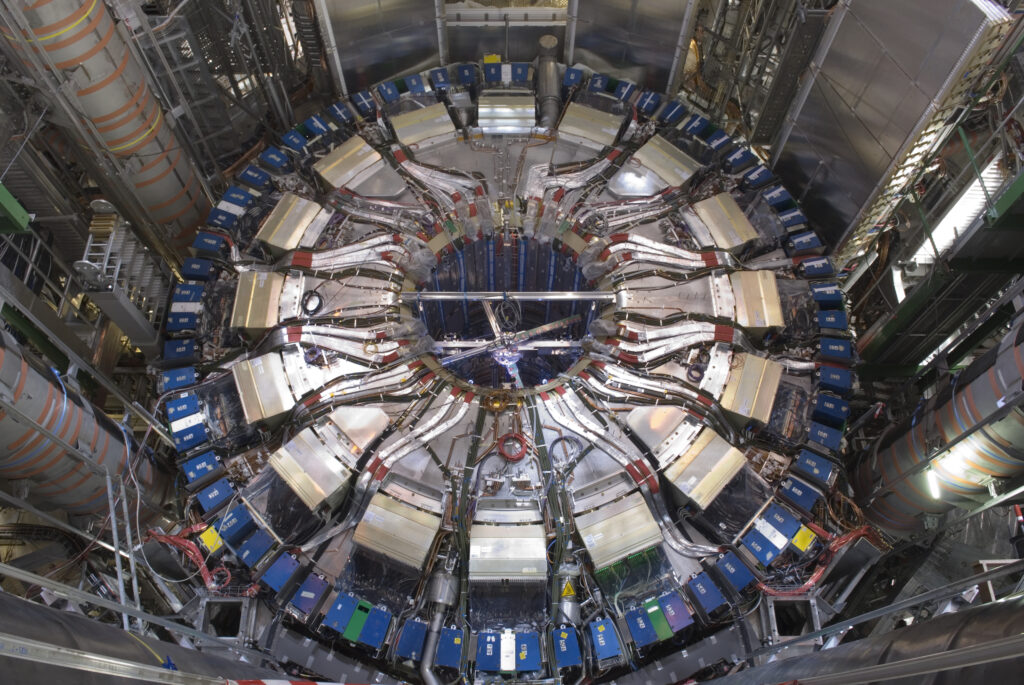
CERN, located in Geneva, Switzerland, is a global hub for fundamental physics research.
Canada’s contribution to CERN’s groundbreaking work has long been facilitated through TRIUMF, the country’s national particle accelerator centre.
By supplying cutting-edge equipment, world-class talent, and deep scientific expertise, Canada continues to shape discoveries that unravel the mysteries of the Universe.
Nigel Smith, Executive Director and CEO of TRIUMF added: “Global scientific endeavours like CERN and the Large Hadron Collider are major drivers of technological progress and have positive impacts on our world.
“Through TRIUMF’s international connections, Canadian researchers are tackling emerging global issues, improving health outcomes and driving innovations that benefit all.
“With this statement of intent, Canada is showing its support for TRIUMF and the country’s national major research facilities, and for the academic and industrial research communities they support.”
Innovation beyond the collider
The partnership goes beyond infrastructure. Canada and CERN are also prioritising the joint development of emerging technologies such as artificial intelligence and quantum computing.
These tools are expected to revolutionise data analysis in particle physics and have far-reaching applications across multiple industries.
By aligning with CERN, Canada ensures its researchers remain at the forefront of discovery, contributing to knowledge that drives innovation, economic growth, and solutions to the world’s most pressing challenges.
Canada and CERN continue to shape the future of science – together, unlocking the Universe’s secrets, one breakthrough at a time.