Measuring methane when cows don’t live in the lab: Agscent’s portable methane monitoring brings lab-grade accuracy to the paddock.
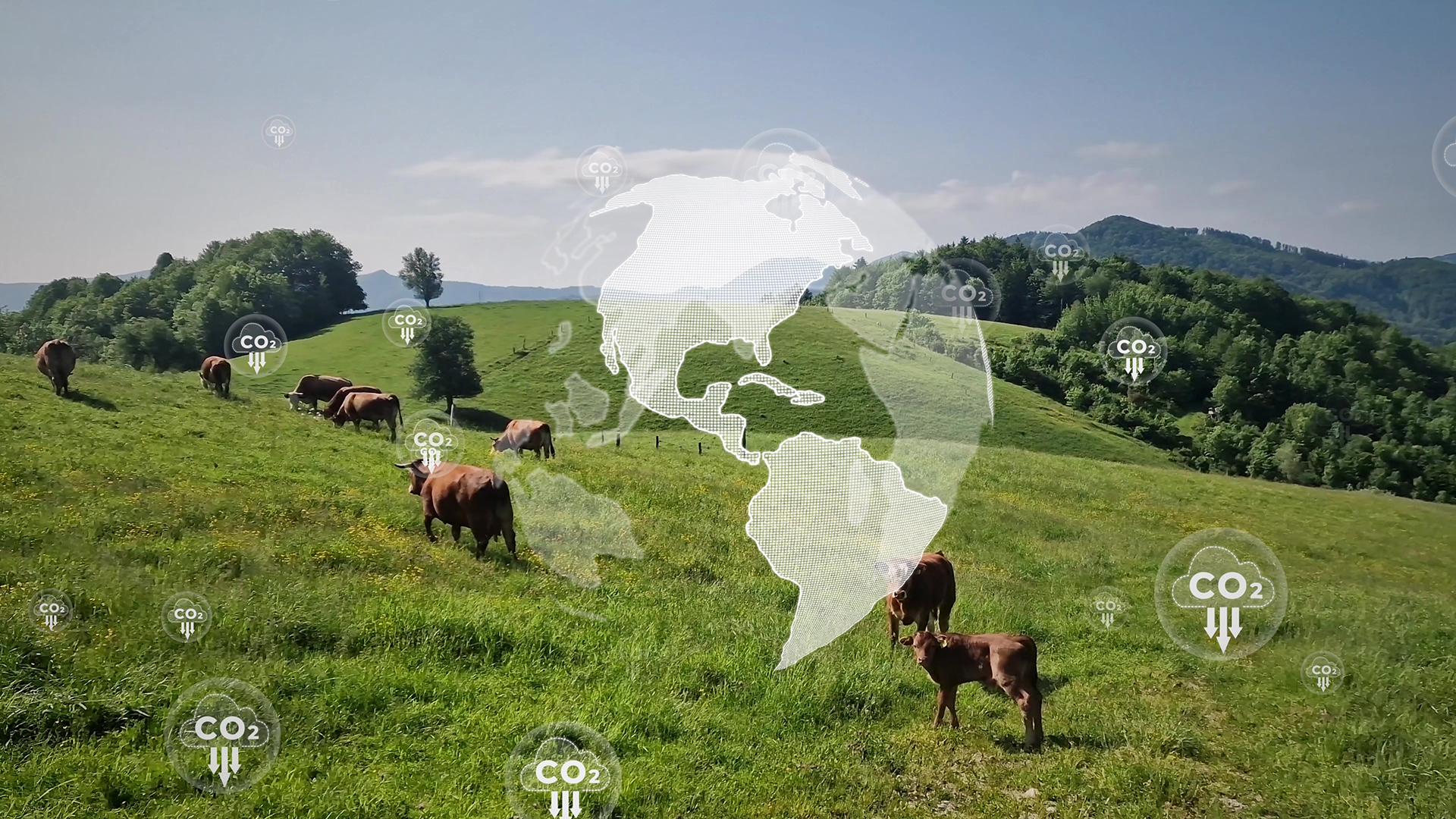
Livestock producers and researchers face a critical problem: accurately measuring methane emissions and feed efficiency when cattle roam paddocks rather than standing in research chambers or under research conditions. Traditional lab methods have limited real-world application, yet pressure to reduce methane is mounting. Global commitments to cut emissions by 30%, combined with buyer pledges like McDonald’s 31% reduction target, demand practical on-farm tools to prove environmental performance and capture efficiency gains.
Enteric methane accounts for over half of a dairy farm’s greenhouse gas footprint, with every cow losing 6–12% of feed energy as methane, equivalent to 25–40 lost grazing days per lactating animal annually. Poor pasture digestibility compounds this, making efficient measurement and mitigation critical for both profitability and sustainability.
From lab to paddock: Agscent’s transformation
Agscent’s portable methane monitoring brings lab-grade accuracy to the paddock. Pairing the Agscent Air GHG system with Optiweigh’s in-paddock weighing or integration of the Agscent Air GHG 2100 into existing infrastructure like robotic dairies enables producers to capture real-time methane emissions and liveweight gain without disrupting operations. This bridges the gap between scientific research and commercial farming, validating feed additives, genetic programmes, and management practices where they truly matter.
Measuring feed additive success when cows don’t live in the lab
Feed companies need proof that their products deliver results beyond controlled settings. Ranchers and dairy farmers need accurate measurements for proof of productivity gains, environmental reporting and investment justification. The Agscent Air GHG systems are being used to bridge this gap.
- Queensland, Australia, Feed Yard Trial: The Agscent Air GHG system in a South Burnett feedlot documented approximately 50% reduction in emissions after additive inclusion.
- Great Plains USA Feed Yard Trial: A major retailer developing premium low-emission beef sponsored this trial, achieving 50% emission reduction and leading to expanded US trials, demonstrating how verified reductions access premium markets.
- NSW, Australia, Grazing Trial: Using the Agscent GHG 2100, this study achieved approximately 90% emission reduction after additive inclusion, convincing the customer to continue additive development.
Bringing measurement to the cow: Seamless robotic dairy integration
Modern dairies increasingly adopt robotic milking systems where cows choose to be milked 2-3 times daily. Agscent transforms these routine visits into high-frequency methane measurement opportunities without additional labour or animal handling.
Key advantages:
- Silent, automatic operation undetected by cows.
- No behavioural changes required.
- High herd coverage with 2-3 daily data points per cow.
- Integration with existing herd management software.
In partnership with a Japanese company, Agscent has integrated Agscent Air: GHG 2100 units into robotic dairies, allowing farmers to track feed additive performance and individual performance with minimal operational change.
Measuring methane for genetic decisions when cows roam free
Genetic selection provides permanent, cost-free emissions reductions across generations. Coota Park Blue-E, a leading Australian breeding programme with 25 years of feed efficiency expertise, collaborated with Agscent to investigate relationships between genetics, feed efficiency, and methane emissions under natural grazing. Using Agscent Air GHG X Optiweigh technology, real-time methane and weight data from 52 cattle (90% of the herd) revealed strong correlations between average methane concentration and both Dry Matter Intake (r = 0.43, p < 0.02) and Residual Feed Intake (r = 0.33, p < 0.05).
This breeding approach offers:
- Permanent genetic improvements passed to offspring.
- Feed efficiency increases across entire herds over time.
- Environmental impact reduction without ongoing costs.
- Carbon credit opportunities from verified emission reductions.
The Agscent Air competitive edge
Agscent Air GHG delivers lab precision in field conditions with:
- Consistent 0.59-0.91 correlation with established methods.
- Gold standard validation against chamber measurements.
- Superior field-based performance to other methane systems.
- Easy integration for real-world farm conditions.
- Additional productivity measures when incorporated into the Optiweigh system.
The producer advantage
Agscent’s technology offers producers competitive advantages through:
- Optimised feed efficiency – Identify high-performing animals and feeding strategies converting more feed into weight gain.
- Improved herd productivity – Track growth and emissions in real time to inform management decisions, increasing output per hectare.
- Maximised ROI on feed additives – Validate that supplements deliver measurable gains in emission reduction and weight performance before committing to ongoing costs.
- Data-driven profitability – Combine methane data with liveweight and efficiency metrics to reveal which animals and practices drive the bottom line.
When cows won’t stay in the lab, Agscent brings accurate methane measurement technology to the paddock, transforming environmental stewardship into ranch and dairy productivity and profitability.
Please note, this article will also appear in our Animal Health Special Focus publication.