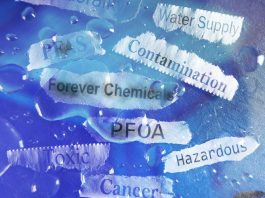
Per- and polyfluoroalkyl substances (PFAS) – dubbed “forever chemicals” for their persistence in the environment – represent one of the most pressing challenges facing the water industry today.
These synthetic compounds, once celebrated for their non-stick and water-repellent properties, have been identified as a persistent contaminant in raw water sources across England and Wales.
The Drinking Water Inspectorate (DWI), working with leading researchers at Cranfield University, has completed an efficacy study for the removal of PFAS in drinking water using conventional treatment methods. The literature review published previously demonstrates the vast amount of research being undertaken around PFAS removal technologies.
Understanding the PFAS threat
PFAS compounds present unique difficulties due to their exceptional chemical stability. The strong carbon-fluorine bond that makes them useful in firefighting foams, non-stick cookware, and stain-resistant fabrics also makes them persistent in the environment.
Once released, they accumulate in water bodies and can persist indefinitely. What makes this particularly challenging is the sheer diversity of PFAS compounds – there are thousands of different variations, each with distinct properties that affect how they can be removed from water.
In England and Wales’ water sources, 48 different PFAS compounds have been detected, ranging from short-chain molecules like perfluoro-butanoic acid (PFBA) to longer-chain compounds like perfluoro-octane-sulfonic acid (PFOS). This diversity demands a strategically designed treatment process based on a risk-based approach that incorporates a clear understanding of the raw water to be treated.
Reducing contamination risk
The DWI’s research focused on understanding how different England and Wales water sources – groundwater, upland surface water, and lowland surface water – respond to various treatment technologies.
This approach recognises that water quality significantly influences treatment effectiveness, a factor often overlooked in international studies.
The research team evaluated six major treatment approaches: granular activated carbon (GAC) adsorption, surface-modified clay (SMC) adsorption, ion exchange (IEX), membrane filtration, advanced oxidation processes, and coagulation. Each technology was tested against fifteen different PFAS compounds, providing unprecedented insight into treatment effectiveness.
Key findings revealed that longer-chain PFAS compounds are generally easier to remove than shorter-chain variants. This is crucial because shorter-chain PFAS, particularly four-carbon compounds like perfluoro-butanoic acid (PFBA), proved exceptionally difficult to treat using conventional methods. The research demonstrated that PFBA broke through treatment systems almost immediately, highlighting the need for a strategic approach when dealing with PFAS contamination. Most water treatment processes require coagulation and filtration as part of the standard process.
DWI’s innovation in eradicating PFAS in drinking water
The DWI’s systematic approach has identified four technologies with the greatest potential for full-scale implementation: advanced ion exchange resins, membrane filtration, granular activated carbon, and novel surface-modified clay materials.
Ion exchange technology emerged as particularly promising for long-term PFAS removal. The research demonstrated that specialised PFAS-selective resins achieved sustained removal of most longer-chain compounds over extended operational periods, though shorter-chain compounds like PFBA and PFBS remained challenging across all treatment methods tested.
However, the research highlighted important economic considerations, as frequent media replacement and/or regeneration cycles may be required to maintain effective treatment, particularly when dealing with diverse PFAS contamination profiles.
Membrane technology using nanofiltration or reverse osmosis showed remarkable versatility. The research achieved over 90% removal for most PFAS compounds and over 80% removal even for problematic short-chain variants. Importantly, nanofiltration requires lower operational pressures than reverse osmosis, making it more economically viable for widespread deployment.
Perhaps most significantly, the research revealed that integrated treatment approaches could address individual technology limitations. The study demonstrated that membrane technologies showed “overall better removal of varying PFAS with fewer constraints and selectivity issues” compared to adsorption and ion exchange technologies when used individually.”
However, the research noted that “when used in collaboration, these technologies can be an effective treatment process for the removal of PFAS compounds.”
The pilot-scale studies, completed in April 2025, provided crucial real-world validation. Long-chain PFAS compounds were consistently removed more efficiently than short-chain variants, with increased selectivity for sulphonated PFAS over carboxylic acid compounds. The universal applicability of nanofiltration membranes was confirmed, representing a robust option for waters with diverse PFAS contamination profiles, though the research emphasised that cost implications for capital and operational expenditure require significant consideration for any proposed treatment installation.
Engineering solutions for implementation
The research provides detailed cost analysis for different treatment scales, from small rural supplies (3.8 megalitres per day) to major urban systems (380 megalitres per day). Capital expenditure ranges from £1.2 million for small ion exchange systems to £57.9 million for large membrane installations, with corresponding operational costs reflecting the complexity and intensity of each treatment approach.
Critically, the research addresses waste management challenges. PFAS removal technologies concentrate contaminants rather than destroying them, creating waste streams that require careful handling.
The study found that conventional coagulation processes, while not effective for primary PFAS removal, can transfer significant PFAS concentrations to water treatment sludge, influencing disposal options and management strategies. This again highlights the need for a strategic approach when dealing with PFAS contamination.
Looking forward
The DWI’s research represents a paradigm shift from one-size-fits-all solutions to tailored approaches based on specific water characteristics and PFAS profiles. This precision approach recognises that effective PFAS management requires an understanding of local conditions and implementing appropriate technology combinations.
The findings will inform regulatory approaches and guide water companies in selecting appropriate treatment technologies. With PFAS regulations continuing to evolve globally, this research positions England and Wales at the forefront of practical, evidence-based solutions to one of the water industry’s most challenging problems.
The research also highlights the importance of continued innovation. While current technologies can address many PFAS compounds effectively, the persistence of short-chain PFAS challenges and the ongoing development of new PFAS compounds mean the battle against forever chemicals requires sustained scientific effort.
As water treatment professionals worldwide grapple with PFAS contamination, the DWI’s comprehensive evaluation provides a roadmap for effective intervention. By combining rigorous science with practical engineering solutions, this research demonstrates that even the most persistent environmental contaminants can be addressed through systematic innovation and targeted technology deployment.
The fight against forever chemicals is far from over, but thanks to the DWI’s groundbreaking research, water treatment professionals now have the tools and knowledge needed to protect public health while managing the technical and economic challenges these persistent compounds present.