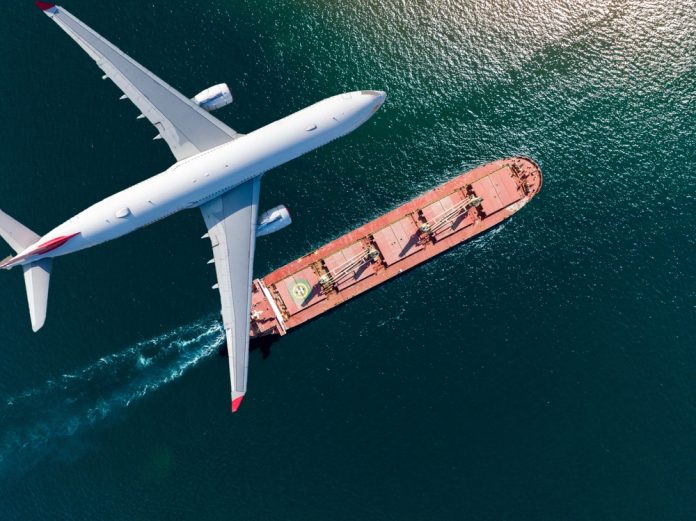
The European Commission has launched the Sustainable Transport Investment Plan (STIP), a comprehensive roadmap designed to scale up the use of renewable and low-carbon fuel in aviation and waterborne transport.
The plan, unveiled under the EU’s Clean Industrial Deal and Competitiveness Compass, aims to close the investment gap in sustainable fuel production and align the transport sector with Europe’s goal of climate neutrality by 2050.
With an estimated €100 billion needed by 2035, the initiative aims to attract both public and private capital to develop 20 million tonnes of sustainable fuels, comprising 13.2 million tonnes of biofuels and 6.8 million tonnes of e-fuels, to meet the targets of the ReFuelEU Aviation and FuelEU Maritime regulations.
Unified investment across hard-to-decarbonise sectors
The Commission’s plan delivers, for the first time, a single framework for mobilising investments across two of the hardest-to-decarbonise sectors.
The Sustainable Transport Investment Plan aims to remove bottlenecks, stabilise policy signals, and support market growth through a combination of regulatory assurance and financial instruments.
The EU will deploy at least €2.9bn through 2027 to spur private co-investment, combining support from the Innovation Fund, Horizon Europe, InvestEU, and the European Hydrogen Bank. InvestEU alone will mobilise at least €2 billion in financing for low-carbon fuel projects by 2027.
The Commission also plans to allocate €300m through the Hydrogen Bank this year to accelerate the development of hydrogen-based aviation and maritime fuels, while Horizon Europe will channel €133m into research and innovation projects.
Maintaining Europe’s leadership in low-carbon fuel production
The Sustainable Transport Investment Plan forms part of a broader industrial and competitiveness strategy designed to reinforce Europe’s energy independence and maintain its global leadership in clean technologies.
Europe already holds a majority share of global intellectual property in renewable and low-carbon fuel production, and the Commission views domestic scaling as central to safeguarding both jobs and industrial know-how.
Beyond the economic dimension, the STIP also aims to alleviate regulatory burdens for airlines and shipping operators, allowing them to redirect resources toward innovation and operational efficiency.
The plan’s international component will deepen cooperation with global partners on sustainable fuel development while ensuring a level playing field for EU producers.
Building on other clean technology initiatives
The STIP builds on two major EU legislative frameworks adopted earlier this year: ReFuelEU Aviation, which mandates minimum shares of sustainable aviation fuels at EU airports, and FuelEU Maritime, which sets greenhouse-gas intensity limits for maritime fuel suppliers.
Together, these measures will drive market demand for cleaner fuels across supply chains, from feedstock development to distribution infrastructure, helping Europe move closer to its 2030 emissions-reduction targets.
A strategic step towards competitive decarbonisation
Commissioner for Sustainable Transport and Tourism Apostolos Tzitzikostas framed the initiative as both an environmental and economic imperative.
“Our Sustainable Transport Investment Plan is a decisive step towards a sustainable future. It’s not just about cutting emissions – it’s about building a stronger, more competitive and resilient Europe that leads in sustainable transport,” he explained.
As Europe enters a decisive decade for decarbonisation, the STIP’s success will hinge on collaboration among Member States, industry, and financiers.
The stakes extend far beyond aviation and shipping. By anchoring investment confidence in the clean transport transition, the EU is laying the groundwork for a broader green industrial renewal – one that could define its global competitiveness in the decades ahead.