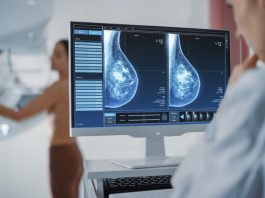
A study from the London School of Hygiene and Tropical Medicine reveals that just one in five women’s cancers are diagnosed at an early stage in low- and middle-income countries (LMICs).
Women’s cancers, including breast and cervical cancer, have higher early diagnosis rates in high-income countries (HICs), at 1 in 3.
For ovarian cancer, the proportion of women diagnosed with early-stage disease was generally lower than 20% (one in five) worldwide, although the situation remains slightly worse for women in LMICs.
The study, which looked at the three most common types of cancer in women, found variations in the stage of disease at diagnosis, the type of treatment, and the extent to which treatment was consistent with international guidelines.
Part of the VENUSCANCER project, embedded within the CONCORD programme for global surveillance of cancer survival, the study provides the first global picture of pathways to care, showing crucial evidence to support initiatives aimed at improving cancer control worldwide.
Women in LMICs are being diagnosed too late
Despite less inequality in surgery for women with cancer, the researchers found that too many women, especially in LMICs, are not being diagnosed until the disease has become too advanced.
The proportion of women whose cancer was detected at an early stage was 40% or higher in HICs for cervical or breast cancer, but much lower in LMICs, at below 20% for all three cancers, apart from Cuba (30% for breast) and Russia (36% for cervix and 27% for ovary).
These differences mean that women’s chances of survival in most LMICs will be lower than in HICs.
Metastatic breast cancers (where the cancer has spread from its original site to another part of the body) accounted for less than 10% in most HICs but were more frequent in LMICs (range 2-44%). The rate of advanced cervical cancers was lower than 15% in most countries worldwide.
Ovarian cancer is most commonly diagnosed at a late stage
Ovarian cancers were still mostly diagnosed at an advanced stage. Ovarian cancer is often described as the “silent killer” because it produces vague symptoms (abdominal pain or swelling) and can go undetected for a long time, leading to late-stage diagnosis.
Treatment for early-stage women’s cancers was more consistent
Data from more than 275,000 women in 39 countries revealed that surgery was generally offered to women with early-stage cancer in most countries, although not necessarily consistent with international guidelines.
When it came to treatment for the three cancers, surgery was offered to 78% of women in HICs and 56% of women in LMICs, but initial treatment for early-stage tumours was more often consistent with clinical guidelines for cervical and ovarian cancer than for breast cancer.
Consistent with clinical guidelines, women with early-stage breast cancer were treated with breast-conserving surgery plus radiotherapy (67-78%) in most European countries. The proportion was lower in Canada (60%) and the USA (53%).
By contrast, in LMICs, 30-70% of women with early-stage breast cancer were treated with mastectomy. However, mastectomy was also common in the USA, Canada, Estonia, the Netherlands, and Portugal.
Informing global policy on cancer care and control
Professor Claudia Allemani, Professor of Global Public Health at the London School of Hygiene & Tropical Medicine, stated: “This study was a major undertaking, creating the largest and most detailed global population-based database for three of the most common cancers in women to date, including data on stage, staging procedures, treatment, and biomarkers.
“VENUSCANCER offers the first real-world picture of patterns of care and consistency of treatment with clinical guidelines, on a global scale.”
She added: “Evidence from this study should help to inform global policy on cancer control, such as WHO’s Global Breast Cancer Initiative and Cervical Cancer Elimination Initiative.”
Following of international guidelines must be improved
Overall, the study revealed variation in the extent to which countries followed international clinical guidelines.
“This suggests that more needs to be done to tailor internationally agreed recommendations to local needs and resources, to simplify them, and to make them available in local languages,” said Dr Veronica Di Carlo, Research Fellow in the Cancer Survival Group at LSHTM.
“Women everywhere need to be able to discuss their treatment with medical professionals and make decisions in the knowledge that they can access the best available options according to recommended guidelines.”