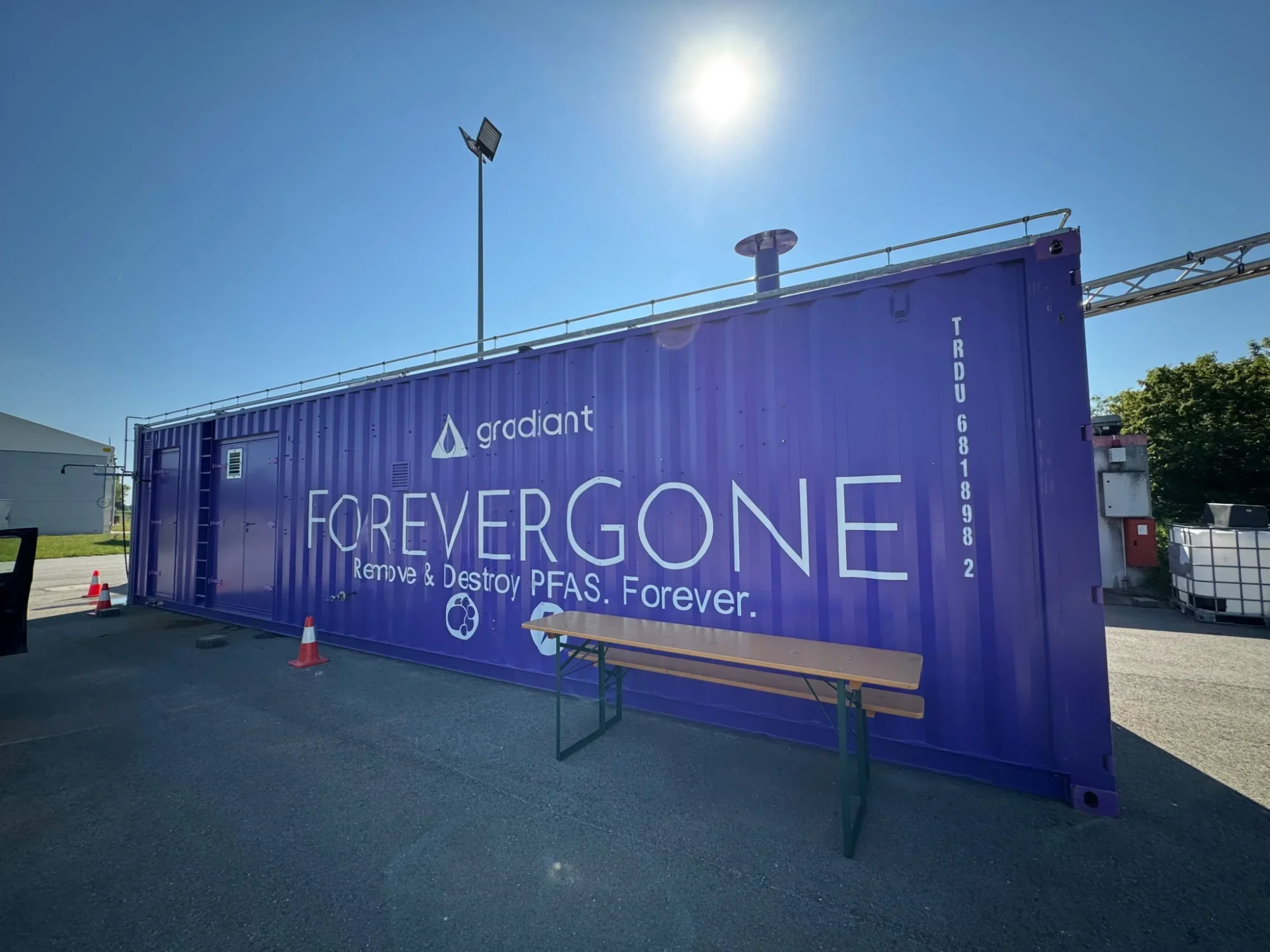
Gradiant has advanced its ForeverGone system for PFAS destruction, with new deployments and regulatory pressure driving demand worldwide.
Per- and polyfluoroalkyl substances (PFAS), often called “forever chemicals,” are a large group of synthetic compounds used for their resistance to heat, water, and oil.
They are found in products ranging from firefighting foams to nonstick cookware. The problem is that PFAS do not easily break down in the environment, leading to long-term contamination of soil and water.
Linked to health risks such as cancer, immune disorders, and hormonal disruption, PFAS have become a global focus for regulators and industries seeking effective elimination technologies.
Destroying PFAS at the source
Water treatment company Gradiant has unveiled major progress in its ForeverGone PFAS destruction platform, positioning it as one of the most advanced solutions for industrial wastewater treatment.
Unlike traditional ‘capture and dispose’ methods such as granular activated carbon (GAC) or ion exchange resin (IX), ForeverGone is designed to eliminate PFAS on-site completely.
The system combines micro-foam fractionation with electrooxidation, delivering 99–99.9% removal rates, including short-chain PFAS that other methods struggle to handle.
By destroying PFAS at the source, industries can eliminate the need for transporting and disposing of contaminated materials, reducing both environmental risk and long-term liability.
Breaking cost barriers
One of ForeverGone’s most significant achievements is affordability. Operating costs average just $0.10–$0.20 per cubic metre, far below the $0.50–$2.00 typically associated with GAC or IX treatment.
With energy consumption of only about 0.5 kWh per cubic metre, the system sets a new cost benchmark for PFAS destruction while maintaining efficiency and scalability.
Deployment at Munich International Airport
A high-profile example of ForeverGone’s application is at Munich International Airport, where Gradiant has deployed the system to address contamination from firefighting foams containing aqueous film-forming foam (AFFF).
The airport installation demonstrates the platform’s adaptability in tackling complex PFAS contamination, particularly in legacy sites where traditional solutions have fallen short.
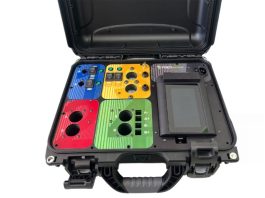
Compact, mobile, and scalable
After four years of development, Gradiant has engineered its Destruction Engine electrooxidation unit to be 100 times smaller than its original prototype.
Today’s units occupy just 2% of the original volume, making them compact and mobile. This versatility allows for both permanent installations and rapid temporary deployment at remediation sites.
Growing demand driven by regulation
Stricter regulations worldwide are fuelling demand for PFAS destruction technologies.
Taiwan has imposed semiconductor discharge limits as low as 1.2 ppb, South Korea is tightening oversight of industrial releases, and China is implementing stricter standards for drinking water.
Europe already enforces aggressive PFAS restrictions, while in the United States, upcoming EPA guidance is expected to accelerate adoption.
Beyond PFAS: Tackling TFA
Gradiant is also exploring applications beyond PFAS, including the treatment of trifluoroacetic acid (TFA), a chemical byproduct of pharmaceutical manufacturing.
With potential EU regulations on TFA expected in 2026, ForeverGone could expand into an even broader market for chemical destruction technologies.
Anurag Bajpayee, Co-Founder and CEO of Gradiant, concluded: “ForeverGone is the new model for how industries tackle PFAS. By destroying PFAS at the source, we remove the burden of disposal and deliver compliance that is both cost-effective and sustainable.
“Regulations in Europe and Asia are accelerating adoption, while US industries are preparing for the inevitable. ForeverGone gives customers confidence to meet today’s standards and tomorrow’s. And as attention turns to compounds like TFA, this platform establishes a foundation for long-term leadership in emerging contaminants.”