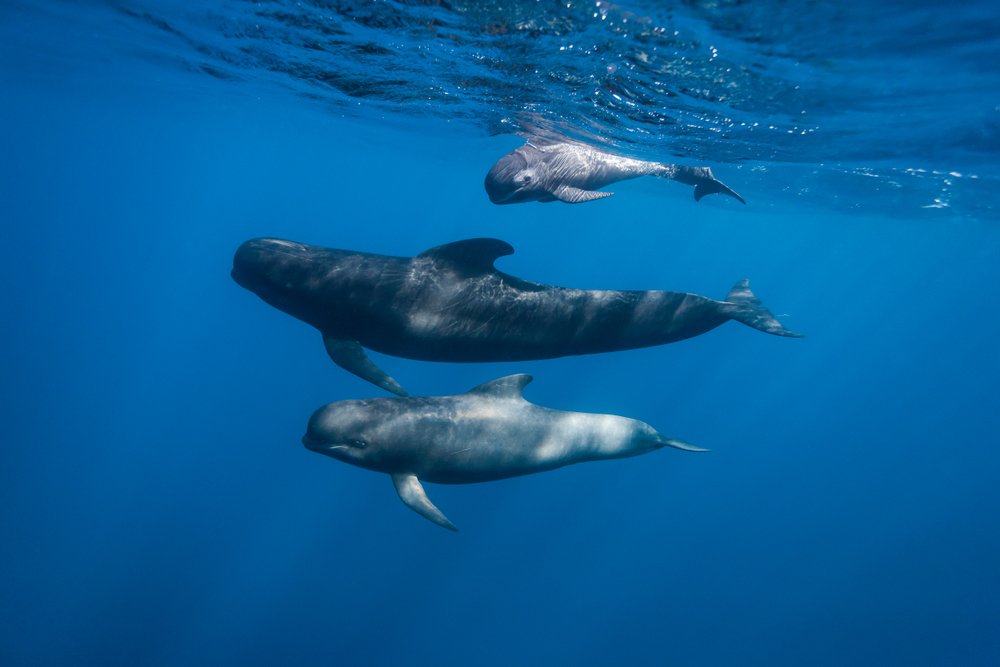
A new study from Harvard has found that, since phaseout efforts began, concentrations of PFAS in the bodies of North Atlantic pilot whales are more than 60% lower.
Studying PFAS levels in North Atlantic pilot whales addresses a long-standing challenge in detecting and measuring PFAS concentrations. While older, so-called legacy PFAS are well understood and easy to detect, newer generations of chemicals are harder to pinpoint.
“With legacy PFAS, we know a lot more about their environmental transport and impacts on organisms,” said lead author Jennifer Sun, a recent PhD graduate and current postdoctoral fellow.
“However, we have a lot less information about what is going on with many newer compounds that have been produced to replace the phased-out legacy PFAS.”
Understanding the impact of individual PFAS compounds is challenging
Senior author Elsie Sunderland, the Fred Kavli Professor of Environmental Chemistry in the John A. Paulson School of Engineering and Applied Sciences, explained that once researchers understand the exposure and health implications of one chemical, a new one is developed.
To overcome that challenge, the researchers took a new approach: Instead of measuring individual PFAS, they measured bulk organofluorine, which captures the fluorine in most PFAS compounds.
They used these measurements as a proxy for total PFAS concentrations, including newer types that are harder to identify independently.
How North Atlantic pilot whales can help overcome these challenges
Armed with this approach, the researchers studied whale tissue samples in collaboration with longtime research partners in the Faroe Islands, a North Atlantic archipelago that maintains a unique, long-term archive of pilot whale tissues.
As apex predators, North Atlantic pilot whales are considered sentinels of marine pollution because their bodies retain chemical exposures for long periods and live in the open ocean, demonstrating how far harmful compounds can travel into the environment.
The researchers found that overall organofluorine levels were primarily composed of four legacy PFAS, which together peaked in the mid-2010s and declined by more than 60% by 2023.
PFAS phase-out efforts are likely working to clean up ocean pollution
“Production phase-outs, which were initially voluntary and later driven by regulation, have been quite effective at reducing concentrations of these chemicals in near-source communities as well as more remote ecosystems, which I think is very positive and important to emphasise,” Sun stated.
However, newer PFAS may accumulate in different places
This reduction comes at a time when global production of new PFAS is on the rise, which raises the question: if newer PFAS aren’t accumulating in ocean ecosystems like the legacy ones, where are they accumulating?
Sunderland explained: “Generally, the ocean is thought to be the terminal sink for human pollution on land. But we are not seeing substantial accumulation of the newest PFAS in the open ocean. So, where are they?
“While our results are good news for ocean contamination, it suggests newer PFAS may behave differently from the legacy ones.”
She concluded: “It underscores the need to place stronger regulations on ongoing PFAS production to mitigate future impacts.”