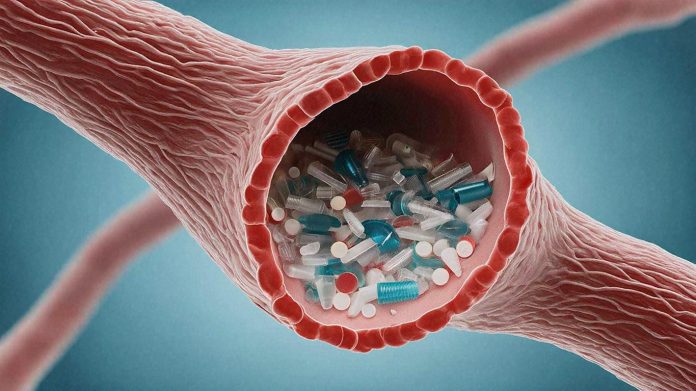
Microplastics are not just pollutants but also highly complex materials that facilitate antimicrobial resistance, even without antibiotics, according to a new study.
As global plastic use has surged, microplastic contamination has become widespread, with wastewater emerging as a major reservoir. At the same time, antimicrobial resistance (AMR) is rising globally, with environmental factors playing a key role.
“Addressing plastic pollution isn’t just an environmental issue; it’s a critical public health priority in the fight against drug-resistant infections,” said lead study author Neila Gross, a PhD candidate in the lab of Professor Muhammad Zaman at Boston University.
Exploring the development of antimicrobial resistance in plastics
In the new study, researchers sought to quantify antimicrobial resistance at clinically relevant levels and explore how microplastic characteristics influence AMR development.
The researchers used different plastic types: polystyrene, such as the packing peanuts used for shipping; polyethylene, found in plastic zip-top bags; and polypropylene, which is found in crates, bottles and jars).
They ranged in size from half a millimetre to 10 micrometres – similar scale to a typical bacterium – and were incubated with Escherichia coli for ten days.
Every two days, the researchers checked the minimum inhibitory concentrations (MICs), or how much antibiotic is required to kill an infection, for four widely used antibiotics to determine if the bacteria were growing in resistance or not.
Microplastics facilitate highest levels of multi-drug resistance
The researchers demonstrated that microplastics alone can facilitate increased AMR development.
“This means that microplastics substantially increase the risk of antibiotics becoming ineffective for a variety of high-impact infections,” Gross stated.
Prior research primarily focused on antibiotic resistance without considering the role of environmental pollutants like microplastics.
Studies with microplastics looked mostly at resistance factors such as antibiotic-resistant genes (ARGs) and biofilms, not the rate or magnitude of AMR via their minimum inhibitory concentration to different antibiotics.
A call to action: Addressing microplastic pollution in AMR mitigation efforts
The researchers found that resistance induced by microplastics and antibiotics was often significant, measurable and stable, even after antibiotics and microplastics were removed from the bacteria.
Ultimately, this means that microplastic exposure may be selected for genotypic or phenotypic traits that maintain antimicrobial resistance independent of antibiotic pressure.
Gross concluded: “Our findings reveal that microplastics actively drive antimicrobial resistance development in E. coli, even in the absence of antibiotics, with resistance persisting beyond antibiotic and microplastic exposure.
“This challenges the notion that microplastics are merely passive carriers of resistant bacteria and highlights their role as active hotspots for antimicrobial resistance evolution.”
Given that polystyrene microplastics facilitated the highest levels of resistance and that biofilm formation—known to enhance bacterial survival and drug resistance—was a key mechanism, the results underscore the urgent need to address microplastic pollution in antimicrobial resistance mitigation efforts.