Ranked among Canada’s most research-intensive universities, and home to the nation’s most powerful nuclear research reactor, McMaster University is training the nuclear engineers, scientists, and healthcare leaders of tomorrow.
McMaster University is readying the next generation of nuclear professionals for careers in the evolving nuclear industry. The university’s world-class suite of nuclear research facilities, anchored by the 5MW McMaster Nuclear Reactor, provide unique hands-on learning experiences for students at the graduate and undergraduate levels, and early- and mid-career professionals from Canada and around the world looking to expand their skillsets.
A global centre for nuclear education and training
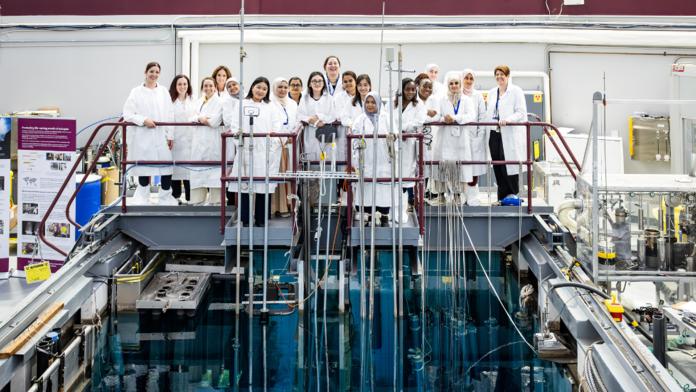
A group of 15 women from around the world received hands-on experience at McMaster’s nuclear research facilities as part of the Lise Meitner Programme (LMP), a prestigious programme for women in nuclear offered by the International Atomic Energy Agency (IAEA).
The 2025 LMP cohort visiting Canada spent a week at McMaster in July, participating in interactive training experiences in areas including radiation safety and emergency preparedness, neutron activation analysis, and hot cell manipulation.
Nuclear capacity globally is expected to more than double by 2050 according to projections from the IAEA, and, as the existing workforce retires, the agency estimates that four million new professionals will be needed to meet the demand for nuclear power. That makes programmes like LMP and centres for nuclear research and training like McMaster all the more important, said Karin Stephenson, Director of Nuclear Research and Education Support.
“Nuclear needs more women, and career development opportunities like the IAEA LMP give women professionals the hands-on experience they need to make a difference in the nuclear sector,” said Stephenson.
This year’s LMP cohort built on the experience and skills they gained at McMaster during the second week of the programme held at the Canadian Nuclear Laboratories (CNL) facilities northwest of Ottawa in Chalk River.
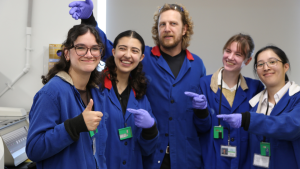
McMaster has a longstanding history of collaboration with CNL. Launched in 2023, the CNL Nuclear Undergraduate Research Experience programme enables McMaster students enrolled in Level II or above in the Faculties of Engineering and Science to develop valuable research and technical skills in the nuclear field. Three cohorts of McMaster undergraduates have now been part of this experiential learning opportunity, with a record 175 students applying in 2025.
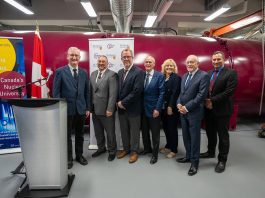
CNL and Atomic Energy of Canada Limited (AECL) recently announced they are extending their partnership with McMaster for five years as part of their Academic Partnership Programme (APP). The extension will ensure McMaster students have continued access to unique nuclear education programmes, said John Preston, McMaster’s Acting Associate Vice-President, Nuclear.
“This programme has provided key learning, research and mentorship opportunities for some of McMaster’s brightest and most passionate students in nuclear science and engineering. We’re so impressed with their accomplishments and proud of the example they’ve set as future leaders in the field,” Preston said.
As a leading supplier of medical isotopes used to diagnose and treat cancer, McMaster is uniquely positioned to train experts in the field of nuclear medicine.
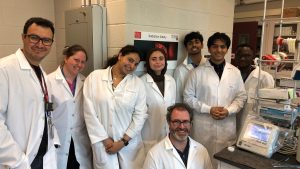
A total of 27 graduate students and early career professionals gathered at McMaster in spring 2025 for the second-annual Next Generation in Nuclear Medicine workshop, hosted in partnership with King’s College London.
The three-day workshop helps participants strengthen their academic, technical, and professional skills in the evolving field of nuclear medicine and molecular imaging.
The workshop features lectures and hands-on activities led by nuclear experts from McMaster and King’s and held within McMaster’s nuclear facilities, where medical isotopes for over 70,000 patients are produced and processed each year.
As the demand for radiopharmaceuticals grows rapidly around the world, the next generation of innovators will drive the discovery and production of potentially life-saving nuclear medicines, said Raluca Petria, Manager, Nuclear Outreach and Education at McMaster.
“We were honoured to host so many talented young leaders at McMaster for this year’s workshop, where they built upon their skills in radiation safety, isotope production, radiopharmaceuticals and more, and discovered firsthand the role they can play in addressing critical challenges shaping the future of nuclear medicine,” said Petria.
Sparking student interest in nuclear science
While research and innovation are powering ahead, Canada’s nuclear future faces a significant challenge: the talent gap. John Preston says there’s a risk that a shortage of qualified professionals could stunt the industry’s growth.
“McMaster is stepping in to meet the need,” said Preston. “Together with our partners, we can ensure Canada’s nuclear future is powered by both innovation and talent.”
To shape the next generation of nuclear talent, McMaster has launched a multi-tiered approach, including expanding enrolment in its Engineering Physics programme and introducing a new interdisciplinary minor in Nuclear Studies and Society, which filled all 150 seats in the first week – a clear sign of student enthusiasm and sector relevance, according to Preston.
With leading-edge infrastructure and expertise, the university is not only advancing its own capabilities in medical isotope production, materials and energy research, but also embracing a broader mission.
“We’re proud to take on a national responsibility,” said Preston. “By collaborating with universities across Canada and internationally, we’re accelerating experiential education and helping build the country’s nuclear workforce.”
Please note, this article will also appear in the 24th edition of our quarterly publication.