


Innovation News Network brings you the latest research and innovation news from the fields of science, environment, energy, critical raw materials, technology, and electric vehicles.
Budget23: Supporting clean hydrogen production in Canada
The budget will enable Canada to compete globally against other countries that are accelerating clean hydrogen production.

Phoenix Tailings begin production at US’ first rare earth refinery
Phoenix Tailings uses the rare earth refinery to meet critical supply chain demands by refining rare earth metals in the US.
Pulsar Helium: Committed to advancing helium projects and furthering the helium supply chain
Pulsar Helium is developing its North American helium projects to bring stability and supply diversity to the industry.

What makes long-term research projects valuable?
Learn more about the nature of innovation and the value and challenges of long-term research projects with the Graphene Flagship.
How hydrogen-powered light commercial vehicles will revolutionise the transport industry
Innovation News Network brings you the ultimate guide to zero-emission, hydrogen-powered light commercial vehicles.
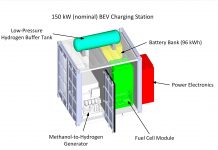
Affordable and efficient hydrogen production on site and on demand
The technical team at Element 1 has achieved the most compact and highest-efficiency hydrogen generator available today.

Linking environmental data with business decisions to reduce agriculture’s impact on the environment
The assessment of environmental data is arguably the most effective way to reduce carbon emissions within agriculture.

Electric car range can be boosted by revolutionary new battery technology
Researchers have developed a high-capacity anode material that could boost the current electric car range by at least ten-fold.

First Hydrogen’s light commercial vehicles test driven by Ballard Power
Ballard Power Systems has test-driven First Hydrogen's first-generation zero-emission light commercial vehicle

Are activities in space contributing to climate change?
Dr Thomas Shahady, Professor of Environmental Science at the University of Lynchburg, details how space activity could impact climate change.