


Innovation News Network brings you the latest research and innovation news from the fields of science, environment, energy, critical raw materials, technology, and electric vehicles.
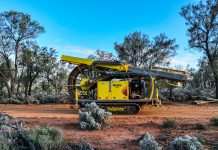
Rebuilding Australia’s critical mineral exploration and development industry
David Giles, Chief Scientific Officer of MinEx CRC, details working to accelerate critical mineral exploration and development in Australia.

Improving carbon capture efficiency with quantum computing
Researchers have developed a quantum computing algorithm that could identify better compounds for more efficient carbon capture.

Computer scientists warn of the dangers of smartphone spyware apps
Dangerous smartphone spyware apps can easily leak sensitive personal information and are hard to notice and detect.

A-LEAF sustainable fuels project achieves world-record results
The A-LEAF project has achieved a world-record efficiency in converting CO2 and H2O into sustainable fuels.

Volkswagen chooses Canada for its first battery plant outside Europe
Volkswagen has chosen Canada for its first battery plant outside of Europe, taking advantage of the country’s vast plethora of raw materials.

Cargo ships powered by wind could help fight climate change
Future cargo ships are set to be powered by wind once again due to a new project that retrofits large vessels with ultra-modern wing sails.

Enhancing and strengthening the excellence in interdisciplinary biomedical research at TRANSCEND (ESEI-BioMed)
The ESEI-BioMed project advances tumour diagnostics and nanomedicine in the frame of the new translational research centre, TRANSCEND.
TRANSCEND is a translational research centre in...

Innovating rechargeable battery design with crab shells
Researchers have used crab carbon to create anode materials for the next generation of rechargeable battery technologies.

Agriculture needs a fresh approach in tackling biopesticide resistance, experts warn
Scientists have discovered that insect pests that attack crops have extraordinary powers to develop biopesticide resistance.

First Hydrogen reveals Generation II zero emissions vehicle design
First Hydrogen Corp. has unveiled the design of its Generation II zero emission vehicle concept that looks to decarbonise fleet transport.