


Innovation News Network brings you the latest research and innovation news from the fields of science, environment, energy, critical raw materials, technology, and electric vehicles.
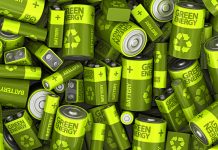
An energy-efficient method for recycling lithium batteries
Researchers have devised a technique for recycling the inner components of lithium batteries, reducing demand for raw materials and energy.

Black hole collisions provide new evidence of the Universe’s expansion
The University College London has established a new method that utilises black hole collisions to measure the Universe’s expansion.

CERN approves a new neutrino detector experiment at the LHC
CERN’s newly approved project, Scattering and Neutrino Detector at the Large Hadron Collider, will be the facility’s ninth experiment.

Uncovering the origins of amino acids in the early solar system
Researchers have discovered meteorite amino acids derived from substrates that were more widely available in the early solar system.

New algorithm for the diagnostics of dementia
An international research team has developed a new algorithm based on blood and cerebrospinal fluid biomarker measurements for the diagnostics of dementia.

The SKA Observatory has announced its novel future branding
The formally known SKA Observatory, based at the iconic Jodrell Bank Observatory, has divulged its future SKAO branding.
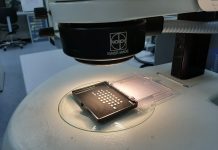
HV-CMOS sensors – the future of fundamental physics experiments
Dr Eva Vilella-Figueras discusses the revolutionary HV-CMOS silicon sensors her team are developing for fundamental physics experiments.

Enzyme from fungus could help produce renewable fuels and chemicals
Researchers at the University of York have discovered an enzyme in a fungus could provide a breakthrough in the upscaling of renewable fuels and chemicals.

Chemical signature discovered on exoplanet for the first time
A collective of international researchers has identified a novel chemical signature in an exoplanet’s atmosphere for the first time ever.

Paving the way for self-driving vehicles on UK roads
Automated Lane Keeping System technology outcome means the UK could see self-driving vehicles on the roads by the end of the year.