


Innovation News Network brings you the latest research and innovation news from the fields of science, environment, energy, critical raw materials, technology, and electric vehicles.
Cooling down antihydrogen atoms using laser light for the first time
In a world first, the ALPHA collaboration at CERN has successfully cooled down antihydrogen atoms – the simplest form of atomic antimatter – using laser light.
New observations reveal 21/Borisov as the most pristine comet ever
Fresh findings from the ESO's VLT reveal that rogue comet 21/Borisov may be the most pristine we have ever encountered.

Engineering protein-based drugs using Artificial Intelligence
Researchers from Chalmers University of Technology in Sweden have developed a method of developing protein-based drugs using artificial intelligence.

Scientists design ‘smart’ device to harvest daylight
A team of scientists from Nanyang Technological University in Singapore has created a device to harvest daylight and relay it to underground areas.
Exploring the far side of the Moon and beyond with NESS
Dr Jack Burns, of the Network for Exploration and Space Science, discusses missions to the far side of the moon and beyond.
Electromagnetic fields of nanostructures visualised in 3D
Researchers at Graz University of Technology and the University of Graz, along with experts from France, have visualised the electromagnetic fields of nanostructures in 3D.
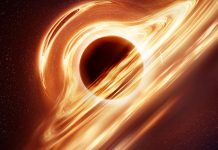
Mysterious black hole photon sphere explained by string theory
Researchers at Kavli IPMU have utilised string theory to understand the behaviour of particles outside the photon sphere of a black hole.
£30m government investment into batteries and electric vehicles
The Minister of Investment has announced that the government is investing over £30m into batteries and electric vehicles.
Improving battery safety through calorimetric studies
Dr. Carlos Ziebert, Leader of The Batteries – Calorimetry and Safety group at the Karlsruhe Institute of Technology’s Institute of Applied Materials – Applied...
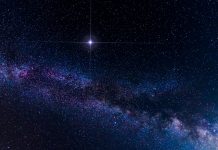
Satellites contribute light pollution to night skies
New research results indicate that artificial objects in orbit around Earth contribute more to light pollution than was previously thought.