


Innovation News Network brings you the latest research and innovation news from the fields of science, environment, energy, critical raw materials, technology, and electric vehicles.

Photonic microcomb could find new exoplanets and monitor people’s health
Researchers from Chalmers University of Technology, Sweden, have developed a photonic microcomb that could be used to find new exoplanets.

New facility to accelerate battery recycling research at University of Birmingham
New battery testing and storage facilities have been installed at the University of Birmingham, in a bid to accelerate battery recycling research.

Warmer waters and low oxygen could impact young oysters’ ability to grow meat
Early exposure to conditions like warmer waters and low oxygen could impact oysters’ ability to grow meaty tissue on their shells.

Radiation in healthcare and beyond
The Innovation Platform explores the positive uses of radiation in healthcare and the negative effects caused by extreme exposure.

Converting carbon dioxide into methane using light energy
KAUST scientists have developed catalyst nanoparticles that use light energy to convert carbon dioxide and hydrogen into methane.

Vegetable protein waste from rapeseed farming replaces petroleum-based raw materials
German researchers are using vegetable proteins from agricultural waste to replace petroleum-based raw materials in industrial applications.

Can an increase in flowering fields help promote biodiversity?
Ecologists have analysed the effects of initiatives to plant flowering fields to increase biodiversity around agricultural landscapes.
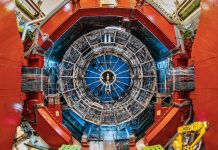
Physicists from ALICE discuss the strong interaction between hadrons
Physicists Oton Vazquez Doce and Laura Fabbietti from CERN’s ALICE collaboration spoke to Caitlin Magee about the strong interaction hadrons.

Harnessing the boundary between 2D and 3D materials
Method of imaging what occurs at the boundary between 2D and 3D materials reveals ways to control the properties of atomically thin materials.

Strong airflows in the lower atmosphere impact the performance of wind farms
Researchers have found strong airflows in the lower atmosphere, known as low-level jets, are beneficial to the performance of wind farms.