


Innovation News Network brings you the latest research and innovation news from the fields of science, environment, energy, critical raw materials, technology, and electric vehicles.

Measuring the temperature of red supergiants
Scientists have developed a method to determine the surface temperatures of red supergiants to help astrophysicists study their lifecycle.

New images of space debris allow scientists to prevent space collisions
Scientists ihave developed a method of taking images of space debris, which could help space agencies prevent future collisions.
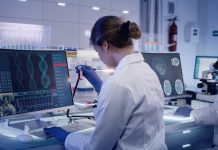
Scaling-up extraction of extracellular matrices
Dr Deepak Choudhury, from the Biomanufacturing Technology Group at BTI A*STAR, explains how its newly-developed strategies can scale-up the extraction of extracellular matrices.
VTT’s quantum technology in Finland and Europe
Himadri Majumdar, manager at VTT, discusses the research centre's role in delivering quantum technology to Finland and Europe.

Keeping security afloat with offshore ports
Float Incorporated spoke about the developments of offshore ports and how they are an efficient means of transporting cargo.

Revolutionising the battery sector in the UK and beyond
Isobel Sheldon OBE discusses how Britishvolt stands to revolutionise the the lithium-ion, and beyond lithium-ion battery sector in the UK and beyond.
High-energy neutrinos and tidal disruption events
New research led by NASA's Goddard Space Flight Center has identified a link between high-energy neutrinos and tidal disruption events.
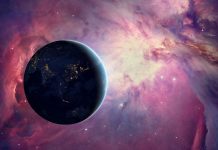
Novel observation method shows promise in imaging Earth-like planets
New technique for reducing light interference during telescope observations enables imaging of Earth-like planets in nearby solar systems.

Intelligent turbines to produce green energy from tidal waterpower
Engineers from the University Otto von Guericke of Magdeburg are developing intelligent turbines for green energy from tidal waterpower.

Particle physics confronts its data legacy
Professor Michael Hildreth from the University of Notre Dame argues that while efforts are underway to ensure that the results of particle physics experiments (and the knowledge behind them) are preserved, the future will ultimately require a new way of working.