


Innovation News Network brings you the latest research and innovation news from the fields of science, environment, energy, critical raw materials, technology, and electric vehicles.
Technology and mindset for quantification will lead success in cell manufacturing
Drs Kei Kanie and Ryuji Kato from Nagoya University are trying to break open the data-driven cell culture process development concept to ensure that the future of cell manufacturing will promise quality cell therapy products.

Scientists biosynthesise magnetic nanoparticles using bacteria
Researchers have biosynthesised magnetic nanoparticles using bacteria, a process that will become essential to biomedicine and biotechnology.
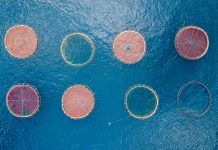
Sustainable delousing: a necessity for growth in salmon farming
Lars Georg Backer, CEO of Flatsetsund Engineering AS, outlines how its sustainable delousing solution is both cost effective and environmentally friendly.

Could life from Earth survive on Mars?
A new study by NASA and German Aerospace Center has found that some microbes from Earth can temporarily survive on Mars.

Renewing urban water quality
Dr Thomas Shahady from the University of Lynchburg outlines how challenges facing urban water quality can be addressed through a more holistic approach.
The water...
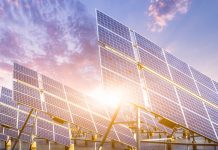
Hydroxyapatite increases the environmental safety of perovskite solar cells
Scientists have found a way to accelerate the uptake of solar technology by increasing the environmental safety of perovskite solar cells.

The ups and downs of atmospheric neutrinos
Henry W Sobel from the University of California, Irvine discusses how atmospheric neutrinos lead to the discovery of neutrino mass.

NASA’s most advanced rover safely lands on Mars
NASA’s most advanced rover touched down on Mars yesterday after a 203-day journey traversing 293 million miles (472 million kilometres).

Independent scientific research agency will fund high-risk, high-reward research in UK
New independent scientific research agency will fund high-risk, high-reward research in order to support new discoveries in the UK.

Facing new computing challenges in high energy physics experiments
Professor Xavier Vilasis-Cardona explains why computer scientists are so important to the future of high energy physics experiments.