


Innovation News Network brings you the latest research and innovation news from the fields of science, environment, energy, critical raw materials, technology, and electric vehicles.

New peptide treatment could prevent COVID-19 symptoms
Researchers have developed a new peptide therapy that is showing success as a way to prevent COVID-19 symptoms in mice.

Future climate-related species extinction could be less severe than previously predicted
Future climate-related species extinction could be less severe than predictions based only on the current trend of global warming.

Engineers create a jellyfish-inspired underwater robot for marine exploration
The University of Southampton has been inspired by jellyfish to engineer a flexible underwater robot that can propel itself through water.

Exploring the Universe with Cosmological surveys
Using cosmological surveys to trace the evolution of the Universe and understand its accelerated expansion.
In the last hundred years, cosmology has made significant steps...
New original blockchain technology helps traders make use of surplus renewable electricity
Researchers has collaborated with Mitsubishi, to optimise the P2P trading of surplus renewable electricity.
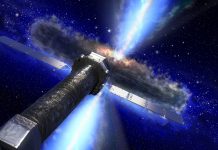
The European Space Agency on probing the hot and energetic Universe
Dr Matteo Guainazzi spoke to The Innovation Platform about some of the ways that the mission will probe the hot and energetic Universe.

New research hub to boost the circular economy in the UK
The University of Exeter’s research hub will spearhead efforts to create a sustainable, circular economy in the UK and boost sustainability.

New environmental monitoring initiative to support Vietnamese shrimp and crab aquaculture
Vietnam has launched a new environmental monitoring initiative that will support shrimp and crab aquaculture in mangrove forests.
Study reveals positive role of androgens in breast cancer treatment
New evidence about the positive role of androgens in breast cancer treatment has been discovered by researchers at the University of Adelaide.
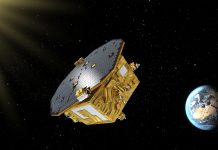
Observing gravitational waves from space
International Editor Clifford Holt spoke to Dr Oliver Jennrich, the Project Scientist for ESA’s Laser Interferometer Space Antenna (LISA) mission, which will be the first gravitational wave observatory based in space