


Innovation News Network brings you the latest research and innovation news from the fields of science, environment, energy, critical raw materials, technology, and electric vehicles.
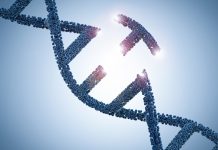
Scientists genetically reprogramme bacteria for better nanomaterials
Scientists have genetically reprogrammed bacteria, turning the organisms into cell factories for multifunctional magnetic nanoparticles.
Led by Professor Dr Dirk Schüler, a team of microbiologists...
Discovering the quantum wave nature of complex antibiotic polypeptides
Scientists have successfully demonstrated the quantum wave nature of complex antibiotic polypeptides, a previously unproven principle of quantum physics.
Wave-particle duality, one of the central...
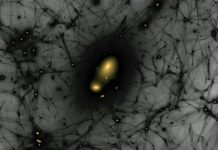
The connection between galaxy size and dark matter
Based on satellite galaxy simulations, scientist have made a stronger connection between the size of galaxies and the dark matter halos that surround them.
Large...
Developing microreactors that transform water into hydrogen fuel
Scientists from the University of Southampton have used solar energy to convert optical fibres into photocatalytic microreactors that transform water into hydrogen fuel.
In a...
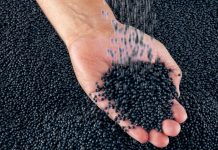
Lead batteries: a role model of safe, sustainable recycling
With a remarkable 99% recycling rate and successful circular economy, lead batteries surpass the sustainability of newer battery chemistries. Can they respond?
The reliability of...
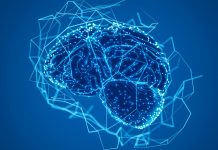
Endocannabinoid signalling in olfactory neural circuits
Thomas Heinbockel presents groundbreaking evidence that the endocannabinoid system plays a role in regulating neuronal activity in the main olfactory bulb.
The cannabis plant Cannabis...

Scientists detect gamma rays coming from distant galactic sources
The High Altitude Water Cherenkov (HAWC) observatory, Mexico, detected gamma rays coming from distant galactic sources.
The High Altitude Water Cherenkov has detected gamma rays...
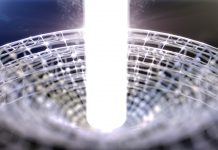
How to ‘cook’ anti-matter
Carsten Welsch tells Innovation News Network his ‘cooking recipe’ for anti-matter while addressing public preconceptions towards his research.
Carsten Welsch, a former CERN fellow, studied...
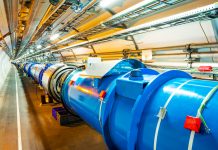
$75m to upgrade CERN’s ATLAS detector
Scientists led by Columbia University, USA, will be working to enhance the capabilities of the ATLAS detector at CERN’s Large Hadron Collider (LHC).
"These improvements...

Using biomedical engineering to track the transfer of COVID-19
University of Utah’s biomedical engineering assistant professor Jessica Kramer is now researching how mucus aid the transfer of COVID-19 from person to person.
Researchers don't...