Canada’s top research college seeks international partners to advance applied research in food, agriculture, and the bioeconomy.
The #1 research college in Canada
Niagara College (NC) has established itself as Canada’s leader in applied research. For the second year in a row, NC holds the No. 1 national ranking for research funding – capping a decade-long presence in the country’s top 10.
In 2023, the College attracted more than $40 million in research support across advanced manufacturing, business and commercialisation, food and beverage, health, horticulture, and environmental science. NC also ranked first in industry research income at more than $35m, a clear signal of the confidence Canadian companies place in Niagara’s research expertise.
This success reflects a deliberate strategy: Niagara has built an applied research model that connects academic expertise directly to industry need. Faculty, staff, and students work alongside small- and medium-sized enterprises (SMEs) to test prototypes, validate technologies, and refine products for commercialisation. The results are practical and academically rigorous, demonstrating how colleges can anchor regional innovation systems while preparing the next generation of innovators.
At the core of this work are five specialised centres: the Food and Beverage Innovation Centre (FBIC); the Horticultural and Environmental Sciences Innovation Centre (HESIC); the Walker Advanced Manufacturing Innovation Centre (WAMIC); the Healthy Aging and Wellness Innovation Centre (HAWIC); and the Business and Commercialization Innovation Centre (BCIC).
Three of these centres – FBIC, HESIC, and WAMIC – hold Technology Access Centre (TAC) designations from the Natural Sciences and Engineering Research Council of Canada (NSERC). TACs are nationally recognised hubs that provide SMEs with access to specialised facilities and equipment, expert staff, and applied research capacity.
A national force in food and environmental innovation
Few global challenges are more pressing than feeding a growing population sustainably while adapting to shifting consumer demands in the food and beverage sector. At NC, two centres are tackling these issues head-on: the Food and Beverage Innovation Centre (FBIC) and the Horticultural and Environmental Science Innovation Centre (HESIC).
Together, they help Canadian SMEs compete internationally while developing solutions that address global health, food security, and sustainability needs.
Walk through NC’s research facilities, and it becomes clear how the College translates funding and rankings into real-world impact. At the Daniel J. Patterson Campus in Niagara-on-the-Lake, Ontario, the hum of automated canning lines inside the renovated Beverage Pilot Plant signals a thriving testbed for beverage entrepreneurs. Nearby, a new $12m greenhouse glows under LED lights, where rows of basil, strawberries, and bell pepper plants are monitored under precisely controlled conditions in individually managed growing bays.
FBIC: Scaling innovation in beverages
FBIC is at the forefront of one of the fastest-changing global industries: food and beverage. Its research spans beverage formulation, process optimisation, food safety validation, shelf-life testing, and sensory science – helping entrepreneurs and established brands create everything from zero-alcohol spirits to plant-based functional drinks.
The centre’s Beverage Pilot Plant meets the highest mandated food safety and regulatory standards at both the provincial and national levels, providing companies with a trusted environment to scale their products safely. Equipped with automated canning systems, nitrogen-dosed fillers, tunnel pasteurizers, and scalable tanks capable of handling 600-litre runs, it bridges the critical “0-to-100 case” gap that often prevents startups from transitioning into full commercial production. Operating under the Safe Food for Canadians Act, products validated here are immediately market-ready.

One example is Dispatch Coffee, a Canadian speciality coffee company that partnered with FBIC to develop Mazagran Coffee—a sparkling, ready-to-drink lemon-coffee beverage. FBIC researchers helped improve the recipe, ensure shelf stability, and scale the product for commercial production.
“The FBIC team improved the recipe, making the product shelf-stable and scalable,” said Michael Kapusty, General Manager at Dispatch. “Then we were able to get initial market traction on our new product and bridge the gap to a commercial scale co-packer.”
In another example, Miski Brewing partnered with FBIC to develop North America’s first beer certified gluten-free, organic, vegan, and kosher. Niagara’s researchers guided recipe development, scaled production in the Teaching Brewery, and validated sensory quality – bringing a quinoa-based beer to market with availability on store shelves. The company’s added benefit was hiring former students who worked on the project as key employees to move forward.
Another SME, DistillX, worked with FBIC to launch Canada’s first zero-alcohol gin and tequila. With global demand for low- and no-alcohol beverages accelerating, DistillX entered an international market with Niagara’s support in scaling, regulatory compliance, and commercialisation.
Together, these projects highlight how FBIC helps SMEs reduce risk, shorten timelines, and align with global trends while strengthening Canada’s competitiveness.
HESIC: Advancing agriculture and environmental solutions
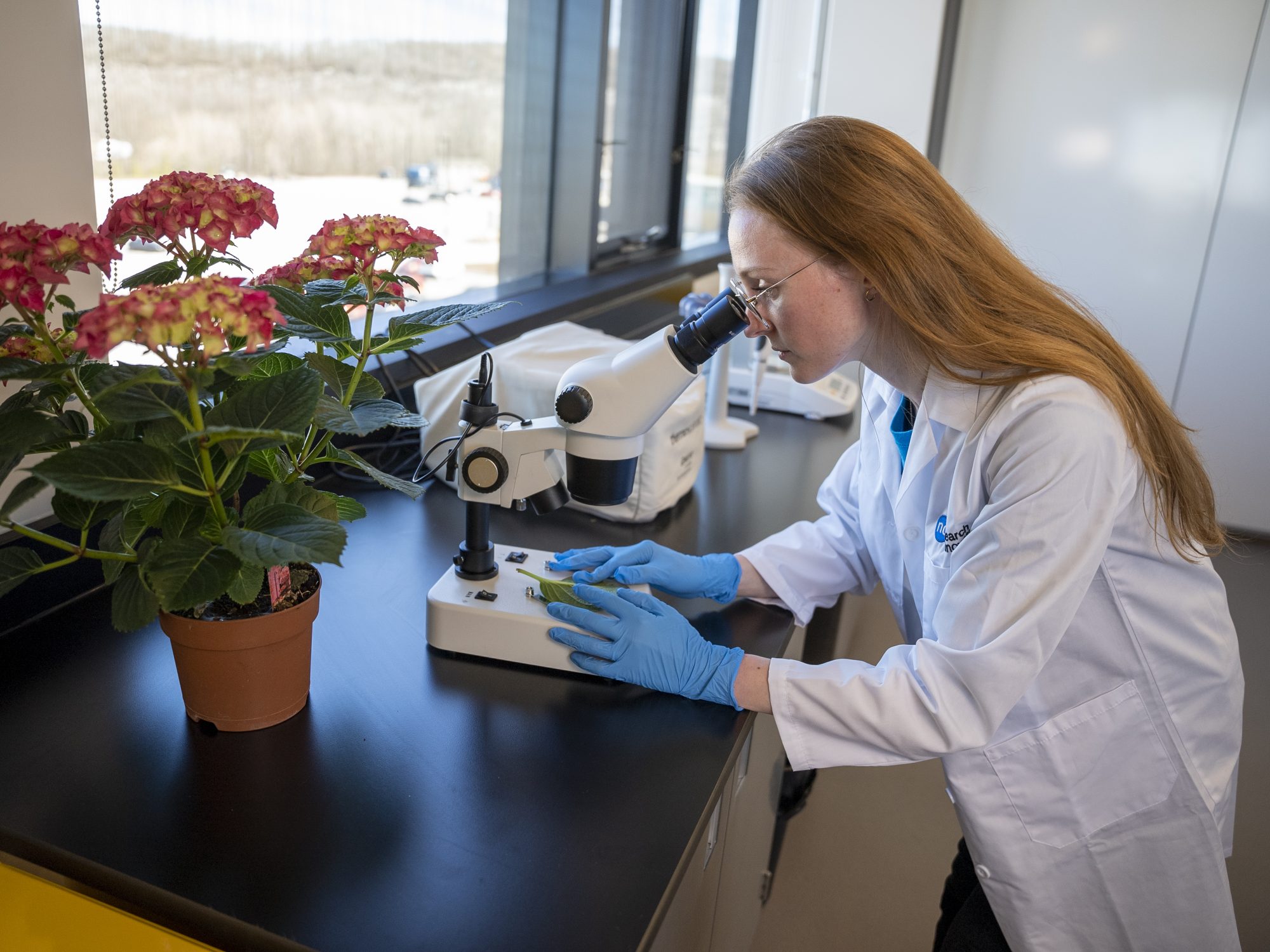
While FBIC enhances the commercialisation of products and the success of SMEs in the food and beverage space, HESIC addresses a global imperative: how to produce more food with fewer resources. Its research focuses on controlled-environment agriculture, soil and substrate science, irrigation and nutrient management, biostimulants, pest and disease management, and sustainable horticultural practices. By validating new technologies under real-world conditions, HESIC helps growers and agri-tech innovators adapt to climate change while maintaining productivity.
Its $12m CAD state-of-the-art greenhouse – featuring five independently controlled bays, precision climate systems, and a vertical grow room – is one of the most advanced controlled-environment agriculture (CEA) facilities in Canada.

Recently, the international development company International Zeolite turned to HESIC to validate a zeolite-based soil amendment designed to improve nutrient retention and crop yields. Rigorous trials produced the data growers needed to comfortably adopt the technology, giving the company a stronger foothold in markets increasingly defined by sustainability.
Another partner, Terra Optima Labs, collaborated with HESIC to test Vermichar – a soil amendment made from worm castings and biochar that repurposes food waste into agricultural value. In greenhouse trials, Vermichar outperformed conventional fertilisers: basil produced greater biomass, strawberries flowered earlier, yielded more fruit, and measured higher in sugar content.
“We were able to gain access to experts in horticulture and research who designed and executed growth trials to a degree that we could not do in-house,” said Will Wang, Co-Founder of Terra Optima Labs. “HESIC’s greenhouse is a great asset to provide a controlled environment to conduct trials year-round.”
By validating Terra Optima’s innovation, HESIC advanced a circular economy solution that addresses food waste, soil health, and climate resilience while boosting Canada’s competitiveness in agri-tech.
Beyond facilities: Talent and support
Niagara’s advantage lies not only in infrastructure but in the ecosystem around it. Projects integrate students from programs such as Culinary Innovation and Food Technology, Mechanical Engineering Technology, Horticulture Technician, Business Administration, and Computer Programming.
These interdisciplinary teams give partners fresh perspectives and skilled graduates, many of whom transition directly into the companies they supported during their research projects. For the industry, collaboration with Niagara means not just new solutions but also future-ready employees.
By working with these innovation centres, organised under the wing of NC’s Research and Innovation division, SMEs also benefit by accessing cost-shared funding through national programs such as the Natural Sciences and Engineering Research Council of Canada (NSERC), the National Research Council of Canada’s Industrial Research Assistance Program (NRC IRAP), and the Ontario Ministry of Agriculture, Food and Agribusiness (OMAFA). These partnerships lower financial risk while enabling companies and researchers to pursue projects with greater scale and impact.
Positioning for the future
NC’s three Technology Access Centres (TACs) – FBIC, HESIC, and WAMIC – exemplify how NC operates at the intersection of industry and society. By equipping SMEs with the expertise, certifications, and infrastructure they need, Niagara helps Canadian companies compete globally while contributing to solutions in food security, sustainability, and advanced manufacturing.
As one of a handful of Canadian colleges with three TACs, Niagara offers a diverse research platform unmatched in scale and scope. For researchers, this means access to collaborative opportunities that extend well beyond regional impact, into national and international relevance.
Looking ahead, Niagara is extending this model internationally. With proven expertise in food, agriculture, environment, and advanced manufacturing, the College is actively seeking partners through Horizon Europe, the European Union’s flagship research and innovation program. For researchers and companies tackling global challenges, NC offers the facilities, expertise, and proven track record to translate ambitious ideas into measurable results.
For more information or to explore partnership opportunities with NC’s Research and Innovation division, please get in touch with Marc Nantel, PhD, Vice-President, Research, Innovation and Strategic Enterprises, at mnantel@niagaracollege.ca.