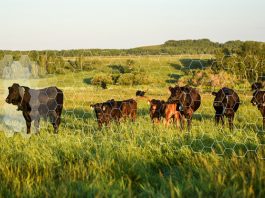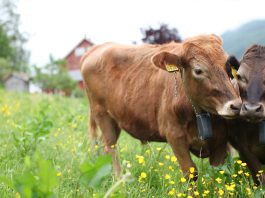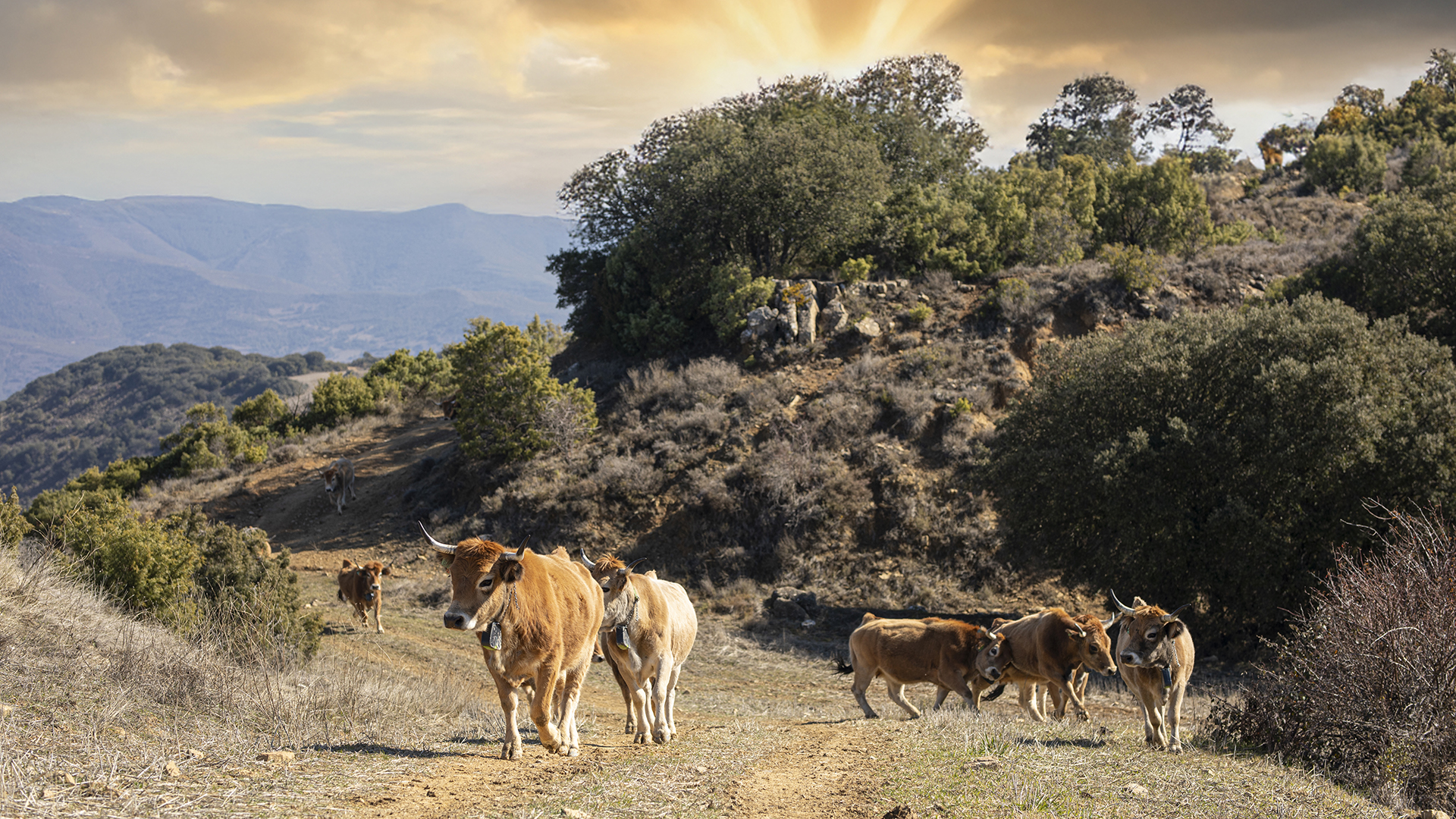
As large carnivore populations increase in Europe, Nofence offers a new way for farmers and wildlife to cohabitate, by helping animals to follow their natural instincts and escape in the event of an attack.
Large carnivores have made a remarkable comeback in Europe over the past half century, a widely recognised conservation success made possible by protective legislation and improvements in habitat. While this is a milestone for biodiversity, it presents real challenges for livestock farmers, especially in mountainous and remote regions.
As predator populations grow and territories expand, physical fencing, long been considered the first line of defence, is being put to the test. This method, however, comes with an inherent paradox: physical fences keep animals in, but once a predator enters, by jumping, sneaking in, or getting through breaches, they can also trap the livestock. In hilly or forested environments, where livestock graze extensively and fences are difficult to maintain, the risk is very real: if a predator gets in, those same barriers can trap the animals inside, leaving them unable to escape.
Virtual fencing offers a new way forward. Without the constraints of physical barriers, animals are no longer at risk of being trapped. The Nofence system is not just a grazing tool, but a potential lifeline: one that allows animals to stay together, stay alert, and that gives them the chance to get away.
Guiding animals, not confining them
Nofence is the world’s first virtual fencing system for livestock, combining GPS-enabled collars connected via cellular network to a user-friendly app. Farmers use the app to design and adjust grazing boundaries remotely, while the collars gently guide and track animals using escalating audio cues. When approaching a defined boundary, instead of an immediate correction, the system uses a series of audio cues that increase in pitch as the animal gets closer, allowing it to respond proactively, by either turning away or stopping, before receiving a mild electric pulse – half the intensity of those emitted by traditional electric fences – which occurs only as a last resort. Over a short period of time, animals learn to respond to the audio cues alone, rarely triggering a pulse, which contributes to a calmer, more predictable grazing environment.
Unlike traditional fences, virtual boundaries do not fragment herds or obstruct movement. This becomes particularly valuable in predator-prone areas. When livestock are attacked, they are not trapped by wire or confined to a fixed perimeter. Instead, the Nofence system allows them to disperse, regroup, or flee naturally, behaviours that can be critical in avoiding an attack.
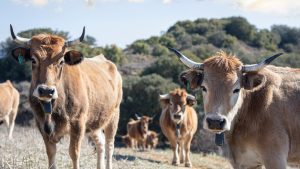
Moreover, the collars feature live monitoring and live location tracking. If an animal stops moving for a certain period of time or if it escapes the set boundaries, the farmer receives a push notification via the app, allowing for immediate investigation. In such areas, this feedback can make all the difference, enabling early intervention and providing valuable data on animal behaviour before, during, and after an attack.
Living with the wolves
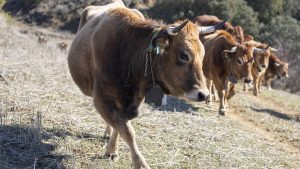
In the rugged, mountainous landscapes of northern Spain, farmers like Gonzalo have learned to work with nature’s unpredictability. Grazing cattle across shared, high-altitude pastures in the Picos de Europa, he faces a challenge that’s increasingly familiar to livestock producers across Europe: wolf attacks.
Gonzalo notes, “100% of the territory I manage is occupied by wolves”, a reality he and other farmers in northern Spain have learned to live with. While the presence of predators can’t be controlled, Gonzalo has focused on what he can influence: how his animals are managed and how they respond when danger appears.
Two years ago, he lost up to 10% of his herd to attacks. The issue wasn’t just the presence of wolves; it was the fragmentation of the herd, the lack of timely response, and the difficulty of gathering animals across remote, uneven terrain.
That changed with Nofence. The virtual fencing system allowed Gonzalo to regroup his cows with calves, keeping them close together in designated grazing zones. This simple change in herd structure made a critical difference. He says, “Last year, not a single calf was lost. Zero.”
Crucially, Gonzalo notes, location alone doesn’t guarantee safety; grouping does. In particular, cows with calves, kept in close groups using Nofence, were better able to detect threats, defend themselves, and protect the young.
It’s not about fighting predators; it’s about giving the animals the conditions they need to respond naturally.
Following nature
Animals have evolved their own defence strategies long before humans introduced fences. In herd species like cattle, goats and sheep, grouping together improves vigilance, enables faster detection of threats, and helps coordinate flight or defensive behaviours. This is well-documented in ethology and supported by recent studies on livestock behaviour and virtual fencing.
A study published in Frontiers in Veterinary Science found that cattle exposed to virtual fencing quickly learned to avoid boundaries simply by observing their herd mates. In the vast majority of cases, animals responded to escalating audio cues or turned back from virtual boundaries without ever receiving an electrical pulse, guided by the behaviour of the group. Researchers described this as social facilitation, a phenomenon where animals mimic the actions of their peers in response to environmental cues.
This learning dynamic is particularly notable in cow-calf operations, where uncollared calves learn the system by following their mothers, or dams, behaviours. By the time they are old enough to wear a collar, they already understand how the virtual boundaries work.
This collective responsiveness isn’t just efficient, it’s protective. Group-level learning means fewer animals are exposed to aversive stimuli, and more are able to adapt quickly in high-risk situations. It reflects what’s seen in wild herbivores: tight group cohesion reduces individual predation risk, improves collective awareness, and supports coordinated movement during flight.
Nofence’s virtual fencing system, by design, enables rather than restricts these instinctual behaviours. Unlike traditional physical barriers, it does not trap animals, allowing them to disperse when chased or group up defensively. As reported in a study published in the Journal of Rural Studies, interviewed sheep farmers confirmed that GPS collars and virtual fencing tools have helped identify predator attack patterns and support more intentional grazing strategies, such as adopting tight flock structures.
As highlighted in Fences and Biosecurity: The Politics of Governing Unruly Nature, the problem with physical fencing is that it represents an attempt to impose static human control on dynamic natural systems. These would often ignore the adaptive patterns animals rely on for survival, including movement, dispersal, and regrouping in response to a threat. Virtual fencing, by contrast, works with those patterns, giving animals the flexibility to act according to their nature.
In predator-dense environments, that flexibility can make all the difference.
Conclusion
As Europe works to restore its large carnivore populations, farmers are being asked to adapt. Nofence offers a way forward: a tool that doesn’t rely on building sturdier or higher fences, but on supporting the natural behaviours of the animals themselves.
In predator-prone environments, this shift can make the difference between vulnerability and resilience.
About Nofence
Founded in Norway in 2011 by goat farmer Oscar Hovde, Nofence is the world’s first commercial virtual fencing system for livestock, serving as a sustainable alternative to traditional fencing. The animals’ grazing areas are managed using a GPS collar, which communicates with an app using a mobile network. When the animals cross the virtual boundary, an escalating acoustic warning is played. If they ignore the sound, they will get a light electrical pulse. The animals learn this quickly in their training period of up to a week, depending on variables like the breed and the age of the animal. The collars can be bought online here.
The company’s virtual fences have increased in popularity since its pilot customers first began using them in Norway in 2016, with the company recently surpassing 150,000 collars sold across Europe – a strong testament to the success of the new technology. Nofence has over 90 employees worldwide distributed between Norway, the UK, Ireland, Spain and the United States.
Please note, this article will also appear in our Animal Health Special Focus publication.