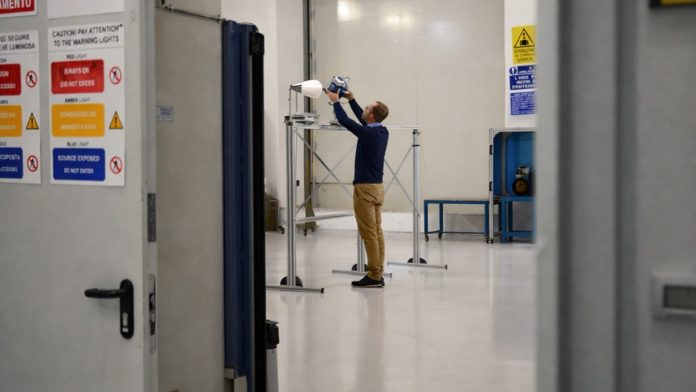
At Politecnico di Milano, radiation measurement becomes knowledge, from neutrons to ultrafast beams, from dosimetry to tomography, bridging fundamental research and real-world applications.
Nuclear Measurements Laboratories (NMLs) focus on studying, applying, and developing methods to exploit or measure radiation fields of different types and properties. Based at Politecnico di Milano, NMLs transform neutrons, photons, and charged particles from ‘invisible agents’ into measurable, traceable information, supporting research, radiation protection, and nuclear applications. Most activities are funded through national and international projects and span spectrometry, dosimetry and microdosimetry of complex and mixed radiation fields, nuclear signal analysis, and the development of innovative detection systems and data workflows.
Active neutron spectrometry in complex fields
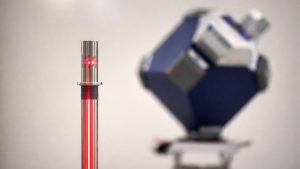
Neutrons represent a particularly demanding frontier, especially under extreme conditions such as those found in fusion facilities, high-energy radiation fields, or pulsed beam environments. The NMLs address these challenges by developing novel active neutron spectrometers, both isotropic and direction-sensitive, through an iterative cycle of advanced simulation (e.g., FLUKA-based modelling) and rigorous experimental validation. One illustrative example is DIAMON: a compact, direction-aware, isotropic, and active instrument engineered for rapid, real-time characterisation of complex neutron fields, where conventional techniques are often too slow or operationally demanding.
Neutron irradiation and metrology services
NMLs include a neutron irradiation infrastructure providing extended thermal and fast neutron fields, enabling radiometric characterisation services both in the lab and in situ. Its neutron metrology service includes fast neutron reference fields based on neutron sources, supporting calibration in compliance with ISO 8529-1:2021 (neutron reference radiation fields). A complementary facility generating a 95% pure thermal neutron field through a streaming moderator is available for the characterisation of instruments and samples under controlled low-energy conditions.
Ultrafast sources and laser-driven diagnostics
Another research line refers to radiation delivered in ultrashort bursts, such as laser-driven proton beams. In these regimes, diagnostics must cope with transient fields and strong backgrounds. Work includes active diagnostic concepts coupling magnetic spectrometers with pixelated detectors to measure the energy spectrum of the emitted protons, supported by prototype development and calibration campaigns. In parallel, the use of CCD sensors in laser-driven PIXE (Particle-Induced X-ray Emission) is also investigated, acquiring X-ray spectra by integration over multiple laser shots, enabling meaningful spectrometric studies even when single-shot statistics are limited.
RETINA: Non-destructive elemental and tomographic analysis
NMLs host RETINA (Recognition of Elements and Tomographic Imaging for Non-destructive Analysis), a facility designed for non-destructive materials analysis by combining X-ray fluorescence (XRF) spectroscopy with 2D/3D X-ray imaging. Equipped with a high-power X-ray tube, automated sample positioning, and high-resolution detectors, RETINA supports qualitative and quantitative analysis of planar samples such as thin films, polymer membranes, and battery electrodes. Rapid elemental mapping can be performed with spatial resolution ranging from a few millimetres to centimetre scale. Depending on sample size and configuration, X-ray imaging and 3D scans can achieve spatial resolution from approximately 60 µm to 1 mm.
Micro- and nanodosimetry for particle therapy
A key research line addresses micro- and nanodosimetry for particle-therapy beams, where biological response depends not only on delivered dose but on how energy is deposited at micrometre and nanometer scales. NML research group develops tissue-equivalent proportional counters (TEPCs) based on an avalanche-confinement concept to reproduce cellular and sub-cellular interaction sites. Dedicated Monte Carlo tools support detector modelling and data interpretation, alongside complementary studies on nuclear reaction channels relevant to novel therapies (e.g., the aneutronic fusion reaction p + ¹¹B → 3α). Solid-state dosimetry and silicon-based microdosimetry further extend the measurement portfolio.
Batteries and AI-enabled microstructural insight
A recent application domain is electrochemical systems for energy storage or conversion. NMLs operate a system (TESCAN UniTOM HR) for ultrafast 3D or 4D microtomography down to 600 nm of resolution for enabling quantitative studies of microstructural degradation, dendrite nucleation and propagation, and morphology changes during cycling. To speed up and strengthen quantitative analysis, AI-driven segmentation, defect detection, and denoising approaches are integrated into the workflow, helping link microstructural descriptors to functional performance metrics – while aiming to reduce acquisition time without sacrificing measurement robustness.
Supporting the full lifecycle of radiological facilities
From early design stages to later operational phases, the laboratories contribute across the lifecycle of nuclear and radiological infrastructures: Monte Carlo studies for shielding and activation, support for nuclear medicine facility design, and downstream activities including radioactive waste management and both in-situ and in-lab radiometric characterisation using high-resolution gamma spectrometry (HPGe), in settings such as isotope-production accelerators and treatment centres.
Looking ahead
By combining advanced instrumentation, modelling, and metrological rigour, the Nuclear Measurements Laboratories sit at the intersection of physics, engineering, and data science, serving as both a research and development hub and a resource for external users. The direction is clear: smarter detectors, advanced experimental tools, more predictive simulations, and more automated, auditable pipelines where AI supports (but does not replace) traceability and uncertainty-aware decision-making, bringing reliable radiation measurement from controlled laboratory settings to real-world applications.
Please note, this article will also appear in the 25th edition of our quarterly publication.