In a major scientific breakthrough, researchers at Rice University have unveiled a powerful new technology for PFAS removal that could transform global water purification efforts.
The innovative system not only captures these toxic ‘forever chemicals’ with record speed and efficiency but also destroys them safely – a feat that has eluded scientists for decades.
Developed in collaboration with leading South Korean institutions, the eco-friendly PFAS removal method represents a crucial step toward tackling one of the world’s most persistent and widespread environmental pollutants.
With PFAS contamination threatening drinking water supplies and ecosystems across the globe, the Rice-led team’s discovery offers a practical and sustainable solution to an urgent public health challenge.
The research was led by postdoctoral researcher Youngkun Chung under the supervision of Professor Michael Wong at Rice’s George R. Brown School of Engineering and Computing.
Collaborators included Professors Seoktae Kang of the Korea Advanced Institute of Science and Technology (KAIST) and Keon-Ham Kim of Pukyong National University in South Korea.
The dangers of PFAS
Per- and polyfluoroalkyl substances (PFAS) are manufactured chemicals developed in the 1940s and prized for their resistance to heat, oil and water.
These properties made them ideal for use in non-stick cookware, waterproof textiles, food packaging and firefighting foams.
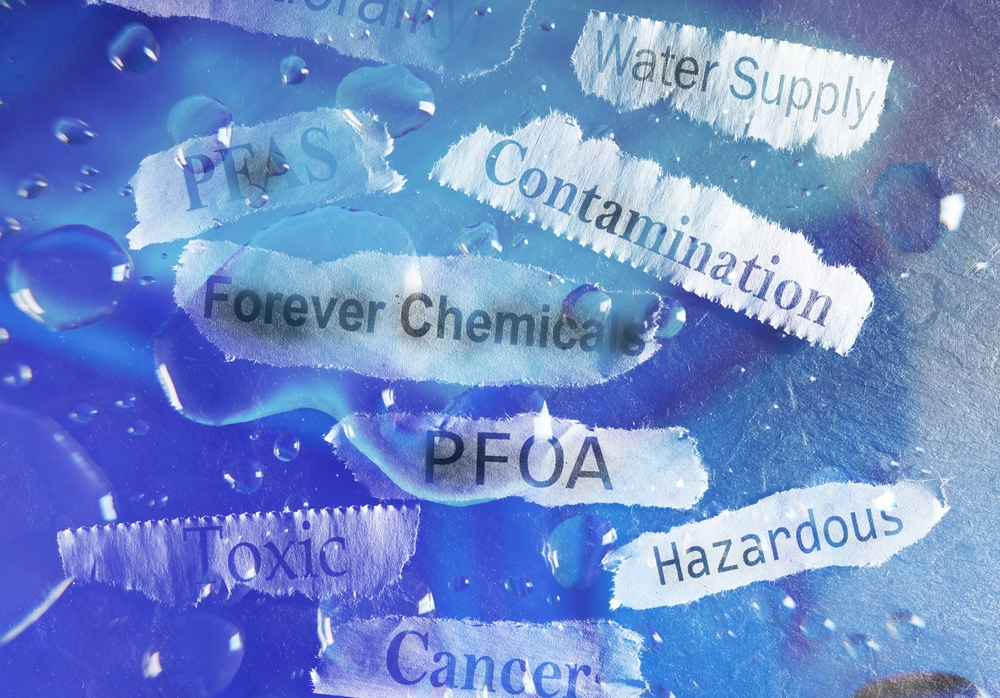
However, this same durability has created a global contamination problem. PFAS do not break down easily, allowing them to accumulate in water, soil and even the human body.
Studies have linked PFAS exposure to serious health risks, including cancer, liver damage, hormonal disruption and immune system impairment.
The limitations of existing cleanup methods
Conventional PFAS cleanup technologies, such as activated carbon filters or ion-exchange resins, rely on adsorption to capture the chemicals.
While these systems can temporarily remove PFAS from water, they are often slow, inefficient and produce secondary waste that still requires disposal.
This has made large-scale remediation costly and unsustainable.
A powerful new material for PFAS removal
The Rice-led team’s innovation centres on a layered double hydroxide (LDH) material composed of copper and aluminium – first developed at KAIST in 2021.
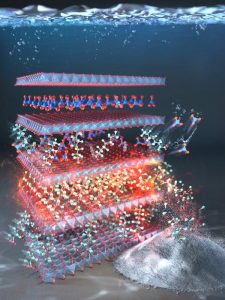
During experiments, Chung discovered that a specific nitrate-based LDH compound could capture PFAS with unprecedented speed and efficiency.
Tests revealed that the material absorbed PFAS over 1,000 times more effectively than traditional adsorbents and could purify contaminated water 100 times faster than commercial carbon filters.
Its performance stems from the material’s unique atomic structure, where precisely arranged layers and subtle charge differences attract and trap PFAS molecules almost instantly.
Real-world potential and sustainable design
The team tested the LDH material in various water sources, including tap water, river water and industrial wastewater.
In every case, it achieved rapid and thorough PFAS removal, working efficiently in both stationary and continuous-flow systems.
But the true innovation lies in the system’s ability not just to capture PFAS, but to destroy them. Working with Rice professors Pedro Alvarez and James Tour, Chung developed a thermal process that safely decomposes the captured PFAS by heating the material with calcium carbonate.
This approach eliminated more than half of the PFAS without producing harmful by-products and regenerated the LDH for reuse.
Closing the loop on forever chemicals
The research marks the first demonstration of a closed-loop, sustainable PFAS removal and destruction system.
Early results show the material can undergo at least six full cycles of capture, breakdown and regeneration, dramatically reducing waste and cost.
As PFAS contamination continues to threaten ecosystems and public health worldwide, Rice University’s innovation offers a powerful, scalable and environmentally responsible solution – bringing the world a step closer to finally breaking the cycle of forever chemicals.