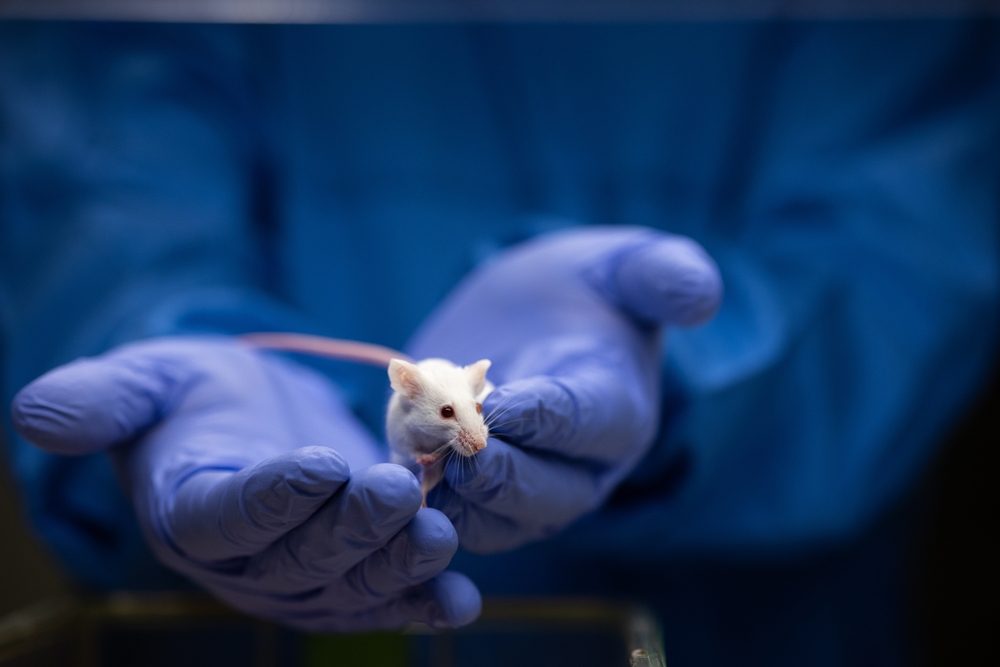
The number of animals used in UK laboratories has fallen once again, marking the lowest figure in over two decades.
According to the latest government statistics, 2.64 million scientific procedures involving animals were carried out in 2024, down slightly from 2.67 million in 2023.
The RSPCA has welcomed this continued decline but warns that the headline numbers conceal a much larger, often overlooked issue – the thousands of animals bred for research but never actually used in experiments.
The charity argues that without accounting for these animals, the true scale of the UK’s reliance on animal testing remains hidden.
The hidden toll: Bred, not used animals
Despite the decline, the RSPCA warns that the official statistics only tell part of the story.
The charity says the data fails to include hundreds of thousands of animals that are bred for science but never actually used in experiments.
These animals – often labelled ‘surplus’ – may be killed because they do not possess the desired genetic traits or because more animals were bred than required.
Others are euthanised so their tissues or organs can be used for research rather than being involved in live procedures.
The RSPCA argues that without counting these animals, it is impossible to fully assess the true scale of animal testing and its ethical implications.
Dr Penny Hawkins, RSPCA Head of Animals in Science, explained: “While the statistics published by the Home Office can help inform the public about the use of live animals in scientific procedures, information about the hundreds of thousands of animals that are bred for science, but then not used in procedures, is crucially missing.
“All these animals are capable of experiencing suffering, and every individual counts. Our overarching ambition is for the UK and the rest of the world to phase out the use of animals in science.
“But as long as UK Government statistics show only part of the story, it will impede everyone’s ability to measure how science is impacting on the full range of animals bred for lab use, making it impossible to understand the complete picture.”
Calls for transparency and reform
The charity is calling on the UK Government to reinstate regular reporting of data on bred, not used animals, last published in 2017. In contrast, the European Union continues to collect and release this information every five years.
The RSPCA believes that comprehensive data would not only improve transparency but also support the development of strategies to phase out animal testing altogether.
Accurate reporting, it says, is essential for tracking progress toward the replacement of animal-based experiments with humane, non-animal technologies.
Towards a future without animal testing
While the continued decline in laboratory animal use offers hope, campaigners insist that real progress depends on acknowledging every animal affected by science, including those never used in a procedure.
Without this transparency, the RSPCA warns that the UK risks overlooking a significant proportion of animals bred for research purposes – undermining both scientific accountability and animal welfare efforts.
Therefore, the RSPCA is urging the government to deliver an ambitious national strategy to phase out animal experiments, a plan expected to be outlined later this year.
As the country awaits the forthcoming strategy, the debate over animal testing continues to highlight the tension between scientific advancement and ethical responsibility.