An Eindhoven-based medtech startup has raised €24m in seed funding to bring a radical shift to antimicrobial susceptibility testing, a cornerstone of modern infectious disease treatment.
ShanX Medtech is developing a rapid diagnostic system capable of identifying the most effective antibiotic for a patient in around one hour – dramatically faster than the two to three days required by conventional laboratory methods.
The funding round reflects growing urgency around antimicrobial resistance and the need for faster, evidence-based prescribing at the point of care.
Breaking the bottleneck in antibiotic diagnostics
Traditional antimicrobial susceptibility testing depends on culturing bacteria from patient samples.
This biological growth process is inherently slow, often forcing clinicians to prescribe broad-spectrum antibiotics while waiting days for results. Such delays increase the risk of complications, prolong hospital stays, and contribute to antibiotic resistance.
ShanX Medtech’s platform is designed to bypass this bottleneck entirely. Instead of waiting for bacteria to grow, the system analyses patient samples directly.
By removing the need for lengthy preparation steps such as subculturing, the technology compresses a multi-day workflow into a rapid, automated process.
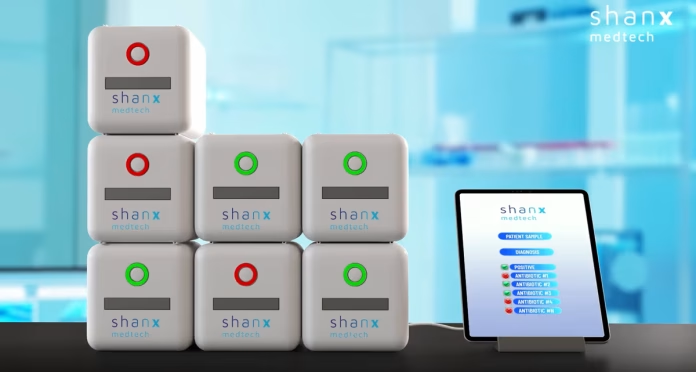
At its core is a single, stackable cartridge that can test a wide range of microbes. This flexibility allows the system to fit into complex clinical microbiology workflows without requiring different instruments for different pathogens.
Point-of-care antimicrobial susceptibility testing
Unlike large diagnostic mainframes limited to central laboratories, ShanX’s device is compact and built for decentralised use.
This opens the door to antimicrobial susceptibility testing in settings such as general practitioner clinics, nursing homes, and smaller hospitals.
The system is designed to minimise hands-on time by automating the biological analysis needed to determine which antibiotic will effectively kill a specific pathogen.
In practice, this could allow a clinician to test, diagnose, and prescribe the correct antibiotic during a single patient visit.
By turning a biological delay into a hardware-driven solution, the company aims to make precision antibiotic treatment both faster and more accessible.
Funding to de-risk tech innovation
The €24m seed round combines public and private investment, reflecting the high-risk, high-impact nature of medical diagnostics innovation.
The round was led by the Borski Fund, with participation from NextGen Ventures, the Brabant Development Agency (BOM), CbusineZ, and Invest-NL.
A significant portion of the funding – €8.85m – comes from a European Commission contract managed through the European Health and Digital Executive Agency (HaDEA).
This blended financing structure is intended to accelerate development while reducing the risk associated with bringing advanced antimicrobial susceptibility testing technologies to market.
Implications for healthcare systems and policy
The impact of same-day antimicrobial susceptibility testing extends well beyond individual patients.
Faster, targeted prescriptions reduce the misuse of broad-spectrum antibiotics, helping preserve their effectiveness over time. For policymakers, this represents a tangible tool in the fight against antimicrobial resistance.
There is also a strong economic case. According to Invest-NL, widespread adoption of rapid antimicrobial susceptibility testing could generate millions of euros in annual healthcare savings in the Netherlands alone.
These savings would come from shorter hospital stays, fewer treatment failures, and reduced reliance on costly last-resort antibiotics.
Clinical validation underway
ShanX Medtech’s system is not yet commercially available and must still undergo regulatory approval.
Clinical validation is already underway through partnerships with Erasmus Medical Center and AMR GLOBAL, focusing initially on urinary tract infections.
Funded by Health Holland, this project targets one of the most common infection types where rapid diagnostics can immediately reduce unnecessary antibiotic use.
In parallel, collaborations with Catharina Hospital and Eindhoven University of Technology are evaluating the technology’s performance in sepsis and meningitis – conditions where every hour of diagnostic delay significantly increases mortality risk.
The outcomes of these studies will play a decisive role in determining whether the platform becomes a standard tool in antimicrobial susceptibility testing or remains confined to pilot settings.