Navalprogetti, a Trieste-based engineering firm, leads maritime innovation by transitioning from fossil fuels to sustainable hydrogen technologies onboard.
Navalprogetti, a Trieste-based engineering company, has been serving the maritime industry with advanced design solutions for half a century. Founded in 1975, the firm initially focused on ship design and general engineering services. In the 1980s, it expanded into the oil and gas sector under the leadership of Silvio Stenta and Loris Cok, gaining recognition for its technical expertise and tailored engineering support to major industrial clients.
Over the past ten years, the company has undergone a gradual transformation. This shift has been driven by a generational change in leadership and the entry of new partners, Pierluigi Busetto and Kristin Zuric, who had served previously in the company, starting in 2003 as naval architects. While continuing to serve the fossil fuel sector, Navalprogetti has diversified its research and development activities by exploring alternative energy sources, with a particular focus on hydrogen technologies.
The transition from traditional energy systems to sustainable maritime propulsion reflects broader changes taking place across the global shipping industry, where decarbonisation has become a strategic priority.
Navalprogetti began working on low-emission fuel systems in 2012, starting with liquefied natural gas (LNG), which at the time was seen as a transitional solution. Building on that experience, the company has focused on hydrogen-based applications since 2019. Initial projects were developed at the regional level, later expanding to include European research initiatives supported by both private and public stakeholders.
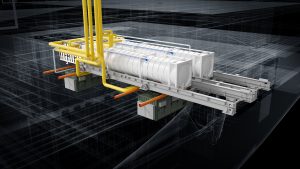
The sHYpS project
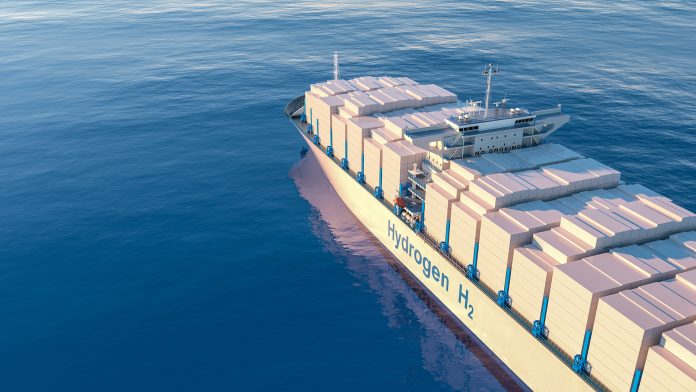
Among these efforts, one of the most significant is the sHYpS project, which aims to design and implement a hydrogen-powered energy generation system on board a cruise ship. The project won first place in the Innovation category at the Waterborne Awards in 2025, a highly regarded recognition in the international maritime sector. The system will allow the ship to operate using liquid hydrogen, which is vaporised and converted into electricity via high-efficiency fuel cells.
The system, capable of producing up to 6 megawatts of power, is being designed and integrated by Navalprogetti, including all auxiliary and safety systems required for onboard operation. The project is particularly notable due to the size and class of the vessel involved, as no comparable application has been implemented on a cruise ship of this scale. The ship, operated by Viking Cruises, will be able to navigate for an entire day through the Norwegian fjords with zero emissions, releasing only water vapour into the environment.
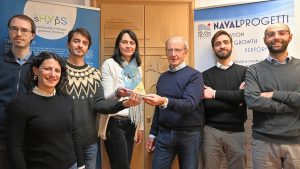
The sHYpS initiative involves 13 partners from six different countries, combining expertise from shipbuilding, energy systems, research institutions, and engineering firms. The prototype of the hydrogen fuel cells has already been completed. Construction of the hydrogen storage tank and the tank connection space will be finalised by the end of 2025 and will be tested on land to prove safe and reliable installation on board, planned for November 2026, which essentially turned the activities and outcomes into a commercial project.
The promise of hydrogen
Working with liquid hydrogen presents complex technological challenges. The fuel must be stored at extremely low temperatures, around -253°C, requiring advanced cryogenic systems and strict safety protocols. Despite these obstacles, hydrogen is increasingly being considered by industry stakeholders as a viable solution for reducing maritime emissions, especially in specific use cases such as short-distance cruising or port operations.
Navalprogetti has reported growing interest in hydrogen-based systems from long-standing clients in the oil and gas sector, many of whom are now exploring the potential of alternative fuels to meet evolving regulatory and environmental standards. While the maritime industry has yet to identify a single universal fuel for the future, several options are under active consideration, including ammonia and methanol.
Hydrogen is seen as one of the safest alternatives for passenger vessels due to its clean combustion and lower toxicity compared to other fuels. However, its use on long-range routes remains limited by current storage and distribution constraints. Research is ongoing to address these challenges, and Navalprogetti is actively contributing to efforts aimed at expanding the practical range of hydrogen-powered systems.
Although hydrogen propulsion may not yet be ready for deep-sea commercial shipping, it already offers compelling benefits in other scenarios. One potential application is providing clean, onboard power during port stays, a solution that could significantly reduce emissions in urban port areas.
With ongoing investment in research and a clear commitment to innovation, Navalprogetti is positioning itself as a key player in the shift toward more sustainable maritime transport.
Please note, this article will also appear in the 24th edition of our quarterly publication.