The SOLiD project is developing next-generation lithium-metal batteries, combining safety and performance with recyclability for Europe’s clean energy future.
On the path to a climate-neutral future, few technologies are as indispensable and as closely scrutinised as the battery. Powering everything from smartphones to electric vehicles (EVs), batteries sit at the heart of the energy transition. But as demand increases, so do concerns about sustainability, cost, and the physical limits of today’s dominant lithium-ion technology.
SOLiD is an ambitious EU-funded project aimed at redesigning the rules of battery manufacturing. Launched in September 2022, SOLiD brings together 14 partners across nine countries, ranging from industrial powerhouses to nimble SMEs and leading research institutes. The goal of the project is to create a sustainable pilot-scale process for the next generation of solid-state lithium-metal batteries, which promise higher energy density, improved safety, longer lifespan, and recyclability by design.
Three years after SOLiD’s outset, the project has reached a turning point. Its breakthroughs in electrode coating, electrolyte formulation, and digital quality control are paving the way for Europe to scale solid-state batteries beyond the lab and into real-world production. And with them comes the promise of lighter, longer-lasting batteries for EVs, safer storage for renewable energy, and a path toward European battery sovereignty.
Beyond lithium-ion: The need for a new generation
Lithium-ion batteries have carried the electrification revolution this far. They power millions of EVs on Europe’s roads and are central to the continent’s plans for renewable energy storage. Yet, their limitations are increasingly clear. Liquid electrolytes are volatile and flammable, graphite anodes limit energy density, and dependence on critical raw materials, especially cobalt, poses both supply risks and ethical concerns.
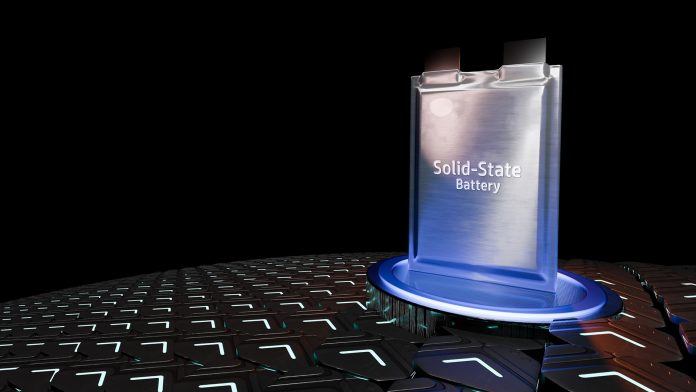
Solid-state lithium-metal batteries (SSBs) offer a way forward. By replacing liquid electrolytes with solid ones and swapping graphite for lithium metal anodes, these batteries can store up to 70% more energy in the same volume. They also reduce fire risks, perform better at higher voltages, and create design possibilities for lighter, more compact batteries. Most importantly, they can drastically cut dependence on cobalt and lithium by using advanced protective layers and thinner electrode coatings.
The problem, until now, has been scalability. Most SSB research remains confined to the lab, where carefully produced cells work in small numbers, but falter under industrial conditions. SOLiD was launched with the aim of bringing scalable manufacturing, recycling-ready design, and digital quality control into the DNA of solid-state batteries.
Reinventing the battery factory
SOLiD goes beyond better materials: it’s redefining battery manufacturing. Traditional electrode fabrication is a wet and wasteful process, relying on toxic solvents and energy-intensive drying steps. SOLiD is pioneering roll-to-roll (R2R) dry extrusion coating, which blends active cathode material, polymer electrolyte, and conductive additives into uniform films without the use of solvents and excess material waste.
Dry coating is a ‘gamechanger’. It’s cleaner, faster, and eliminates the need for costly solvent recovery and drying infrastructure, which is better for the environment and for production costs.
On the anode side, the project is scaling up pulsed laser deposition (PLD) to create ultra-thin lithium layers at just five micrometres in thickness. This precise coating is supported by in-line processes that engineer stable interfaces, ensuring compatibility with the cathode and electrolyte layers. This meticulous interfacial control is crucial for preventing dendrites, which are tiny needle-like formations that can pierce the electrolyte and short-circuit the battery.
Meanwhile, the solid-state polymer electrolyte (SSPE) itself is being reinvented. Early work focused on polyethylene glycol-based systems, but, by mid-2025, the team unveiled a polyester-based formulation, PESDA, that vastly outperformed its predecessors. With tensile yields up to 250% before failure and stable cycling performance, retaining 95% of capacity after 120 cycles in prototype cells, PESDA is proving to be the electrolyte of choice for scaling into pouch cells.
From lab bench to pilot line
The hallmark of SOLiD’s approach is its industrialisation focus from the outset. Rather than experimenting with coin cells in isolation, the consortium has been building and validating reference cells in both 1 Ah and 10 Ah formats. These so-called ‘Gen 2b’ cells, built with liquid electrolytes, act as benchmarks to ensure new solid-state designs can match and exceed established industrial performance.
Pilot-scale production is already underway. Cathode films with improved thickness control and uniformity have been demonstrated, while slot-die coated separator electrolytes are being tested for consistency and repeatability.

The first smart inspection tools, combining particle detection, optical monitoring, and electrochemical impedance spectroscopy, are being integrated into pilot lines. By late 2025, the first of these inspection systems will be fully operational, enabling near real-time quality assurance.
This is where SOLiD’s digital edge comes in. The project is developing a ‘digital twin’, which is an AI-driven feedback and feedforward system that links inspection data directly to process control. In effect, the factory learns as it produces, reducing defects, improving yields, and cutting costs. This battery production line ‘digital twin’ could become a template for future gigafactories, seeking to minimise waste and maximise efficiency.
Building for sustainability from day one
The planned recycling-by-design approach of SOLiD (i.e., the use of polymeric interlayers to facilitate easy delamination and direct recycling) aims to support the development of more circular battery solutions. Current lithium-ion batteries are exceptionally difficult to recycle, requiring energy-intensive processes that recover only a fraction of valuable materials. Unlike conventional cells, SOLiD’s designs explore ways to integrate recycling-friendly materials and interfaces from the start.
Polymeric interlayers are being engineered for easy delamination, allowing for the separation of cathodes, electrolytes, and anodes at end-of-life. Non-toxic housing materials and modular design simplify disassembly. Advanced software tools track material composition, making it easier to achieve more efficient recycling.
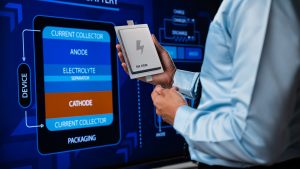
These design principles are intended to support safer, longer-lasting batteries, but are also well-suited for second-life applications, such as stationary storage. In this way, SOLiD directly supports the integration of renewable energy into households and grids – a cornerstone of Europe’s decarbonisation plans.
Milestones and momentum
By the third year of the project, the list of achievements is impressive:
- Successful dry extrusion of cathodes with improved film uniformity.
- Pilot-scale coating of solid polymer electrolytes using slot-die techniques.
- Validation of polyester-based electrolytes with superior mechanical and electrochemical properties.
- Reference ‘Gen 2b’ cells built and tested in multiple formats.
- Inline inspection and quality control tools integrated into pilot lines.
- Peer-reviewed publications and conference presentations disseminating results to the global battery community.
These advances are not only technical, but also strategic. With global demand for batteries expected to grow 14-fold by 2030, Europe faces stiff competition from Asia and North America. By developing both the materials and the manufacturing methods for next-generation SSBs, SOLiD is helping to secure Europe’s place in the global battery race.
Europe’s strategic battery sovereignty
Behind SOLiD’s technical breakthroughs lies a larger strategic goal: to ensure Europe’s energy independence. Today, most advanced batteries are produced in Asia, with China, South Korea, and Japan dominating the supply chain. This imbalance exposes Europe to supply risks and undermines its ability to fully control the environmental and ethical footprint of its energy transition.
By investing in projects such as SOLiD, the EU is working to shift this balance. The technologies developed, including dry extrusion, pulsed laser deposition, and recyclable interlayers, are more than laboratory successes. They are the building blocks of a homegrown European battery industry that can scale sustainably and competitively. In practical terms, this means reducing reliance on imported batteries and critical raw materials, while creating skilled jobs in European factories and research centres.
If Europe wants to meet its Green Deal targets and remain competitive in the global clean-tech race, building this battery sovereignty is not optional, but essential.
Looking ahead: Scaling and impact
As SOLiD enters its final phase, attention is turning to scaling innovations into pouch cells and refining digital quality control. The ambition is clear: to create a cost-efficient, high-yield, and environmentally responsible pilot-scale production line that can be transferred to industrial partners.
If successful, the project’s impact will be felt across the value chain:
- For EV drivers, ultrahigh energy density batteries mean longer driving ranges and faster charging.
- For manufacturers, dry processing and PLD methods reduce costs while improving safety and reliability.
- For the environment, recyclability-by-design and reduced reliance on cobalt and lithium ease pressure on critical raw materials and ecosystems.
- For society, safer and longer-lasting batteries open up new applications in renewable integration and grid storage.
In many ways, SOLiD is building more than a battery – it’s building a blueprint for the factory of the future.
The bigger picture
The story of SOLiD is also the story of Europe’s determination to lead in clean technologies. As the continent pushes toward the Green Deal’s climate-neutrality targets, batteries are recognised as a strategic priority. Projects like SOLiD not only advance the science but also ensure that production capacity, sustainability, and resource efficiency are embedded in the very architecture of the industry.
With consortium leadership from VTT Technical Research Centre of Finland and strong participation from academia, SMEs, and industry, SOLiD is a microcosm of European collaboration. It reflects the continent’s recognition that the energy transition is not just a technological challenge, but also a social and economic one.
Final thoughts
The journey from lab prototype to industrial reality is rarely straightforward. However, as the SOLiD project demonstrates, it is possible to integrate cutting-edge materials science, innovative production methods, and sustainability principles into a coherent roadmap. Three years in, the project has already proven that solid-state batteries can be manufactured more cleanly, safely, and efficiently.
As SOLiD’s pouch cell prototypes come to life and digital quality control systems go live, Europe moves one step closer to a future of stronger, more sustainable, and fully recyclable batteries. SOLiD is creating more than just energy storage. It’s advancing Europe’s energy independence, driving cleaner mobility, and establishing the groundwork for a circular economy – a testament to the fact that electrification’s future can be both powerful and sustainable.
Please note, this article will also appear in the 24th edition of our quarterly publication.