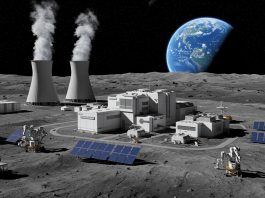
Professor Lefteri H Tsoukalas from Purdue University explores AI as both a catalyst of and key enabler for the atomic energy transition.
The emerging AI-energy nexus presents a critical juncture in technological history, demanding a radical, physically grounded policy framework. To address the unprecedented and rapidly escalating energy demands created by artificial intelligence (AI), we argue that the world must commit to an immediate, deliberate transition to the atomic energy paradigm – a monumental shift that AI itself is uniquely positioned to both drive and enable.¹
The AI-driven energy imbalance
The AI-energy nexus is defined by the soaring energy consumption of AI infrastructure that is overwhelming the global electricity grid. This massive expansion is fuelled by data centres – AI server farms and supercomputer networks – which are rapidly becoming the single largest factor in future commercial energy consumption.
This demand is quantifiable and urgent: the US is projected to see thousands of new data centre projects break ground in 2025, with overall energy consumption from the sector projected to triple by 2028. This energy hunger requires the annual output equivalent of approximately 77 new 1000 MWe nuclear reactors by 2028 – a demand so immense it is now the ‘pacing challenge’ for continued technological growth, including the electrification of transportation and industrial reshoring.
Promethean limits and the need for energy density
Humanity’s energy history hinges on two great revolutions: the Promethean and the atomic. The Promethean era, based on the mastery of fire and the chemical energy in molecular bonds (fossil fuels and, currently, most renewables working with natural gas), is now reaching its physical limits. While policy pushes for a ‘green energy transition’ toward renewables, this framework is fundamentally constrained by low energy density, intermittency, and high entropy production.
Attempting to meet global energy needs entirely with existing renewables and storage would require functionally unfeasible scales of land use, resource extraction, and trillions of dollars in grid infrastructure. The scale simply does not match the need.
Against this backdrop, the only viable energy source is one capable of co-location with demand. This is the role of small modular reactors (SMRs) and micro-reactors (MRs) – the first generation of nuclear innovation. These advanced fission reactors can be placed directly alongside data centres or heavy industrial facilities, providing both electricity and low-temperature process heat from their thermal output. This full-stack option allows hard-to-abate industrial sectors to decarbonise without prohibitively expensive process redesign.
The atomic imperative: Innovation, scale, and fuel production
The atomic energy transition exploits the immense energy of the nucleus, releasing approximately 200 MeV per fission event – millions of times more energy per unit mass than coal. Crucially, unlike the Promethean transition, atomic energy systems (both fission and fusion) can be designed to produce new fuel as they generate power.
The imperative of nuclear innovation
The chief barrier to nuclear power is not physics, but economics and policy. The industry has historically been defined by costly, bespoke, multi-gigawatt-scale projects, leading to high levelized cost of electricity (LCOE) and overnight construction cost estimates (OCCE). The pathway to affordability relies entirely on deliberate innovation: a concerted effort to move nuclear construction from a one-off megaproject to a factory-based, mass-manufactured product.
This innovation is manifested in the modular, smaller-scale design of SMRs and MRs, enabling:
- Factory production: Achieving economies of volume to dramatically reduce capital costs.
- Enhanced safety: Utilising passive safety systems that rely on natural laws rather than active mechanical components.
- Streamlined regulation: Requiring a necessary policy push toward technology-inclusive licensing to accelerate deployment and reduce regulatory lag.
Fuel breeding and fusion breakthroughs
The atomic paradigm is inherently self-sustaining via fuel breeding. This process converts globally abundant fertile material (like uranium and thorium) into superior fissile fuel, such as Pu-239. This critical capability not only produces new fuel alongside energy creation but, perhaps more crucially, converts spent fuel (or ‘nuclear waste’) into an energy resource that can power humanity for millennia.
Furthermore, the commercial viability of fusion is emerging due to recent breakthroughs, including the National Ignition Facility (NIF) achieving net energy gain and the rapid development of high-temperature REBCO magnets by private ventures. These scientific milestones signal that fusion, once a distant dream, may become a commercially viable energy option in the mid-21st century, further reinforcing the atomic imperative.
AI as the catalyst and enabler
AI itself is the engine for accelerating the atomic transition. It provides the necessary sophistication for grid optimisation and reactor control but also for managing global nuclear safety:
- Energy ecosystem optimisation: AI provides the necessary sophistication for grid stability, enabling real-time control and dynamic partitioning into self-healing energy ecosystems to orchestrate the workings of numerous distributed energy sources, including micro-reactors.
- Non-proliferation and safety: AI enables cradle-to-grave monitoring of nuclear material and processes. This unprecedented oversight strengthens non-proliferation targets and helps prevent nuclear chaos. In this sense, AI may be the essential enabling technology for the widespread utilisation of nuclear power, analogous to how radar technology enabled the reliable development of global commercial aviation.
The convergence of the atomic energy transition (driven by high energy density and innovation) and AI-powered optimisation is the only physically and economically viable path to sustain human technological progress and meet the extraordinary demands of the AI-energy nexus.
References
Please note, this article will also appear in the 24th edition of our quarterly publication.