Steve Brooks, Chair, Manufacturing Working Group, AMR Industry Alliance, discusses the AMR related to antibiotic manufacturing and how the sector can address the risk.
Antimicrobial resistance (AMR) is often framed as a clinical or hospital-based problem. Access to appropriate drugs, innovation, and research on new antibiotics and diagnostics remains a major concern, but a less obvious driver of resistance has taken root in our environment.
Ironically, the very production of the antibiotics we need has been overlooked for too long. If antibiotic manufacturing wastes are not adequately controlled, antibiotics can be released into the environment, for example, in wastewater discharged to rivers, at concentrations that may result in the development of resistant bacteria. Resistance can then spread in our environment.
The consequences of AMR, which is driven by various factors, are staggering. In 2019, AMR directly caused 1.27 million deaths and was associated with nearly five million overall, according to The Lancet. Without action, AMR could claim 10 million lives annually by 2050, surpassing cancer as a global killer.
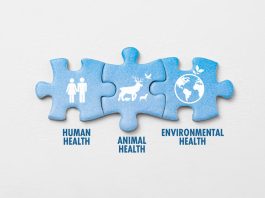
Environmental and human health are inextricably linked. As such, it’s critical that antibiotic producers minimise and control emissions from their manufacturing processes.
Fortunately, momentum to take action is building. Following last year’s UN High-level Meeting (HLM) on AMR, we’ve seen meaningful alignment between public and private actors. The AMR Industry Alliance has helped catalyse this progress by participating in the HLM and creating an industry manufacturing standard to limit emissions of active pharmaceutical ingredients into the environment. Around the same time, the WHO issued guidance for controlling antibiotic manufacturers’ emissions.
Further, the British Standards Institution (BSI) developed independent certification against the industry standard, awarding the BSI Kitemark™ for minimised risk of antimicrobial resistance when an antibiotic is manufactured in accordance with the requirements of the standard. This verification gives manufacturers a pathway to show their operations meet stringent environmental thresholds and that their antibiotics are produced in a manner that minimises the risk of resistance developing in the environment.

Already, the Norwegian Hospital Procurement Trust (Sykehusinnkjøp HF) has adopted the certification into its procurement scorecard, and the UK’s NHS requires pharmaceutical companies applying for its antibiotic subscription model to demonstrate responsible manufacturing through this certification. Based on implementation experience and the WHO guidance, the Alliance is currently revising the standard to align more closely with WHO guidance.
With a strong drive from manufacturers and other stakeholders, a global shift to effective control of antibiotic manufacturing emissions is possible – but only if we scale adoption.
How resistance develops and why the environment matters
Most people associate AMR with overprescribing antibiotics, which is a real problem. However, few realise that antimicrobial resistance can develop before a single pill is taken.
If not well controlled, wastewater from antibiotic production can contain concentrations of antibiotic residue that may promote the development of resistant bacteria and their spread in the environment, which can potentially lead to hard-to-treat human infections. As these resistance genes travel through ecosystems, human populations, and food systems, they create the potential for resistance developing in pathogenic bacteria that undermines antibiotics’ effectiveness.
While policymakers around the globe heavily regulate pharmaceutical manufacturing for quality and more conventional environmental risks, there are no regulations limiting antibiotic emissions in manufacturing waste streams. Given this conundrum, environmental emissions from pharmaceutical manufacturing remain largely unchecked. The AMR Industry Alliance and its member companies have stepped in to address this gap.
From principles to practice: A new manufacturing standard
To address this challenge, the AMR Industry Alliance, one of the largest private sector coalitions providing sustainable solutions to curb AMR, developed and published an environmental standard for responsible antibiotic manufacturing. The standard requires meeting a science-based threshold known as a Predicted No Effect Concentration (PNEC), which defines the level of a given antibiotic in wastewater unlikely to promote the development of resistance in the environment.
Crucially, the standard, developed in partnership with BSI, and associated PNECs are not limited to Alliance members. They’re public and freely available for any manufacturer, investor, or procurement agency to use to set expectations, verify performance, and accelerate global change. BSI created the BSI Kitemark™ certification for minimising the risk of antimicrobial resistance – a first-of-its-kind program that allows manufacturers to demonstrate that their antibiotics are made in facilities with effective environmental controls. Certification is available for both active pharmaceutical ingredients (APIs) and finished drug products. It involves identifying environmental risks, minimising emissions, and validating that discharges fall below predicted no-effect concentrations.

This programme was shaped by a cross-sector coalition: healthcare procurers, financial investors, regulators, civil society, and global public health bodies. The result is a certification that is credible, feasible, and globally relevant.
A call to policymakers and industry leaders
We’re at a pivotal moment. Addressing AMR in the environment may not make headlines like new wonder drugs. But it’s a foundational and solvable part of the AMR crisis. By controlling manufacturing emissions, we minimise the risk of resistance developing from antibiotic manufacturing – and help slow resistance development and spread across borders and generations.
The potential risk is clear, and the tools exist to minimise it. Now, we need scale.
We urge:
- Procurers should make environmental standards a requirement in antibiotic tenders and purchasing frameworks.
- Governments and regulators should formally recognise and integrate AMR risk mitigation into national and international environmental policies.
- Manufacturers should adopt the standard and pursue certification, regardless of Alliance membership. Transparency is not only possible – it’s increasingly anticipated.
- Investors should use environmental AMR risk to assess supply chain sustainability and resilience.
This isn’t just about compliance. It’s about credibility. Manufacturers who proactively demonstrate responsible practices safeguard public health and future-proof their place in the global antibiotic market.
The AMR Industry Alliance remains committed to helping industry, governments, and global health actors work together to overcome this threat. When it comes to AMR, what ends up in the water doesn’t stay there – it finds its way back to all of us.