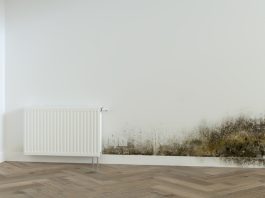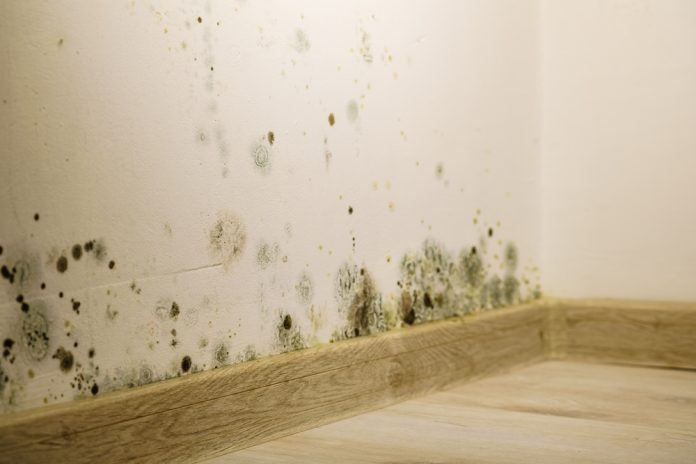
Innovation News Network explores how the UK’s failure to act on damp and mould, despite clear guidance and mounting health risks, reveals a dangerous gap between knowing and doing.
There’s a sentence heard from too many officials, landlords and facilities teams over the past five years: “We’ll monitor it.” Meanwhile, children wheeze through lessons, black spores creep across bathroom seals, and housing officers photograph patches that everyone already knows are there. T
he UK doesn’t have a knowledge gap on damp and mould. We have an action gap.
What the evidence already says
Public health bodies have been clear for years: damp and mould are linked to respiratory symptoms, asthma onset and exacerbation, infections and poorer outcomes for the clinically vulnerable. The World Health Organization’s guidance is unambiguous on risk and on the duty to prevent moisture problems in the first place.
At home, the UK Health Security Agency and central government have consolidated practical guidance for both social and private landlords – identify moisture sources, fix them rapidly, manage ventilation and humidity, and, crucially, stop blaming “lifestyle.” The Housing Ombudsman has gone further, calling for zero tolerance to damp and mould – proactive inspection, evidence-based remediation and empathy-led case handling.
The scale and the stakes
This is not marginal. The English Housing Survey continues to document damp prevalence and the households most exposed – including lower-income families in colder, poorly insulated homes. If you want a single number that should end the debate: the Building Research Establishment estimates poor housing costs the NHS billions and society £135.5bn over 30 years – avoidable harm with a price tag.
The law is moving – so should practice
Awaab’s Law – named after two-year-old Awaab Ishak – sets fixed timeframes for emergency hazards and for damp and mould that present a significant risk of harm in the social rented sector, with a 24-hour window for emergencies from 27 October 2025 and phased extensions thereafter. This is not a suggestion; it’s a new minimum standard of care. The smartest landlords are already working to those timelines and documenting compliance.
From “monitoring” to management: A three-step playbook
1) Diagnose the building, not the tenant
Moisture is physics, not morals. Start with the basics: leaks, fabric defects, cold bridges, insulation gaps, under-ventilation, and overcrowding pressures. Use a structured survey, thermal imaging where helpful, and log RH/temperature/CO₂ to prove root cause – not to apportion blame. Align works with multi-agency practice.
2) Fix fast, prove it, and prevent recurrence
Adopt Awaab-ready SLAs: triage within hours, make safe in 24, permanent remediation on a clock. Photograph before/after, log moisture readings, and share a plain-English closure note with residents. Treat mould and the moisture source – extract repairs, guttering, drainage, insulation, trickle vents, balanced ventilation and set-point tweaks.
3) Buy outcomes, not gadgets
When procuring, contract on results: humidity in the 40–60% band, condensation events trending down, complaint recurrence <X% at 90 days, and time-to-fix within law. Pay suppliers on performance, not kit lists. Feed your dataset to the board and the regulator; what gets measured gets managed.
A note on antimicrobial paints & coatings (choose wisely)
There’s growing interest in “antimicrobial” paints and coatings as part of remediation packages. Many such products rely on biocides – often silver (including nanosilver) or quaternary compounds – to inhibit microbial growth. These actives are regulated under the GB Biocidal Products Regulation, and their safety profiles, environmental fate and long-term effectiveness are under continuing scrutiny. Occupant and worker exposure, especially during application or abrasion, is a legitimate concern raised by regulators and researchers. Inhalation and dermal exposure to silver nanoparticles have documented toxicological signals in lab and animal models; prudent risk management is warranted.
What to do in practice?
- Use biocides only where justified by risk and in line with product authorisations; don’t assume “antimicrobial” equals safer for tenants. Track regulatory guidance and safety data sheets.
- Prioritise source control first (moisture elimination, ventilation, insulation). Paint should be the finish to a building fix, not a substitute for it.
- Consider non-biocidal or physical-mode options where appropriate and supported by evidence and safety documentation.
One commercial option positioned as biocide-free is Q-Field. According to the manufacturer, it avoids harmful additives used in many antimicrobial paints and works via a physical surface effect – a slight electric shield – that inactivates microbes while remaining safe for humans and animals. As with any product, buyers should request independent safety documentation, performance data under real-world conditions, and clarity on maintenance/longevity before specifying.
Why this pays back
It’s cheaper to be good. BRE’s modelling shows that targeted remedial works reduce NHS burden, cut energy bills, lift asset values and improve life chances. In social housing, zero-tolerance also slashes Ombudsman risk, compensation exposure and reputational damage. The dividend is as much moral as financial: fewer hospital admissions, fewer missed school days, fewer parents pleading to be believed.