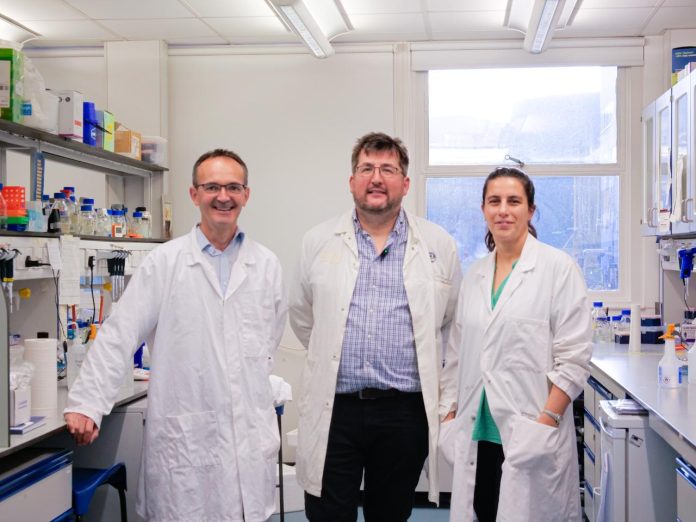
In a major leap forward in the global battle against drug-resistant bacteria, chemists from the University of Warwick and Monash University have uncovered a potent new antibiotic that could help tackle some of the world’s deadliest infections.
The compound, called pre-methylenomycin C lactone, has demonstrated strong activity against notorious pathogens such as MRSA (methicillin-resistant Staphylococcus aureus) and VRE (vancomycin-resistant Enterococcus) – two of the most difficult hospital-acquired infections to treat.
The discovery, made through the Monash Warwick Alliance’s ‘Combatting Emerging Superbug Threats Initiative‘, could mark the start of a new approach to antibiotic discovery – one that may breathe new life into a field that has struggled for decades and become a key weapon in the fight against antimicrobial resistance (AMR).
Why antimicrobial resistance is a global crisis
The discovery arrives at a crucial time. AMR – the ability of bacteria, viruses, fungi, and parasites to resist the effects of drugs – has become one of the world’s greatest health threats.
According to research, AMR is responsible for around 1.1 million deaths each year, with millions more at risk as once-treatable infections become untreatable.
The pipeline for new antibiotics has dried up, and many pharmaceutical companies have scaled back research because the financial incentives are low and the development costs are high.
Most existing antibiotics were discovered between the 1940s and 1970s, often from natural sources like soil bacteria. Since then, scientists have struggled to find new classes of antibiotics.
The ‘low-hanging fruit,’ as researchers describe it, has already been picked. This makes discoveries like pre-methylenomycin C lactone particularly valuable.
Without new treatments, medical procedures like surgery, childbirth, and chemotherapy could once again become life-threatening due to untreatable infections.
Found ‘hiding in plain sight’
What makes this breakthrough even more surprising is where the new antibiotic was found.
The research team discovered pre-methylenomycin C lactone within Streptomyces coelicolor, a bacterium that has been studied in laboratories for over half a century.
This microorganism is well known for producing methylenomycin A, a classic antibiotic identified in the 1970s. But in a twist of scientific irony, the more potent compound had been overlooked for decades – hidden as an intermediate step in the natural process that creates methylenomycin A.
By deleting specific biosynthetic genes, the researchers uncovered two new intermediate compounds, both of which were more effective against bacterial pathogens than methylenomycin A itself.
One of them – pre-methylenomycin C lactone – showed especially promising results, with no detectable resistance in Enterococcus strains under conditions that typically lead to vancomycin resistance.
A new paradigm for antibiotic discovery
What sets this study apart is its innovative approach. Rather than searching for entirely new compounds, the scientists examined the biosynthetic pathways – the natural chemical processes that bacteria use to produce antibiotics.
By investigating the intermediate stages in these pathways, they identified previously unknown compounds with enhanced antimicrobial power.
This method could signal a new direction for antibiotic discovery, focusing on what has long been overlooked: the hidden chemistry within well-studied microorganisms.
The next phase for pre-methylenomycin C lactone involves pre-clinical testing to confirm its safety and effectiveness.
Encouragingly, researchers at Monash University have already developed a scalable synthesis for the compound, meaning it can be produced efficiently for further research and potential medical use.
Hope on the horizon
With its simple molecular structure, strong antibacterial activity, and apparent resistance resilience, pre-methylenomycin C lactone represents a rare and exciting lead in the search for next-generation antibiotics.
If future studies confirm its promise, this compound could one day help protect millions from infections that no longer respond to existing drugs.
As the world grapples with the escalating threat of drug-resistant bacteria, discoveries like this provide a glimmer of hope in the fight against antimicrobial resistance.