Wetlands have long been recognised as Earth’s natural filtration systems, cleansing water by trapping sediments and transforming pollutants into safer compounds.
Now, a new study reveals that these vital ecosystems may also hold the key to combating one of today’s most persistent environmental challenges – the removal of per- and polyfluoroalkyl substances (PFAS), often called ‘forever chemicals.’
A natural solution to a modern problem
PFAS are synthetic compounds used in everything from firefighting foams to non-stick cookware.
Their strong carbon-fluorine bonds make them highly resistant to degradation, leading to widespread contamination of water sources and growing health concerns for humans and wildlife.
Seeking a sustainable solution, Chinese researchers have discovered that pairing certain wetland plants with fungi could significantly enhance PFAS removal from wastewater.
The power of the yellow flag iris and fungi
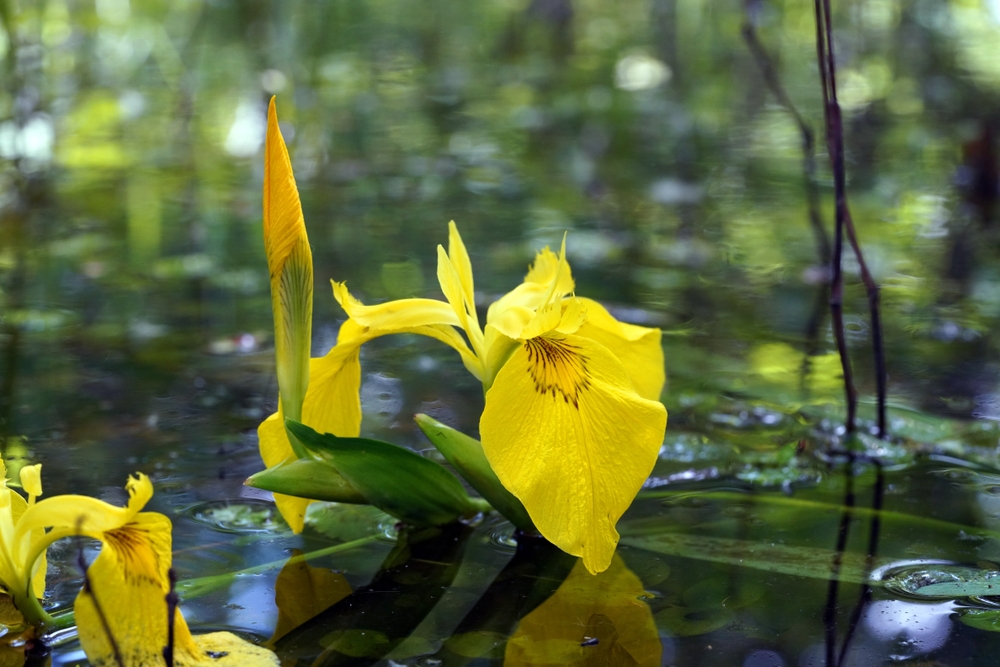
Inside a controlled greenhouse experiment, scientists led by Bo Hu and Feng Zhao tested how well yellow flag irises (Iris pseudacorus L.) could remove PFAS from simulated wastewater.
The plants were cultivated in small, artificial wetland setups with and without a beneficial root fungus known as Rhizophagus irregularis.
The results were striking. While PFAS exposure stunted plant growth and reduced antioxidant activity, irises partnered with the fungus demonstrated improved health and resilience.
Even more impressively, these fungus-assisted plants extracted 10–13% more PFAS than those grown without fungal support.
The team also found that the fungal systems incorporated more long-chain PFAS into plant tissues and accelerated the breakdown of PFAS into less harmful compounds – likely due to increased microbial activity stimulated by the fungus.
Cleaner water, naturally
When researchers tested the outflowing water from these miniature wetlands, they found that the fungal systems released 17–28% less total PFAS compared with the controls.
This indicates that adding R. irregularis to constructed wetlands could greatly enhance their ability to treat PFAS-contaminated water naturally, reducing the need for expensive chemical or mechanical filtration technologies.
Towards scalable PFAS cleanup technologies
The next phase of the research will move beyond the greenhouse to test full-scale constructed wetlands using real wastewater sources.
If these systems perform as well under natural conditions, they could offer a scalable, eco-friendly strategy for PFAS removal – transforming polluted sites into thriving habitats that heal the environment.
By harnessing the symbiotic relationship between plants and fungi, scientists are uncovering a nature-based blueprint for tackling one of the world’s most stubborn pollutants, turning wetlands into powerful allies in the global fight against forever chemicals.