Agriculture considerably contributes to methane emissions, with livestock being a major source. However, practices such as feeding red seaweed and other supplements can effectively cut methane emissions.
Manure management approaches, such as anaerobic digestion and composting, help capture or reduce methane. Technological innovations enable better monitoring and verification of these strategies. However, barriers like funding, regulatory challenges, and resistance to change slow progress.

Innovation News Network delves deeper into sustainable solutions for reducing methane emissions in agriculture.
Understanding the methane problem in agriculture
The challenge of methane emissions in agriculture is considerable, with the sector accounting for approximately 40% of human-caused methane emissions.
Livestock, particularly ruminants such as cattle and sheep, are significant contributors, with enteric fermentation alone accounting for approximately 73% of agricultural methane emissions. This potent greenhouse gas is 80 times more effective than carbon dioxide over a 20-year period, making it a critical focus for climate change mitigation. Since the 1980s, atmospheric methane levels have surged, presenting unique challenges, especially during periods of reduced carbon dioxide emissions.
To address this issue, strategies are being developed to reduce methane emissions. Improving livestock diets and adopting advanced management practices, such as alternative wetting and drying techniques in rice cultivation, can considerably mitigate emissions.
These targeted approaches are crucial for promoting sustainable agricultural practices while addressing the pressing need to mitigate climate change.
Rethinking livestock diets: From seaweed to supplements
Innovative approaches to livestock diets are emerging as a critical strategy for reducing methane emissions in agriculture. Incorporating feed additives, such as red seaweed (Asparagopsis), has shown promise in markedly lowering methane production.
Studies indicate that red seaweed can reduce emissions by up to 90%, with real-world effectiveness around 30%. Nutritional improvements in diets, including higher digestibility, have also been linked to enhanced productivity and reduced methane emissions.
These dietary strategies not only mitigate methane emissions but also contribute to more sustainable livestock management practices.
Manure management that works: From anaerobic digestion to composting
Effective manure management plays a pivotal role in reducing methane emissions from agricultural practices, complementing dietary strategies that target emissions at the source.
Various manure management systems are being adopted to optimise methane reduction, including:
- Anaerobic digestion: Captures methane for energy use, ideal for larger farms with considerable investment capacity.
- Solid-liquid separation: Reduces methane emissions by up to 60% through mechanical separation, providing a cost-effective alternative to digesters.
- Composting: Encourages aerobic decomposition, which considerably lowers methane production compared to anaerobic conditions.
- Acidification: A method used in Denmark that can reduce methane by up to 89% by creating an unfavourable environment for methane-producing microorganisms.
The role of technology: Monitoring, verification, and innovation
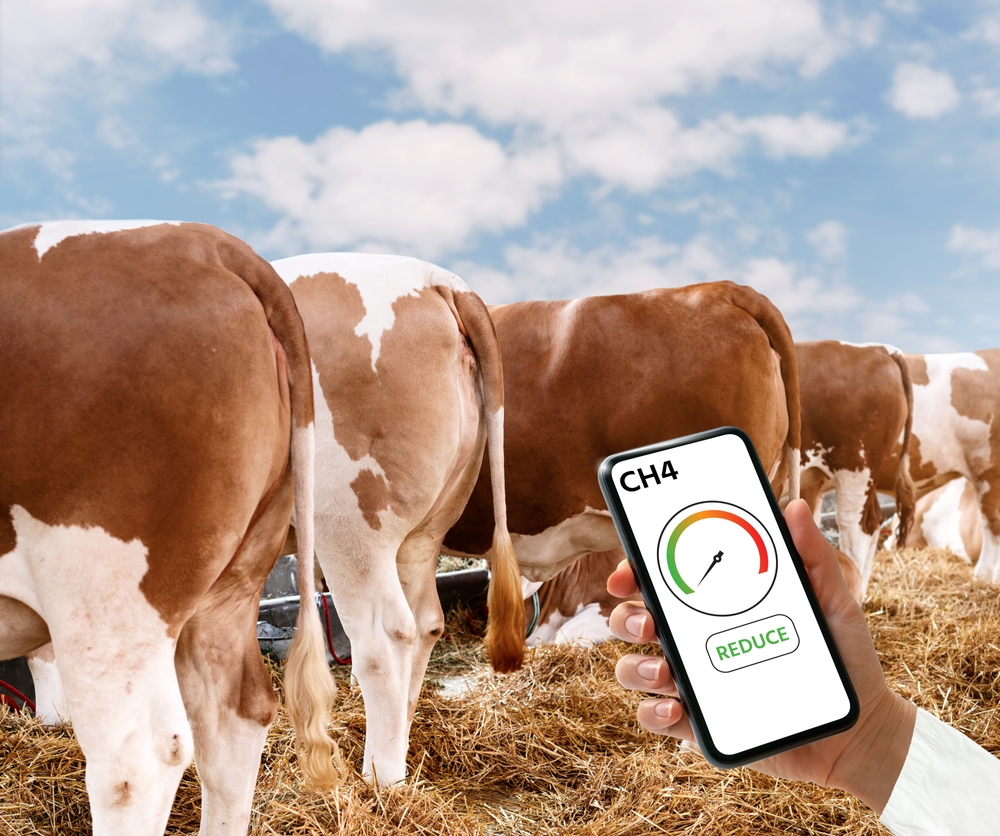
Technology plays a critical role in modern agriculture’s efforts to reduce methane in agriculture. Advanced tools, including precision agriculture systems and sensors, facilitate effective monitoring of livestock health and diet, optimising feed efficiency and minimising emissions from enteric fermentation.
The use of innovative feed additives, such as 3-NOP and red seaweed, has shown promise in research, potentially reducing methane production during digestion by up to 90%. Moreover, solid-liquid separation technology for manure management can achieve methane emission reductions of up to 60%, presenting a cost-effective alternative to traditional methods. Emerging anti-methane vaccines are also under investigation, indicating possible reductions of around 30%.
Additionally, monitoring and verification technologies, such as remote sensing and satellite data, are crucial for accurately assessing methane emissions and evaluating the effectiveness of these reduction strategies, thereby ensuring that agricultural practices align with sustainability goals.
Barriers to adoption: What’s slowing progress?
Although promising methane-reducing practices exist, several barriers hinder their widespread adoption in the agricultural sector.
Limited funding and resources impede farmers from accessing effective technologies that could facilitate methane reduction. Many farmers struggle with the shift from traditional practices to innovative solutions due to a lack of tailored support.
Additionally, regulatory frameworks often favour large-scale operations, leaving small and medium-sized farms without the necessary financial incentives. Resistance to change is also prevalent, as some farmers fear the costs and potential impacts on productivity.
These factors collectively slow the adoption of methane-reducing practices, ultimately hindering progress toward sustainable agricultural solutions.
Looking forward: Scaling sustainable solutions for reducing methane emissions
The urgency of addressing methane in agriculture has spurred a movement towards scaling sustainable solutions that promise significant environmental benefits.
Strategies aimed at reducing emissions from livestock are gaining traction, with practices such as implementing methane-inhibiting feed additives, including 3-NOP and red seaweed, showing potential for a 30% to 90% reduction in enteric methane production.
Additionally, innovative manure management techniques, including anaerobic digesters, are being adopted to mitigate methane release. Collaborative frameworks, such as the Global Methane Pledge, engage over 100 countries in a commitment to reduce methane emissions by 30% by 2030, underscoring the need for international cooperation in addressing this critical agricultural greenhouse gas.
Moreover, alternative practices in rice farming, such as alternative wetting and drying, can achieve reductions of 40-45% in methane emissions, showcasing the viability of these sustainable solutions in enhancing both environmental and economic resilience in agriculture.