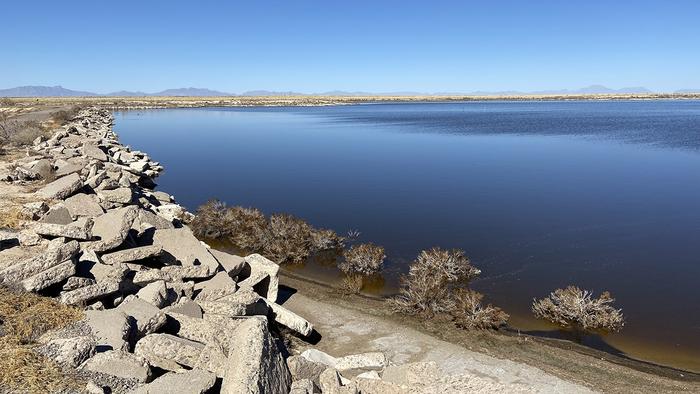
Holloman Lake, a seemingly tranquil desert lake west of Alamogordo, New Mexico, has been revealed as an environmental hotspot for PFAS contamination.
According to a comprehensive study by researchers from The University of New Mexico’s Museum of Southwestern Biology (MSB), the lake has been identified as the epicentre of an ecological crisis that may have begun over three decades ago.
The study, which builds on initial findings from 2021, documents unprecedented levels of per- and polyfluoroalkyl substances (PFAS) – synthetic compounds often called “forever chemicals” – in nearly every component of the lake’s ecosystem.
These chemicals are known for their persistence in the environment and potential health risks to both humans and animals.
PFAS concentrations among the highest ever recorded
The research team conducted extensive testing across a broad range of environmental samples, including lake water, sediments, soil, algae, plants, fish, birds, reptiles, and mammals. The findings are startling:
- A kangaroo rat liver contained 120,000 ng/g of PFAS – over 10,000 times the EPA’s drinking water limit.
- One plant sample registered the highest PFAS concentration ever recorded in vegetation.
- Lake waters tested higher for PFAS than any previously documented body of water globally.
These extreme concentrations are believed to stem from the historic use of aqueous film-forming foams (AFFFs) containing PFAS at nearby military installations, notably Holloman Air Force Base.
PFAS contamination extends beyond the lake
While Holloman Lake itself is heavily contaminated, researchers have confirmed that the toxic footprint spreads well beyond its shores.
In fact, the highest soil PFAS levels were detected downstream of the lake, in playa wetlands that extend toward White Sands National Park.
Historical water flows from the lake appear to have carried contaminants through this vast playa system – a critical habitat for migratory birds during seasonal rains.
The mobility of animals and water across the region raises concerns that PFAS contamination may be far more widespread than initially assumed.
A natural laboratory for PFAS research
With its unique mix of desert hydrology, gypsum soils, and high wildlife density, Holloman Lake offers researchers a rare opportunity to study PFAS environmental behaviour in real-world conditions.
The study noted patterns consistent with laboratory models, including how the length of PFAS molecules and the presence of minerals like salt and clay influence transport and accumulation.
This makes Holloman Lake a “natural laboratory” for understanding how PFAS compounds move through ecosystems, offering valuable insights that could help inform national policy on chemical contamination.
Risks to wildlife and humans
The contamination poses clear risks to wildlife. Researchers discovered a dead killdeer chick near its nest with the highest PFAS levels ever recorded in a bird, sparking concerns about reproductive toxicity and long-term impacts on the species. Sensitive species like the snowy plover could be at particular risk.
But the threat doesn’t stop with wildlife. The lake, once open to public hunting, is visited by thousands of waterfowl and other game animals such as oryx.
With PFAS capable of bioaccumulating in tissue, the possibility of contaminated meat entering the food chain presents a serious concern for human health.
In fact, the New Mexico Environment Department has raised red flags over possible aquifer contamination and is working with researchers to monitor the extent of PFAS infiltration into water wells.
Implications for migratory species and hunters
One of the most pressing concerns is the role of migratory birds. Contaminated at Holloman Lake, these birds may carry PFAS to wetlands across New Mexico and beyond.
As part of a broader risk assessment, University of New Mexico scientists are now collaborating with local hunters and the Department of Game and Fish to track bird movements and assess exposure risks at other sites.
This evolving research highlights how localised contamination can ripple outward, threatening broader ecosystems and communities far beyond the source.
Call for continued monitoring and remediation
The findings at Holloman Lake underscore the urgent need for long-term environmental monitoring and remediation efforts across New Mexico.
With PFAS contamination now recognised as a global issue, this study serves as a stark reminder of the hidden costs of industrial chemicals and the need for more holistic environmental oversight.
As scientists continue to unravel the full extent of contamination, Holloman Lake stands as both a warning and a crucial source of knowledge in the fight against PFAS pollution.