As electric vehicles (EVs) become more mainstream, their lithium-ion batteries remain under the spotlight – not just for performance, but for safety.
A hidden challenge, known as lithium plating, threatens both. While EVs offer a greener alternative to traditional cars, the microscopic build up of lithium metal during charging can silently degrade battery life and, in extreme cases, spark serious safety risks.
Now, researchers from the University of Shanghai for Science and Technology have unveiled a cutting-edge solution that may change the game.
Using artificial intelligence and standard electrical measurements, their lithium plating detection system can identify problems early with over 97% accuracy, potentially paving the way for safer, longer-lasting EVs without costly hardware upgrades.
Lithium plating explained
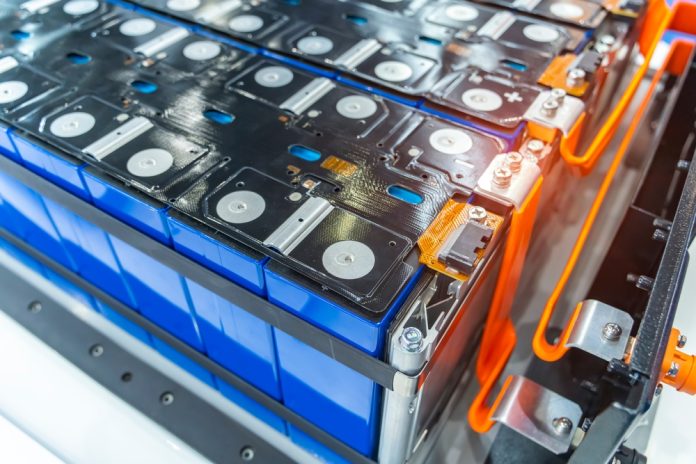
Lithium plating is a failure mode that occurs within lithium-ion batteries during charging. Normally, lithium ions flow into the battery’s graphite anode, where they are stored between layers in a process called intercalation.
However, under certain conditions, such as rapid charging, low temperatures, or high states of charge, these ions don’t intercalate properly. Instead, they deposit onto the surface of the anode as metallic lithium.
This unwanted lithium buildup forms a layer that can reduce the battery’s capacity and efficiency. More dangerously, it can grow into needle-like structures known as dendrites.
These dendrites may pierce the battery’s internal separator and cause a short circuit, which can lead to overheating, fires, or even explosions.
Because lithium plating develops at the microscopic level and evolves rapidly, detecting it before it becomes hazardous has been a significant challenge – until now.
Machine learning meets battery safety
The Shanghai-based research team has developed a smart lithium plating detection and warning system that relies on the Random Forest machine learning algorithm.
Unlike traditional detection methods that often require expensive or invasive tools, this system works by analysing electrical data collected during pulse charging, a method that briefly charges and rests the battery to generate measurable responses.
The algorithm uses this data to identify subtle but consistent electrical patterns that indicate lithium plating is forming. Impressively, this system achieved over 97.2% detection accuracy, using only standard voltage and current signals already available in most battery management systems (BMS).
No physical alterations to the battery are needed, making the technology easy to integrate across a wide range of platforms.
From simple data to complex insights
What makes this solution particularly innovative is its use of multi-dimensional feature extraction. While single-variable analysis produced just 68.5% accuracy, combining multiple features, such as internal resistance changes and voltage relaxation behaviours, boosted detection rates dramatically.
This approach uncovers the fingerprints of lithium plating hidden in the battery’s normal operation data. These early indicators can help predict and prevent failures before they escalate, giving engineers and systems real-time insights into battery health and safety.
Because the system works with existing hardware and relies on common electrical measurements, it can be deployed as a software update to current BMS units or integrated into cloud-based management tools.
This means EV manufacturers and energy storage companies can quickly adopt the technology without redesigning their battery systems.
The researchers also see potential for expanding the model to other types of lithium-ion batteries used in devices like smartphones, drones, and grid-scale energy storage.
Future versions may even adapt to fast-charging environments, adjusting charge speeds based on the real-time risk of lithium plating.
A safer road ahead for electric vehicles
As EVs continue to replace combustion-engine vehicles worldwide, addressing battery reliability and safety is essential.
With this AI-powered lithium plating detection system, manufacturers now have a powerful tool to extend battery life, enhance safety, and build trust in electric mobility.
This breakthrough highlights how data-driven technology can solve even the most complex engineering problems, bringing us one step closer to a smarter, cleaner, and safer energy future.