AGA2tech has embraced the ‘One Health’ initiative, aiming to address the global challenge of antimicrobial resistance (AMR) while promoting sustainable agricultural practices.
In today’s fast-paced world of livestock farming, one of the greatest and often overlooked threats is antimicrobial resistance (AMR). It’s not just a health issue; it’s a business risk, a sustainability challenge, and a looming global crisis.
Antibiotics have been the backbone of animal health, but overuse – in everything from disease prevention to growth promotion – has triggered a dangerous side-effect. Bacteria are evolving, adapting, and becoming resistant to the very treatments meant to protect livestock.
This can lead to high costs, with resistant infections being harder to treat, meaning longer recovery times and increased mortality, not only for animals but to humans too. These resistant organisms don’t stay on the farm. They can spread to people through food, water, and the environment, threatening public health and increasing regulatory scrutiny.
Forward-thinking companies are desperately needed to invest in innovative and disruptive technologies to tackle the ever-growing threat of AMR.
AGA2tech: Tried and tested
AGA2tech is leading a new era in livestock care with a cutting-edge, oxidative, non-antibiotic solution that targets a wide range of harmful bacteria and viruses without risking resistance. The company is tackling antimicrobial resistance at its core to safeguard animal health, protect human wellbeing, and support a more sustainable future for agriculture.
In an Innovate-UK-supported research project, two comprehensive studies were conducted at Scotland’s Rural College (SRUC) to evaluate the potential of the new technology developed by AGA2tech as a sustainable replacement for antibiotic treatments in broilers.
The two studies involved the in-vivo use of peracetic acid (PAA), administered to birds via two different delivery mechanisms. The first study, involving 96 Ross birds, focused on precursor-derived in-water peracetic acid, while the second study of 375 Ross birds explored encapsulated peracetic acid delivered through feed.
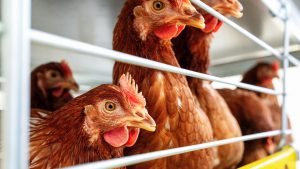
Both studies aimed to evaluate the safety of the intervention, its impact on bacterial load and gut microbiota at different points throughout the bird’s digestive tract, and its effect on performance parameters.
The two trials suggest that PAA could be a valid and safe broad-spectrum antimicrobial alternative in poultry. The first trial, which delivered the PAA treatment in water to birds on day 7-14 of age, significantly reduced bacterial concentrations in the crop, which also correlated with better performance outcomes.
Notably, PAA especially at 20, 30, and 40 parts per million (ppm), led to increased body weight and feed intake compared to the control group. There was also a marked reduction in Lactobacillus and Flectobacillus populations in the crop, suggesting effective modulation of the upper gut microbiota, and laying the foundation of interesting insights on the role of these genera in the upper gut.
The encapsulated PAA trial involved 375 Ross 308 broilers over 28 days. The study tested two PAA concentrations (30 and 80 mg/kg) delivered via hydrolysis of encapsulated precursors in the feed. Birds were housed on reused litter, which allowed to evaluate, amongst other factors, the effects of litter management on AMR and performance, together with the measurement of the effects of PAA.
Birds receiving 30 mg/kg of PAA showed improved body weight gain, with significant shifts in gut microbial communities. There was a decrease in Firmicutes and an increase in Proteobacteria in the jejunum, along with a rise in beneficial bacteria such as Bacillus and Flavonifractor in the caeca. The trial showed a notable reduction in tetracycline resistance genes in the reused litter groups compared to the birds housed on clean litter, likely pointing to a lower risk of AMR development.
Further evidence of efficacy
The success of the initial trials in poultry farming led to a seed fund being secured from the Centre for Innovation Excellence in Livestock (CIEL), now known as the UK Agri-Tech, to evaluate the technology in post-weaning diarrhoea in weaned pigs.
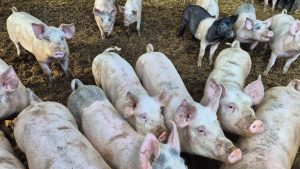
The effectiveness of PAA technology as an alternative to zinc oxide (ZnO) in controlling post-weaning diarrhoea in piglets was assessed. The trial involved 48 weaned piglets split into four groups: Control (0 ppm PAA), ZnO group (3,100 mg/kg), 50 ppm PAA, and 150 ppm PAA receiving a treatment over 14 days. Piglets receiving both 50ppm and 150ppm had reduced faecal scores by day 14, as well as a reduction in stomach pH.
This trial has shown PAA, especially at 150ppm, to be a promising, environmentally friendly alternative to ZnO for managing post-weaning diarrhoea. It can modulate gut microbiota and reduce virulence factors without the environmental concerns associated with ZnO.
The studies in both poultry and weaned pigs at the experimental husbandry unit at Scotland’s Rural College (SRUC) resulted in highly exciting findings and stimulated external interest and additional investment from the poultry industry, leading to commercial trials.
The commercial farm trials have been pivotal to proving real-world applicability and safety of the intervention that delivered positive results at SRUC’s experimental husbandry unit. For poultry, the on-farm effectiveness of the PAA treatment was tested via a series of four nine-month trials on two farms – which run crops of 200,000 and 160,000 broilers respectively.
In the experimental shed, the PAA treatment was added into the birds’ water supply, using the existing lines, and normal procedures were followed in the second control shed. The two sheds were matched as closely as possible, comparing chicks with the same flock code as much as possible to improve the reliability of the results.
Over the course of the nine-month trial, despite seeing Gumboro and Coccidiosis challenges which required antibiotic treatment in the control shed, the farm saw improved chick health in the experimental shed that received PAA treatment, and no antibiotics were needed as a result.
As the on-farm trials progressed, the body weight, feed conversion ratio (FCR) and margin-over-feed cost (MOFC) metrics for the broilers in the experimental shed also proved to be equivalent to, or even better than, those in the control shed.
The commercial post-weaning pig trials have much longer life cycles than broiler farming, and are therefore still ongoing with excellent initial feedback from the farmers in reducing faecal diarrhoea seen in the post-weaned pigs.
A healthier and more resilient future for livestock farming
From broilers to piglets, AGA2tech’s innovation is already delivering results in trials and on commercial farms – boosting performance, reducing pathogens, and cutting antibiotic use.
With continued research, industry partnerships, and support from forward-thinking producers, AGA2tech is laying the foundation for a resilient, responsible future in animal agriculture.
Please note, this article will also appear in our Animal Health Special Focus publication.