


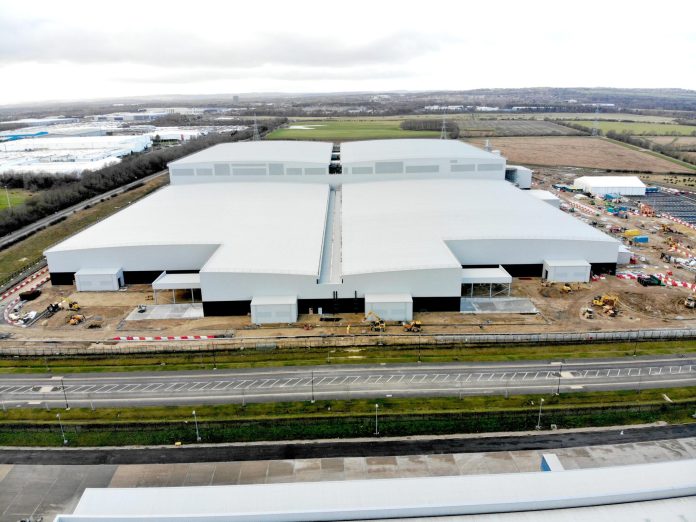
A new £1bn investment in a state-of-the-art gigafactory in Sunderland is set to supercharge the UK’s electric vehicle (EV) capabilities while delivering a significant boost to the local economy.
Spearheaded by AESC, the Sunderland gigafactory development will create 1,000 skilled jobs and produce enough batteries to power up to 100,000 electric vehicles annually – representing a six-fold increase in the nation’s battery production capacity.
This move puts Sunderland at the forefront of the UK’s transition to cleaner transportation and strengthens the country’s global competitiveness in the EV market.
The Sunderland gigafactory is a pivotal step in meeting the UK’s net zero targets and responding to the growing demand for sustainable mobility.
Commenting on the landmark funding, UK Business and Trade Secretary Jonathan Reynolds said: “We’re backing our world-class car industry, and this investment is yet another vote of confidence in the North East’s thriving auto manufacturing hub, which will secure a thousand well-paid jobs and boost prosperity across the region.
“Our modern Industrial Strategy will drive this growth even further, powering our high-potential sectors like advanced manufacturing so we can deliver jobs and investment in every corner of the UK and make our Plan for Change a reality.”
How the gigafactory is funded
The project is being financed through a combination of public and private support.
The National Wealth Fund and UK Export Finance are backing the venture with financial guarantees that have unlocked £680m in bank financing from global institutions, including HSBC, Standard Chartered, and BBVA.
A further £320m is being secured through private equity and AESC’s own investment. The Government has also pledged £150m in grant funding from its Automotive Transformation Fund to support the initiative.
Building on US trade agreement
The announcement follows a landmark UK-US economic agreement that slashes tariffs on British car exports from 27.5% to 10%, with a quota covering 100,000 vehicles—nearly the UK’s total car exports last year.
This will save manufacturers hundreds of millions and safeguard thousands of automotive jobs across the country.
Shoichi Matsumoto, CEO of Japanese headquartered AESC, added: “This investment marks a key milestone in AESC’s ongoing efforts to support the UK’s path towards decarbonisation and the expansion of its EV market.
“Through close collaboration with strategic partners, we strive to accelerate this transition while creating high-quality local jobs and building resilient, sustainable supply chain.”
“We are honoured to contribute to the development of a low-carbon economy with our advanced battery technologies.”
Why the UK must scale up EV battery production
The Sunderland gigafactory is more than an infrastructure project – it is a signal of intent.
As the world pivots to sustainable transport, the UK is taking decisive steps to stay ahead, ensuring that innovation, manufacturing, and economic opportunity remain firmly rooted at home.
This landmark investment demonstrates the power of aligning industrial strategy with environmental goals. It will not only help decarbonise transport and meet net-zero commitments but also reinvigorate communities with skilled jobs and long-term economic security.
With the backing of major financial institutions, strategic government support, and a strengthened trade relationship with the United States, the Sunderland gigafactory sets a new benchmark for green growth in Britain.
As global demand for electric vehicles accelerates, Sunderland – and the UK as a whole – are now better positioned than ever to lead the charge.







Incredible news for the UK’s EV future! This £1bn gigafactory investment is a huge win—clean energy progress, job creation, and a boost for Sunderland’s economy. Excited to see it take shape!