Professor Birgitte Bak-Jensen explains how two EU Horizon projects help local energy communities experience the energy transition and enhance their energy autonomy by relying on their local energy resources to achieve energy sustainability and justice through smart flexibility solutions.
Local energy communities are emerging as a cornerstone of Europe’s decarbonisation strategy. SERENE and SUSTENANCE have shown that energy resilience, affordability, and sustainability can go hand in hand when people, policies, and technologies come together.
Building sustainable communities
From vision to action: Resilient local energy communities
Four years ago, two EU Horizon 2020 projects, SERENE and SUSTENANCE, started a mission to empower citizens, unlock flexibility in local grids, and accelerate the green transition through smart, integrated local energy systems. Today, these projects have resulted in robust demonstrations of how technology, community engagement, and policy innovation can contribute to the decarbonisation of our communities.
From the Dutch neighbourhood of Olst to the Danish villages of Skanderborg and the Polish municipality of Przywidz, the results show that the local energy systems can be smart, citizen-led, and autonomous. These systems integrate renewable generation, electric mobility, heat pumps, energy storage, and intelligent control to balance supply and demand in real time.
Energy islands: Resilience starts local
Local energy communities operate as an ‘energy island’, interconnected but locally optimised, balancing their own energy consumption with renewable generation and smart flexibility. Whether supplying electric buses in Poland, powering community heat pumps in Denmark, or sharing surplus PV generation in the Netherlands, the communities are proving that resilient energy futures begin at the local level.
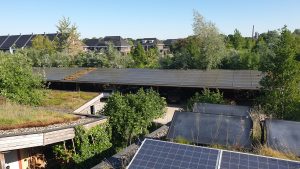
The flexibility unlocked at the community level facilitates the operation of larger systems. Local energy islands can act as partners to the grid, offering ancillary services such as peak shaving, voltage regulation, and demand response, services that were traditionally only available from large-scale providers.
Unleashing flexibility: From consumers to prosumers and flexumers
The core of the project focuses on the transformation of citizens into active energy participants. Through the demonstration activities, residents have become prosumers, both consuming and generating energy, and flexumers, providing flexibility to support the local grid through smart devices, EVs, and storage. Flexumers go beyond traditional prosumers by contributing actively to grid stability. Whether by shifting demand away from peak hours or by discharging stored electricity during shortages, these active citizens represent the future of decentralised energy systems.
Technical solutions for flexibility
CEMS: The core of the Community Energy System
The Community Energy Management System (CEMS) developed in Denmark acts as the intelligent core of the energy community. It tracks local production, consumption, and electricity prices and coordinates devices such as EV chargers, heat pumps, and batteries to optimise energy flows and reduce costs.
In Poland, similar EMS solutions are used in public buildings to coordinate rooftop PV, storage systems, and flexible loads like heat pumps and EV charging. In India, EMSs are adapted to rural microgrids and smart buildings, managing energy access and reliability in areas with weak or no grid connection.
Thermonet and Heat Flexibility
In Danish villages, Thermonet systems supply low-temperature heating through shared ground loops and community heat pumps. Integrated control ensures efficient operation based on PV availability, weather forecasts, and user needs.
Indian pilots in rural areas use Multi-Utility Heat Pumps (MUHPs) that provide heating, cooling, and drying for agricultural use, making thermal flexibility a key enabler of sustainable livelihoods.
EV charging that supports the grid
Electric mobility presents new challenges for local grids, especially with uncontrolled charging. Aalborg University in Denmark developed EV charging systems that adapt to both user preferences, e.g., departure time, and grid signals, e.g., voltage or pricing. Users interact through apps to enable cost-saving or low-emission charging. Initial tests show that smart algorithms help maximise renewable use and avoid costly grid reinforcements.
At the University of Twente’s SlimPark lab, nine smart charging stations align EV charging with locally generated electricity from the rooftop PV panels and battery storage, thereby boosting local self-sufficiency. Poland implements similar smart charging for municipal fleets and buildings. In India, EV charging is integrated into solar-powered and hybrid PV-wind DC microgrids in rural off-grid and weak-grid areas.
Thermal and battery storage
To ease grid strain and improve renewable energy use, the projects implemented thermal and battery storage technologies. In Denmark, thermal tanks using Phase Change Materials (PCM) enhance heat retention by storing latent heat, making them well-suited for low-temperature systems like thermonets.
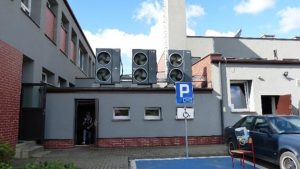
In the Polish case, a public building, being a complex of a school and a sport centre, combined rooftop PV with a large battery systems to reduce peak loads, support off-grid operation, and feed real-time data into EMS optimisation.
India’s pilots go further, integrating biogas-electric hybrids for both electricity and clean cooking. Battery banks of up to 290 kWh store solar and wind power in remote villages, replace diesel generators, and enable flexible energy use for agriculture, education, and healthcare.
Social innovation and community empowerment
While advanced technologies make energy systems smarter, it is the people who make them truly sustainable. Across SERENE and SUSTENANCE, social innovation has proven to be just as critical as technical development. These projects highlight how fostering dialogue, trust, and co-ownership can transform passive energy consumers into engaged and empowered community actors. Social empowerment isn’t just an add-on; it’s the engine that drives local energy transitions.
Engagement starts with conversation
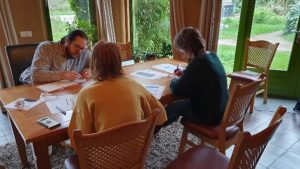
In Skanderborg, Denmark, the path to local heating solutions began with open dialogue. The municipality invited residents from villages without district heating to public meetings, offering them technical options, planning tools, and support to explore collective heating alternatives such as thermonets and shared heat pumps. These meetings didn’t just inform; they activated. Residents began forming energy groups, coordinating through social media, and applying together for funding, creating a strong foundation for long-term community-driven energy action.
The power of pre-existing communities
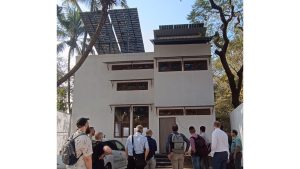
In Olst, the Aardehuizen eco-village demonstrated the strength of well-established social networks. With a strong commitment to sustainability and self-sufficiency, residents were eager collaborators in developing and testing energy solutions. They co-designed energy management dashboards, allowed researchers to test boiler control systems in their homes, and organised working groups to manage their infrastructure. Their resilience, openness, and technical curiosity significantly accelerated innovation, providing valuable insights for the project team and future replications.
Co-creation and trust
Building trust was essential, especially when installing experimental devices or collecting usage data. Local coordinators acted as bridges between residents and researchers, while co-design workshops helped ensure that solutions were tailored to users’ actual needs. In both Dutch and Polish demonstrators, trust led to deeper cooperation. Some residents helped install devices, troubleshoot systems, and even co-author aspects of the solution. When communities feel ownership, participation shifts from passive to proactive.
Social Readiness Levels (SRLs) mapped and matched
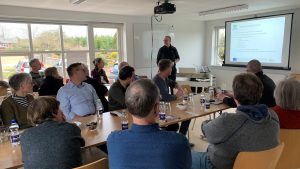
Not all communities are equally prepared to engage with new energy systems. That’s why the project teams assessed Social Readiness Levels (SRLs) for each site and adapted their engagement strategies accordingly. High-SRL communities focused on customising smart control systems and optimising flexibility. In contrast, communities with lower SRLs received more foundational support, awareness campaigns, simplified interfaces, and help building local energy groups. This flexible approach ensured that all communities, regardless of starting point, could move forward on their energy journey.
Impact, lessons learned, and future replication
The SUSTENANCE and SERENE projects have yielded significant insights into how social and technical innovations can foster resilient and sustainable local energy communities. Across demonstration sites in Europe and India, flexible technologies were deployed, tested, and integrated with the CEMS. The results show that tailored implementations and citizen engagement are essential to success.
Lessons from field demonstrations indicate that flexible energy control can optimise self-consumption, reduce peak demand, and improve grid reliability. Projects in Denmark and the Netherlands demonstrated how households can become active players in energy systems when equipped with smart devices and user-friendly interfaces. Indian sites showed that energy access, when locally owned and adapted, can deliver significant social benefits, from lighting and clean cooking to cold storage for agriculture.
In Poland, replacing gas-based systems for domestic hot water preparation with heat pumps linked to district heating networks significantly improved safety, comfort, and decarbonisation. Meanwhile, digital integration challenges across sites, especially where legacy infrastructure exists, highlight the need for standardisation and interoperability.
Demonstration activities also revealed that while many communities are motivated by environmental concerns, enabling tools like dynamic tariffs, visual dashboards, and co-designed EMS interfaces further boost user participation. Energy flexibility was achieved without compromising comfort, and community-level participation was enhanced through transparent communication and shared benefits.
The projects introduced a tiered roadmap towards energy autarky, ranging from off-grid independence in rural India to shared battery storage and communal PV in urban Europe. Most European sites moved from traditional grid reliance (Tier 5) to interconnected, partially autonomous systems (Tier 6), with ambitions for full autarky (Tier 7).
Replicability is promising. Despite local differences, key enabling factors include citizen trust, appropriate governance structures, legal flexibility, and financial mechanisms for shared infrastructure. Technologies like multi-utility heat pumps, EV smart charging, and modular EMS systems can be adapted across geographies. Lessons from one site can inspire practical strategies for others.
The projects recommend removing regulatory barriers, enabling local energy trading, and incentivising flexibility services. With clear legal frameworks and citizen-centred design, local energy systems can become a pillar of the clean energy transition.
Please note, this article will also appear in the 22nd edition of our quarterly publication.
Acknowledgement of Funding and Disclaimer
These projects have received funding from the European Union’s Horizon 2020 research and innovation programme under grant agreement No. 957682 for the SERENE project, and No. 101022587 for the SUSTENANCE project, as well as the Department of Science and Technology (DST), Government of India, under the SUSTENANCE project. Any results of these projects reflect only these consortia’s views and the funding agencies and the European Commission are not responsible for any use that may be made of the information it contains.