Ohmium explores how innovation, collaboration, and policy in the green hydrogen sector can tackle climate change.
The global effort to limit warming to 1.5°C, as outlined by the Paris Agreement, requires immediate action to reduce greenhouse gas emissions. The Intergovernmental Panel on Climate Change highlights that emissions must peak by 2025 and decline by approximately 43% by 2030 to remain on track. While renewable energy has made significant progress in reducing emissions from electricity generation, it alone cannot address the full scope of the challenge. Many heavy industries – even when powered entirely by renewables – continue to emit substantial amounts of CO₂ due to their reliance on fossil-based hydrogen or other carbon-intensive feedstocks.
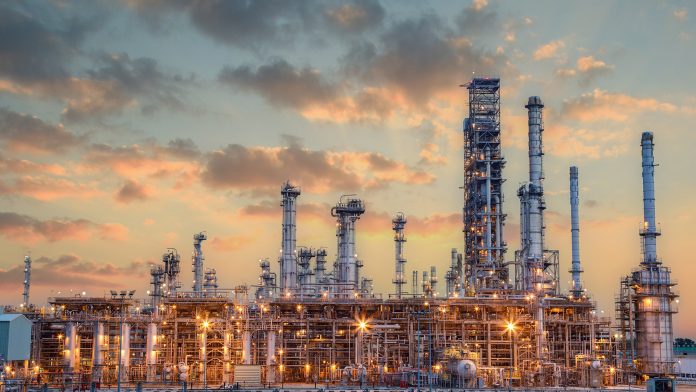
The current industrial use of hydrogen is estimated to contribute 2-3% of total global carbon emissions (Hydrogen Council, 2021), primarily from the small number of ‘hard-to-abate’ industries. The three most emission-intensive sectors are steel production, refining, and chemical manufacturing. Steel production accounts for 7-9% of global industrial CO₂ emissions due to its dependence on coke, coal in blast furnaces, and natural gas in DRI furnaces (International Energy Agency, 2023). The refining industry utilises hydrogen for hydrocracking and desulfurisation, contributing 3-4% of global industrial emissions (World Resources Institute, 2022). Similarly, chemical manufacturing relies on hydrogen to produce methanol and other compounds, driving 5-6% of industrial CO₂ emissions (Global Carbon Project, 2023).
© shutterstock/Snapshot freddy
Green hydrogen is a real-world solution now
Decarbonising these hard-to-abate industries will require the replacement of fossil-based hydrogen with green hydrogen or the electrification of the chemical process. In this case, green hydrogen is produced using renewable electricity and water electrolysis. This method generates no carbon emissions, making it a sustainable option for hydrogen production and a critical enabler of global decarbonisation efforts. This shift to green hydrogen is essential to meet emission reduction targets towards a sustainable future.
Although green hydrogen currently represents only a small fraction of the global hydrogen market, it is growing rapidly. Falling costs for renewable energy, driven by advancements in solar and wind technologies, have significantly reduced the cost of producing green hydrogen through electrolysis. Since energy accounts for the majority of production costs, these reductions are crucial for improving competitiveness. Simultaneously, innovations in electrolyser designs and increased manufacturing scale have increased efficiency and lowered equipment costs.
PEM electrolysers are transforming green hydrogen economics and production
Proton exchange membrane (PEM) electrolysers are at the forefront of this progress. Ohmium, a leading electrolyser solution manufacturer, has developed a PEM electrolyser that combines high efficiency, high energy density, and fast ramping capabilities, making it particularly well-suited for integration with renewable energy sources. Unlike traditional alkaline electrolysers, which are constrained by slower response times and bulkier designs, Ohmium advanced PEM technology delivers high availability and high energy density in a small footprint.
Ohmium has achieved cost reductions that were previously projected to take another decade or more. This acceleration is partly driven by the company’s reduced reliance on scarce materials like iridium, enabling gigawatt-scale production. Ohmium’s hyper modular design further drives down costs, lowering installation expenses to just 10-20% of capital expenditures, compared to 50-100% for traditional custom-built systems. Sound commercial practice also plays a key role: by leveraging global supply chains and mass production in low-cost facilities, Ohmium PEM electrolyser solutions mirror the rapid cost reduction trajectory seen in the solar photovoltaic industry.
It is important to note that realising the potential of green hydrogen requires solutions that are globally scalable and able to be rapidly deployed. It is here that Ohmium’s hyper modular design shines most brightly. Hyper modularity reduces Engineering, Procurement, and Construction (EPC) costs by simplifying design and assembly processes, significantly shortening the time from project initiation to completion. The interlocking module architecture improves scalability, allowing systems to expand seamlessly to meet demand (for example, as production requirements increase). Built-in redundancy boosts operational reliability by minimising downtime and lowering costs, while the rack-in, rack-out design further reduces operational disruptions. Relatedly, backwards-compatible systems support seamless upgrades without risking stranded assets. Another key advantage of hyper-modularity is the ability to produce standardised modules in highly efficient gigafactories, which enhance production efficiencies and facilitate the creation of robust, cost-effective global supply chains.
Delivered innovation #1
Green hydrogen applications in power generation
Lower costs have expanded the potential applications for green hydrogen, including power generation systems. At the NTPC NETRA campus in New Delhi, Ohmium and Spirare Energy collaborated on a green hydrogen pilot project. Spirare Energy led the development of the project, with Ohmium supplying high-efficiency PEM technology to support the green hydrogen-based power generation solution. The system is powered by a NTPC NETRA solar array which supplies renewable energy to the Ohmium cutting-edge PEM eletrolyser to produce green hydrogen. This hydrogen is stored on-site and later converted back into electricity using fuel cells, to provide a continuous energy supply. Ohmium PEM electrolysers are highly efficient in utilising renewable energy but also engineered for dynamic operation and rugged conditions – an essential feature given the extreme heat and challenging climatic conditions at the project site. The Ohmium green hydrogen-based power generation system enables the NTPC NETRA microgrid to provide 24/7, reliable power to their operations even during main grid outages.

Delivered innovation #2
Transforming a hard-to-abate industry: Green steel
Another example of the transformative potential of the Ohmium green hydrogen solution is its role in enabling the production of green steel. Ohmium was chosen to provide its PEM electrolyser technology for the groundbreaking project between MASDAR and EMSTEEL to facilitate the production of green steel. MASDAR is a global sustainability leader which develops utility-scale power plants, community grid projects, and energy storage systems. With presence in over 40 countries on six continents and a combined capacity of more than 51GW, MASDAR is a key participant in the UAE’s vision for global sustainability and climate action. EMSTEEL is a global leader in sustainable steel and building materials from the United Arab Emirates (UAE).
Located in Abu Dhabi, this groundbreaking pilot project is a first-of-its-kind initiative in the Middle East and North Africa region, leveraging green hydrogen generated from Ohmium PEM electrolysers to extract iron from iron ore – a pivotal step in steelmaking. The pilot project has successfully commenced the production of green steel, showcasing how green hydrogen can significantly reduce CO₂ emissions in steel production. This achievement aligns with the UAE’s ambition to become a global leader in hydrogen and green steel production, and addresses the rising global demand for decarbonised steel. By enabling the transition to low-carbon steel manufacturing, this pilot project is an example of the role green hydrogen can play in transforming hard-to-abate industries and decarbonising the global steel value chain.

Collaboration is essential for innovation to thrive
It should be noted that broader efforts are essential to fully realise the potential of green hydrogen in achieving global climate goals. While company-driven technological innovations are driving down costs, government incentives and supportive policies play a critical role in accelerating adoption. Europe’s Hydrogen Strategy and programmes like Germany’s H2Global initiative aim to stimulate market demand through funding and international partnerships. However, policy support must go beyond financial incentives. Streamlined permitting processes for renewable energy projects, infrastructure development for hydrogen transport and storage, and international co-operation on standardisation are all crucial to scaling green hydrogen effectively. A co-ordinated approach that integrates industry, government, and global collaboration will be vital to unlocking the full potential of green hydrogen to reduce greenhouse gas emissions.
Please note, this article will also appear in the 22nd edition of our quarterly publication.