Speira champions transparency and sustainability by utilising advanced technologies and AI in its recycling processes, improving efficiency, reducing carbon emissions, and offering customers detailed information on the ecological impact of products.
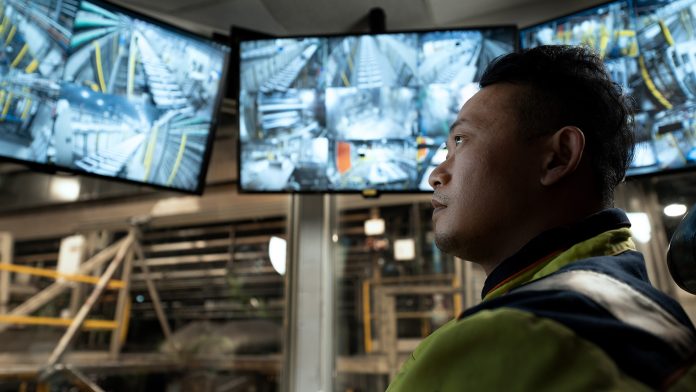
Last year, we put our first ‘transparent’ oven into operation at our Hamburg plant. Its special feature is the integration of state-of-the-art Industry 4.0 technologies. Innovative sensor and camera technology provide real-time insights into all furnace processes, and the data obtained in this way enables continuous optimisation of operation and burner control, adapted to the mix of scrap and primary metal used. Based on the constant monitoring of the melt and supported by artificial intelligence, the operator is given the ideal times for alloying or dross removal, for example. The measured parameters also allow the hydraulic components to be used with less wear and tear, enable targeted predictive maintenance and thus reduce downtimes and further improve plant efficiency.
A short time later, we were able to make the decision to invest in four new tiltable rotary furnaces in our recycling plants. Here, too, we are putting artificial intelligence to industrial use: a learning charge-mix optimisation solution designed to enhance operational efficiency, reduce costs, and optimise the scrap mix. The more precisely we can look into our processes, the more transparency we have about every parameter, the higher our efficiency, the better our ecological and economic performance. The more transparency we have, the better the decisions we can derive from it.
This applies to our internal processes as well as our external relationships. At Speira, we believe that sustainability and transparency are two sides of the same coin. Because we want to make it as easy as possible for our customers to decide on the lowest-carbon, most circular aluminium. And again, as well-informed decisions are the best decisions, that is why we are transparent and consistent about the research, decisions and convictions that guide our product design. We outlined this in our article “Sustainability and transparency, consistently brought together”.
Dorothea Flockert, Head of Sustainability, who just released Speira’s first sustainability report explains: “Sustainability goes beyond decarbonisation. It is in the way we speak to each other, how we make decisions, how we think and how we collaborate.”
ORBIS and RIVOS: Our certified labels for sustainable solutions
We are constantly working to redefine the limits of aluminium and produce each of our products with the highest possible recycled content. We want our customers to be able to rely on this ambition: Third-party certified and at least 75% external scrap use. We created a label for our most circular products that embody resource efficiency and reuse. With unwavering transparency, ORBIS champions a more sustainable future and paves the way to a closed loop. ORBIS is not just a label. It is a testament to our commitment to build a circular world that works!
With a clear focus on carbon footprint and transparency, we took another step, again third-party certified and designed to make it as easy as possible for our customers to choose the most sustainable aluminium. By combining external scrap and lowcarbon primary metal, tailored to regional opportunities for sustainable energy use, we maximise resource efficiency and minimise the carbon footprint of our products. We call it RIVOS, bringing us and our customers one step closer to net zero.
We are already able to provide a detailed sustainability profile for many Speira products: Our customers receive a product data sheet with their delivery, which not only shows the alloy’s chemical composition and the exact batch, but also the precise proportions of internal, pre- and post-consumer scrap and of the recycled alloys as well as the individual ecological footprint, broken down into the slab and the finished coil. This is the transparency by which we measure ourselves and which we want to set as a benchmark.
Building a circular world that works
Speira has ended its primary production after 62 years and is focusing entirely on the recycling of aluminium. Our business model is to realise the savings of up to 95% in energy and CO2 in this process compared to primary production. We want to use this ‘decarbonisation lever’ as often and in as many ways as possible. Around 75% of the aluminium ever produced worldwide is still in use in some application, and with more than 30 million tonnes recycled each year, it is one of the most recycled metals. So, what are we at Speira doing to improve this 75% towards full circularity? It’s not about closing one loop – it’s about closing all loops so that none of our material is lost but is fully recovered from the applications and sent into new life cycles in permanent quality.
We strive to secure as many end-of-life scraps as possible. To this end, we are constantly investing in existing and new recycling equipment and already have far more recycling capacity than our primary production in Neuss had in its peak. And the trend is still upwards. We operate one of the world’s most modern plants for recycling beverage cans at the very site of the old smelter. And the more and the more frequently material is recycled in this plant, the more we can convert the technological advantage of our UBC line into CO2 savings. The beverage can, with its short life cycle and the mature closed (deposit) systems in Western Europe, is ideally suited for this: ‘back on the shelf in 60 days’, the aluminium from a beverage can comes back up to six times a year to begin a new life cycle in our plant.
But we also have the facilities and process expertise to recycle what others cannot keep in the loop. This includes heavily contaminated scrap such as oily, painted or plastic-coated metals – for example, the well-known coffee capsule. We also recover as much aluminium as possible from slags and drosses. Our Rød and Raudsand plants provide this very special recycling service for the entire Norwegian aluminium industry.

Together with our customers, i.e. the direct processors of our aluminium, we turn linear business models into circular ones by recycling their process scrap directly. ‘Aluminium from the customer back to us’ is now just as carefully managed a supply chain as our output to the customer.
And in striving for the highest possible recycled contents, we not only consider our material aluminium, but also the alloy metals that we use for our customised solutions. We rely on recycled metal, especially when it comes to copper, which is particularly energy and resource-intensive in primary production. And we even operate our own recycling line for magnesium at our Töging plant.
Redefining the limits of aluminium
We put our claim ‘redefining the limits of aluminium’ into practice with our customers and in development partnerships. We look at existing and potential applications: Where can we use recycled aluminium, where primary aluminium or completely different materials have been used up to now? With which of our customised alloys can we best meet the application-specific requirements of our customers, and at the same time ensure the optimum product balance with the highest possible proportion of recycled material? For example, our recycling alloy VIA MARIS Njørdal has recently been certified by the Water Revolution Foundation: the 5000 series alloy comes with 15% higher strength compared to a standard high-strength alloy for shipbuilding, allowing 15% less material use resulting in less weight and thus less fuel consumption and at the same time improvement of the vessel’s performance.
The appeal of RFAs – recycling-friendly alloys – lies not only in offering our customers a solution with the smallest possible ecological footprint. It is also about getting back an alloy at the end of its life cycle that can start a new life cycle as easily as possible. For decades, our industry has exploited the potential of new, increasingly specialised alloys in order to achieve physical properties in the final product. The disadvantage of this is the huge complexity of different alloys on the market and in recycling.
That is why we want to redefine the limits of aluminium via a second route, too – namely the forming of physical properties via treatment and processing after casting, for example via annealing, hardening, hot rolling and cold rolling. We see this as an exciting opportunity to simplify the chemical compositions in the long term and to serve the same number of special applications with fewer different alloys overall. And this again reduces complexity in recycling and makes building a circular world that works even easier.
The potential for circularity is huge: Precisely because our decarbonisation lever is so effective, we want to use it in as many ways as possible. We would like to walk through the doors that we have already opened with equally ambitious partners!
Please note, this article will also appear in the 23rd edition of our quarterly publication.