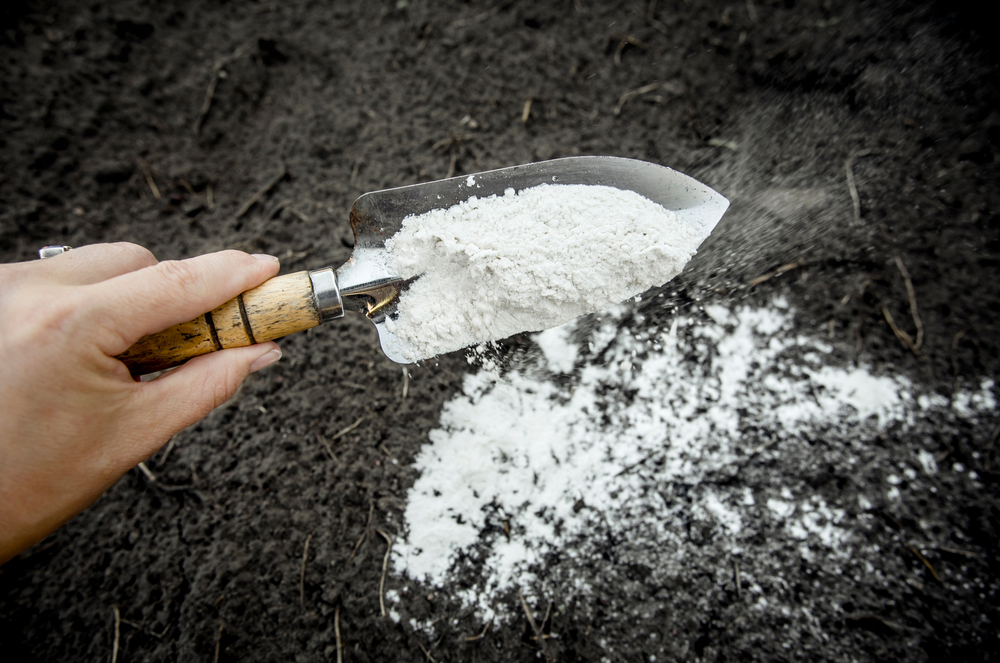
According to new research, agricultural liming – the process of adding lime to soil – can remove CO2 from the atmosphere, rather than cause carbon emissions.
Researchers from the Yale Centre for Natural Carbon Capture at Yale University based their findings on over 100 years of data from the Mississippi River basin and detailed computer modelling, which ran counter to international guidelines on reducing carbon emissions.
They found that the addition of acidity, in the form of atmospheric pollution and fertilisers, is the main driver for CO2 emissions from soils.
By calculating emissions based on acid inputs, they show how emissions may be being underestimated in some cases, and the potential for agricultural liming to reduce emissions is being overlooked.
Carbon emissions in agriculture
Agriculture is one of the largest greenhouse gas-emitting sectors, with a significant proportion of agricultural emissions linked to soils.
The Intergovernmental Panel on Climate Change (IPCC) calculates that all the carbon in lime, when added to agricultural soils to reduce acidity, is emitted as CO2, although some countries use a lower figure.
How agricultural liming releases CO2 from soil
When lime is added to soil, it reacts with carbonic acid to create bicarbonate, calcium and magnesium. If there are strong acids present in the soil, such as nitric or sulfuric acid, these will react with the bicarbonate to create carbonic acid and release CO2.
Lead author Dr Tim Jesper Suhrhoff, from the Yale Centre for Natural Carbon Capture, said: “It is the reaction of acidity with the carbonate that creates CO2 emissions, not agricultural liming itself.
“In the absence of the strong acids, the liming would not lead to any emissions and would actually remove CO2 from the atmosphere through the formation of bicarbonate.”
He added: “If we continue to add acidity to the soil, it will react with remaining natural pools of alkalinity to create emissions. By penalising agricultural liming, rather than the addition of acids, we are targeting the wrong driver and potentially losing the other benefits that liming can bring, in terms of increased yields and lower nitrous oxide emissions.”
Removal is happening at 75% of the maximum rate
The researchers used data from the Mississippi River basin, collected since 1900, to calculate the impact of atmospheric pollution, fertiliser use, and agricultural liming on CO2 emissions.
The data shows that the combination of industrial pollution from fossil fuel burning and the increasing use of nitrogen fertilisers since the 1930s has created high levels of acidity in the soil, which have not been counterbalanced by liming.
Since the 1930s, when limestone application to croplands substantially increased, both the efficacy and efficiency of carbon dioxide removal have also increased, as indicated by river records and model results.
The researchers estimated that today, removal is occurring at approximately 75% of the theoretical maximum rate.
A call for agricultural emissions policy reform
Based on their results, the researchers have called for a reconsideration of policy on agricultural emissions, with emissions being linked to the addition of acid fertilisers rather than lime.
However, they highlight that this needs to be handled with care.
“We have known for a long time that liming is great for farmers and global food security,” explained Dr Suhrhoff.
“What we show here is that over longer timescales, it is also an efficient way to remove CO2 from the atmosphere. Adding a large amount of silicate rock to neutralise the acidity, before moving to liming, may be the best strategy to limit emissions and gain the additional benefits that liming can bring.”