


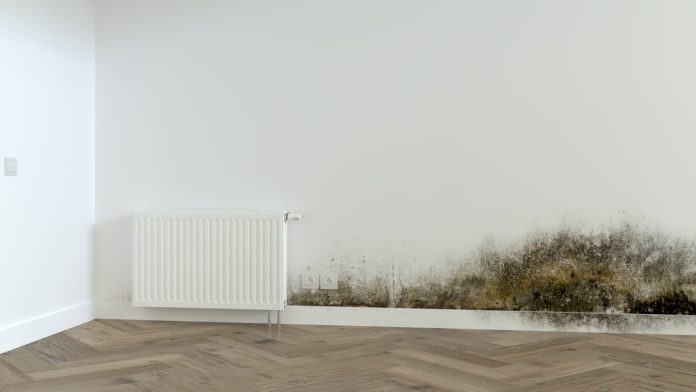
Spectrum Blue discusses how the preventable death of two-year-old Awaab Ishak from mould exposure exposed systemic housing failures and led to the creation of Awaab’s Law, setting strict new standards to protect tenants and save lives.
In December 2020, two-year-old Awaab Ishak died at the Royal Oldham Hospital. The coroner would later confirm what his parents had feared for years: the mould in their council flat had slowly, invisibly, killed their child.
The inquest was damning. Rochdale Boroughwide Housing (RBH), the landlord, had known about the mould. Awaab’s father had reported it as early as 2017, only to be told to “paint over it.” No major repairs were undertaken. By the time Awaab collapsed, mould had spread across every room.
The coroner concluded that prolonged exposure to mould spores caused the fatal respiratory illness. It was a preventable death.
“This was not lifestyle. This was not chance. This was neglect, systemic failure and silence,” said the Housing Ombudsman in a follow-up report.
The chain of responsibility
The tragedy exposed flaws at every level:
- The landlord: RBH operated a policy of halting repairs when legal claims were pending, leaving residents at risk.
- The system: outdated housing standards and poor training meant staff routinely blamed “tenant lifestyle” rather than poor ventilation or insulation.
- The regulators: only after the inquest did the Regulator of Social Housing downgrade RBH’s governance, and the Ombudsman launch a special investigation.
RBH’s chief executive was removed under public pressure. The regulator imposed a recovery plan. Yet the most lasting consequence came not in job titles, but in Parliament.
How Awaab’s Law was born
In November 2022, the coroner issued a Prevention of Future Deaths report. Ministers responded swiftly. By February 2023, they had promised legislation. Awaab’s Law was written into the Social Housing (Regulation) Act 2023.
From 27 October 2025, the law requires landlords to:
- Investigate serious hazards (including mould) within 10 working days.
- Provide written findings to tenants within 3 days.
- Make properties safe within 5 days.
- Begin remedial works within 5 days, or within 12 weeks if there are unavoidable delays.
- Address emergency hazards within 24 hours.
Fact box: What Awaab’s Law requires
- 24 hrs: Emergency hazards made safe
- 10 days: Investigate serious damp and mould
- 3 days: Provide tenants with written inspection results
- 5 days: Make safe and begin remedial work
- 12 weeks max: Deadline for delayed works
The invisible threat: Why mould kills
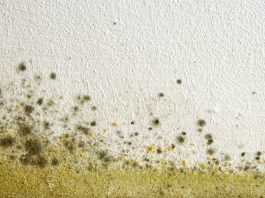
The patch on a wall is only the beginning. Mould releases microscopic spores and toxins into the air, which lodge deep in the lungs and can:
- Worsen or trigger asthma and chronic bronchitis.
- Cause respiratory infections, including pneumonia.
- Lead to allergic reactions and skin conditions.
- Contribute to immune disruption.
- In rare cases, it exposes residents to carcinogenic mycotoxins.
Children are hit hardest. Their developing lungs and faster breathing rates mean they inhale more spores per body weight than adults. Studies show children in damp homes are 50% more likely to develop asthma.
The societal cost
Poor housing is not only a private tragedy — it is a public burden.
- The NHS spends at least £1.4bn each year treating illnesses linked to poor housing.
- Thousands of working days are lost to sick leave from asthma and respiratory conditions.
- Children miss school, deepening inequalities.
- Low-income families are hit hardest, creating cycles of poverty and ill health.
Awaab’s Law is designed to break this cycle by turning delay into accountability.
Who fought for this?
Awaab’s parents campaigned relentlessly. Supported by their lawyers, charities such as Shelter, and local journalism, their petition reached Westminster. The Manchester Evening News gave the story prominence for months, forcing national attention.
The Ombudsman and regulators provided the technical backing. MPs across party lines agreed the system had failed. Together, they created a law named for a child who did not live to see it.
Innovation: The role of technology in preventing the next tragedy
Laws set the deadlines, but innovation delivers the solutions. New technologies already exist that can transform how landlords and tenants combat damp and mould:
- Innovative coatings and materials: New protective paints and treatments can prevent microbial growth on walls, ceilings, and surfaces.
- Digital sensors: Smart humidity, temperature, and CO₂ monitors can detect hidden dampness long before mould becomes visible. Connected to cloud platforms, they alert landlords in real time when conditions cross risk thresholds.
- AI-driven analytics: Data models can predict where damp and mould are most likely to occur across a housing portfolio, allowing proactive intervention.
- Ventilation and energy retrofits: Modern systems with heat recovery and intelligent airflow management reduce condensation at the source while cutting energy bills.
Among these breakthroughs, one product stands out. Q-Field, developed by Spectrum Blue, uses a photocatalytic coating activated by visible light to create intelligent antimicrobial surfaces.
Instead of merely covering damp, Q-Field transforms walls and touchpoints into self-defending barriers that kill bacteria, viruses, fungi, and mould spores upon contact. It has been described as the “immune system for buildings” — a game-changing technology with potential to redefine healthy housing.
Other innovators are pushing forward, too. Moisture-blocking membranes, breathable insulation systems, and bio-based surface treatments are all contributing to the fight. But the message is clear: science and design must be integrated into housing policy, not treated as afterthoughts.
Beyond policy: A legacy of dignity
Laws cannot undo grief. But they can prevent repetition. Every inspection deadline and every five-day repair clause exists because a two-year-old boy died gasping for breath in a mould-filled flat.
The real test of Awaab’s Law will be its enforcement. If it succeeds — and if paired with innovations like Q-Field, smart sensors, and intelligent ventilation — his name will mark not only a tragedy, but a turning point: the moment Britain decided that no child should die because of the air they breathe in their own home







This deeply moving piece highlights the devastating impact of neglect in housing and the crucial role of Awaab’s Law in holding landlords accountable. It’s a powerful reminder that policy changes can emerge from tragedy, but only real enforcement and innovation can ensure justice for families like Awaab’s.