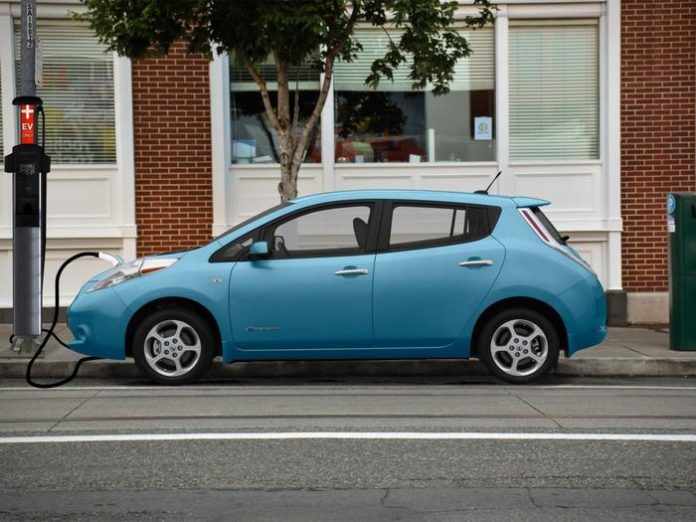
As electric vehicles (EVs) become more common, one major roadblock remains: convenient and affordable access to EV charging stations.
For urban residents and those living in multi-unit buildings, the lack of home charging options can make EV ownership impractical.
But a new project from Penn State University may have found a groundbreaking – and surprisingly simple – solution: turning ordinary streetlights into EV chargers.
A bright idea for equitable EV charging
Researchers at Penn State have developed a scalable framework to convert existing streetlights into EV charging stations.
Their approach offers a low-cost, accessible, and environmentally friendly solution to expand EV infrastructure – especially in cities where space and access are limited.
The team installed 23 streetlight charging stations in Kansas City, Missouri, as part of a pilot programme.
The project, funded by the U.S. Department of Energy, was conducted in partnership with the City of Kansas City, Metro Energy Center, local utility companies, and the National Renewable Energy Lab (NREL).
According to the researchers, streetlight chargers proved to be more affordable, efficient, and sustainable than traditional EV charging stations while also making charging accessible to more residents.
Cost and environmental benefits
Traditional EV charging stations often require costly infrastructure upgrades, including new power connections and parking lot installations. In contrast, streetlight chargers make use of existing infrastructure.
Since streetlights are already powered and typically owned by municipalities, the conversion process is relatively simple and inexpensive.
The Penn State study found that installation costs were significantly lower compared to standard charging stations. Additionally, these chargers delivered faster charging speeds, as they drew power directly from dedicated municipal electrical lines.
Beyond cost and speed, the environmental benefits were clear. The study reported reductions in greenhouse gas emissions and gasoline consumption since the chargers were installed in areas where cars were already parking, eliminating the need for drivers to travel elsewhere to charge their vehicles.
A scalable framework for cities nationwide
One of the project’s most innovative outcomes is its three-part framework, designed to help other communities replicate the success of the Kansas City pilot.
The framework focuses on demand, feasibility, and community benefits, enabling cities to determine where and how to install streetlight EV charging stations effectively.
To assess demand, the researchers analysed data such as traffic volume, land use, and nearby points of interest. They then used artificial intelligence (AI) to predict where chargers would be most beneficial.
Equity was also a key component. The team emphasised community engagement to ensure that charging access was distributed fairly across diverse neighbourhoods, not just in wealthier or high-traffic areas.
Empowering communities through data
The Penn State findings confirm that streetlight EV charging stations can be both equitable and efficient.
The team now plans to refine their models by incorporating socio-economic and weather data, which could further improve predictions of EV charging demand and infrastructure placement.
Understanding how temperature and climate affect EV usage will also help cities better plan for future energy needs.
Lighting the way for a sustainable future
As the transition to electric transportation accelerates, the need for creative, affordable, and equitable charging solutions has never been greater.
Penn State’s streetlight charging initiative offers a promising path forward – one that leverages existing infrastructure to power cleaner cities and make EV ownership more accessible to everyone.
With its scalable design and proven success in Kansas City, this framework could soon help communities nationwide expand their network of EV charging stations, turning the simple streetlight into a symbol of sustainable innovation.