TRIUMF, Canada’s particle accelerator centre, explains how Canada can reframe its research infrastructure to become a global leader in research and innovation.
The world today looks strikingly different from even a year ago. Geopolitical allegiances are shifting, long-held norms are being rewritten, and nations everywhere are rethinking how they can secure their place in an increasingly unpredictable future.
Amid this uncertainty lies an opening. For Canada, it is a chance to show that we are more than a dependable partner – we can be a leader. But leadership demands bold choices, and it requires that we make full use of the strategic advantages we already hold.
Canada’s major research facilities
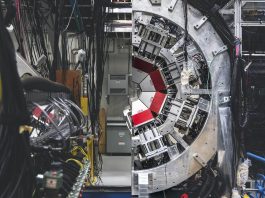
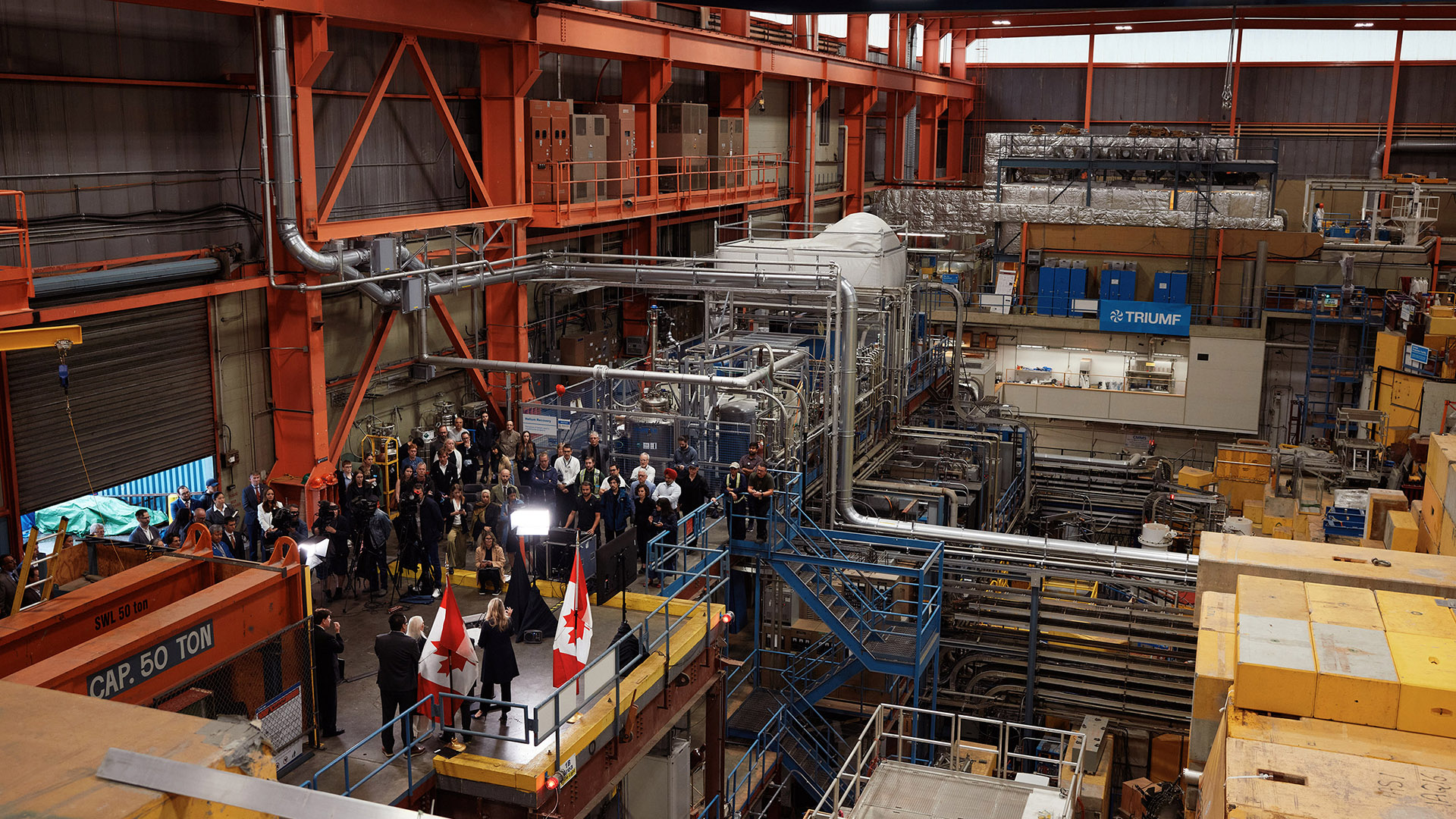
Among the most powerful of these advantages is our network of large-scale research infrastructure – the nation’s so-called ‘major research facilities’ (MRFs). These are not mere scientific workhorses; they are engines of innovation, magnets for talent, and platforms for mission-driven discovery that yield benefits far beyond the lab. Yet too often, they are treated as afterthoughts: supported just enough to function, but rarely empowered to thrive.
For decades, Canada’s MRFs have operated under a ‘minimal viable product’ mindset. Our funding and policy frameworks have sustained them, but not elevated them. If we aspire to true global leadership in science and innovation, that posture must change. These facilities are not burdens; they are our most valuable players.

The need to be bold
Canada already has what it takes to succeed: world-class talent, impressive infrastructure, and strong international relationships. But our current approach to MRFs puts us at a disadvantage. In a world that rewards boldness, hesitation – or our characteristic Canadian modesty – risks making us invisible. Today, a patchwork of ownership, operations, and funding models limits the ability of our facilities to act as a cohesive national system. Despite the federal government’s role in sustaining them, there is no unified framework to co-ordinate their missions or amplify their impact. The result is diminished visibility and missed opportunity – while our peers use their laboratories as flagships of national strength, Canada’s are too often overlooked.
The absence of a long-term roadmap only deepens the challenge. Our grassroots, proposal-based approach to defining priorities may have served small projects well, but it falters when applied to billion-dollar facilities with national potential. The result is a system built for the short term, where local interests compete with national goals, and where scale and strategy are often afterthoughts.
Meanwhile, the competition is not standing still. Across Europe, Asia, and beyond, large-scale facilities are being positioned as the foundation of scientific and economic strength. They share common traits: coherent organisation, clear missions, stable funding, and direct accountability at the highest levels. These facilities don’t just produce science – they cultivate resilience, attract global partnerships, and serve as unmistakable proof of a nation’s ambition.
A new approach to MRFs
To seize this moment, Canada must rethink how it approaches its MRFs. We must move beyond viewing them as isolated facilities maintained at the lowest sustainable cost. Instead, we should recognise them as interconnected national assets – multidisciplinary, collaborative, and central to our long-term vision. Achieving this does not require massive new investment. The most urgent steps are structural and organisational: establishing leadership and accountability at the national level, improving co-ordination, and integrating these facilities into Canada’s broader economic and innovation strategies.
We can draw inspiration from many successful models abroad, but the essential task is simple: Canada must treat its MRFs as a network – not a collection. When aligned and empowered, they can deliver impact on a scale no single institution could achieve alone.

This is not only about science; it is about Canada’s resilience, competitiveness, and global voice. Strong, agile research and innovation facilities generate jobs, train skilled talent, and strengthen our alliances in a world where collaboration is currency. They project confidence in uncertain times – the quiet, steady confidence of a nation that invests in its future.
But time matters. High-level stewardship is needed to ensure these facilities operate as the most valuable players they are meant to be. Canada cannot afford to let an outdated system limit the potential of world-class assets, nor can we hesitate while others act decisively.
Our long-term success depends on strong partnerships abroad – and those begin with strength and coherence at home. By better leveraging our large-scale research infrastructure, we can deliver greater impact for Canadians, deepen our role in global science, and secure our place among the leaders of innovation and discovery.
The world is changing quickly. Canada can, and should, change with it. The question is not whether we can lead – but whether we will choose to. Now is the time to act.
Please note, this article will also appear in the 24th edition of our quarterly publication.